
 Pin this
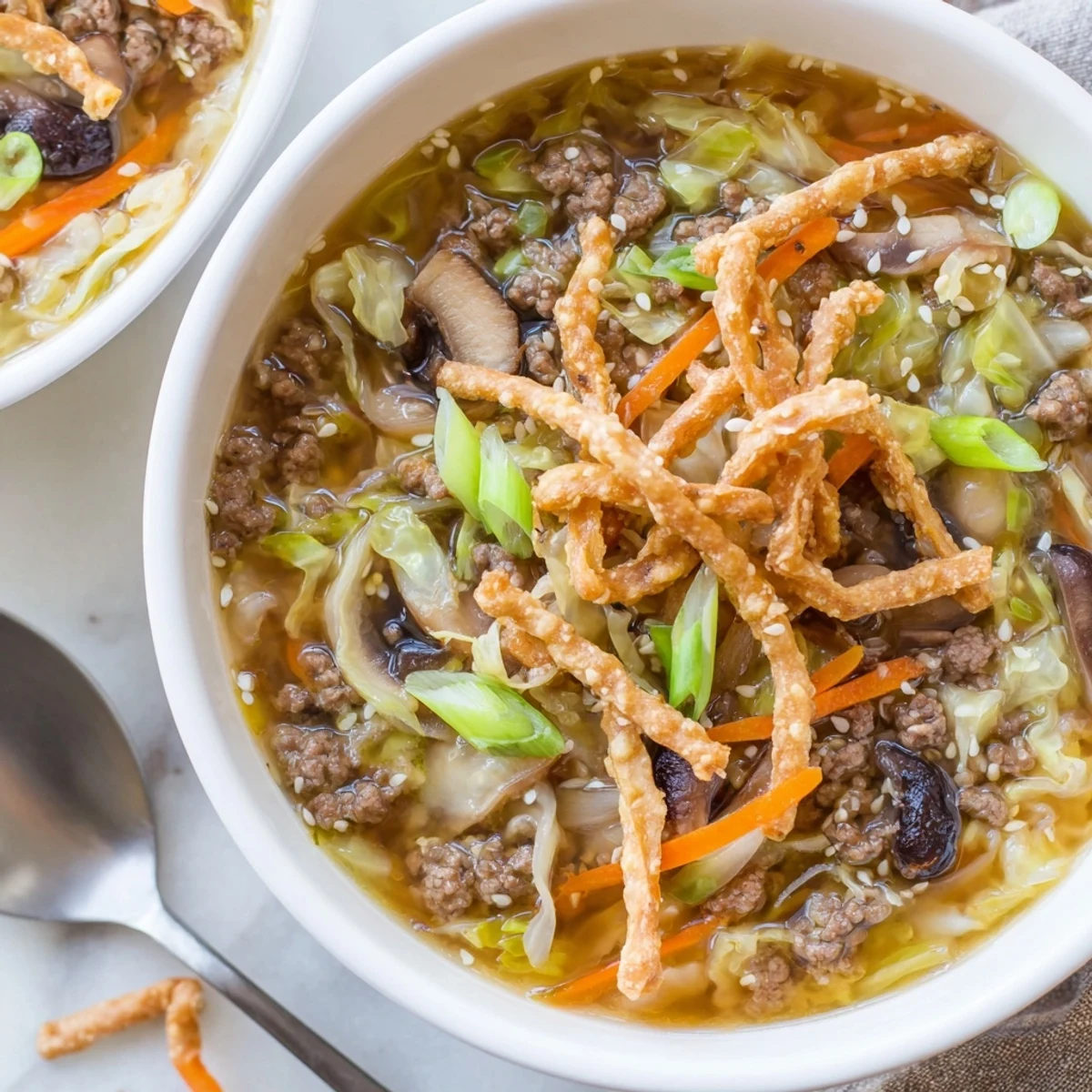
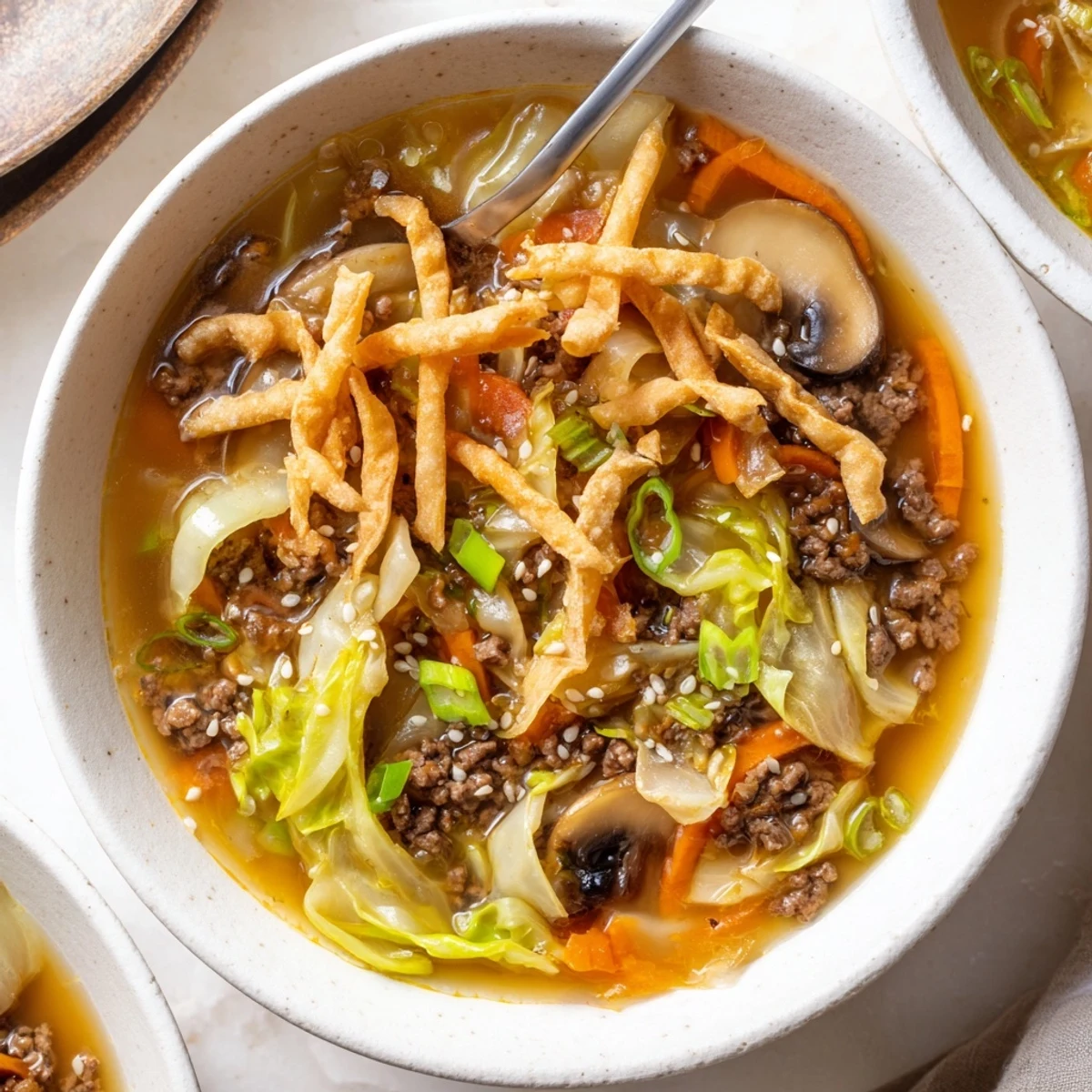
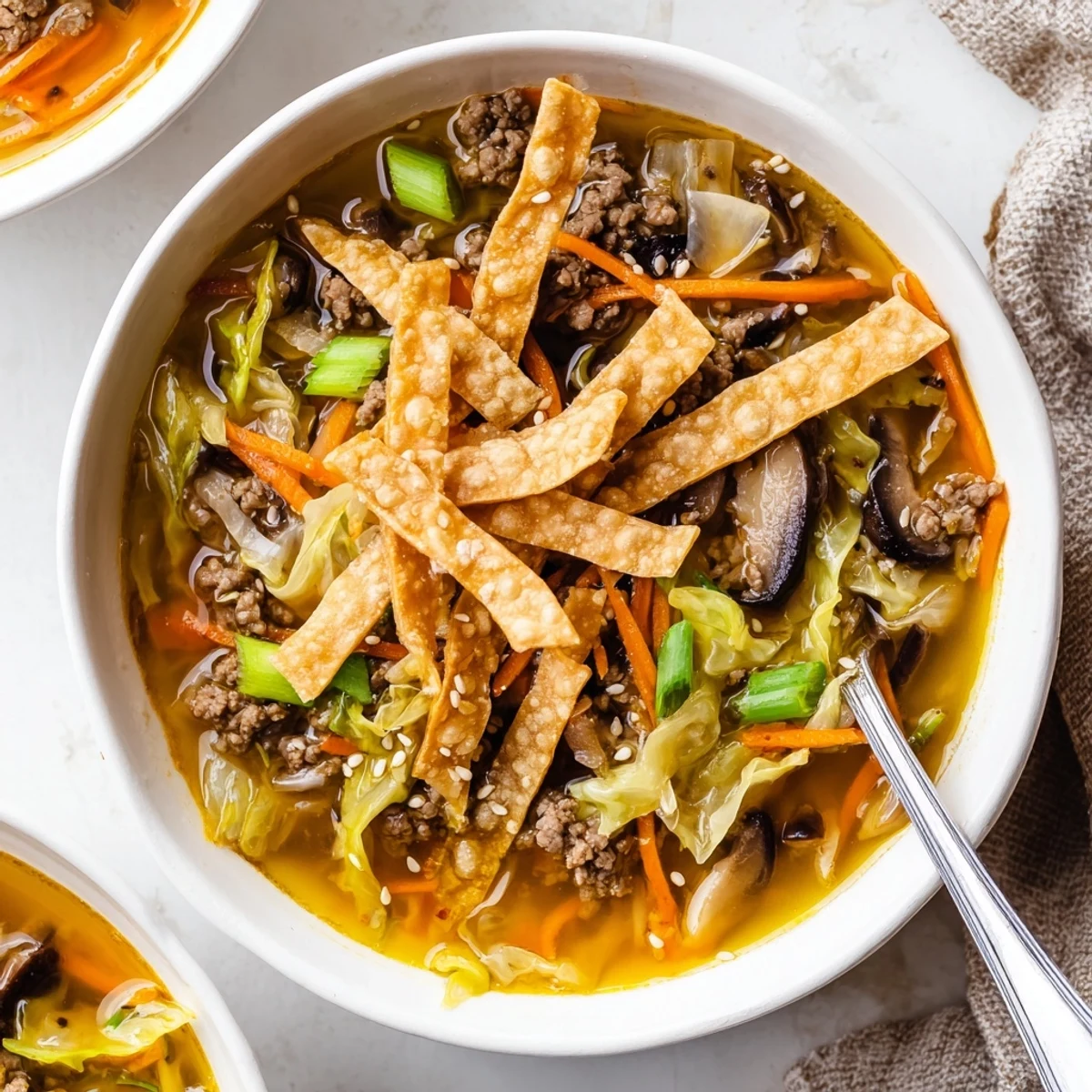
 This Asian-inspired soup captures all the beloved flavors of classic beef egg rolls in bowl form. Ground beef browns alongside aromatic garlic and ginger, then simmers with crisp cabbage, carrots, and mushrooms in a savory soy and sesame broth. The result is a comforting, umami-rich dish ready in under an hour. Top with crispy wonton strips for that signature crunch, or keep it light with extra vegetables. Perfect for cozy weeknight dinners or meal prep, this versatile soup adapts easily to gluten-free or low-carb preferences.
The rain was hammering against the kitchen window so hard I could barely hear the pot bubbling on the stove, and honestly that suited me just fine. I had a head of cabbage sitting in the crisper for a week and a pound of ground beef that needed to be used before it staged a rebellion. What started as a desperate fridge clearing turned into the soup that now gets requested the moment temperatures drop below fifty degrees. All the flavors of a crispy egg roll, none of the deep frying mess, and ready before you can finish a podcast episode.
My friend Laura stopped by unannounced one Tuesday evening, soaked from a downpour, and declared she was staying for dinner before she even took off her coat. I threw this soup together while she sat at the counter telling me about her chaotic work day, and by the time she paused long enough to look at what I was doing, she was already reaching for a bowl. She now texts me every time it rains to ask if Im making the egg roll soup.
Ingredients
- 1 lb (450 g) lean ground beef: Lean is key here because excess grease makes the broth cloudy and heavy, so dont be tempted to reach for the fattier blend.
- 2 cups green cabbage, thinly sliced: Slice it as thin as you can manage because shreds that are too thick never quite soften into that melt in your mouth texture.
- 2 medium carrots, julienned or shredded: Julienned carrots hold their shape better in the broth and give you those satisfying little ribbons throughout.
- 4 green onions, sliced: Save a handful of the green parts for garnish because that pop of color on top makes the whole bowl look restaurant worthy.
- 1 cup shiitake or cremini mushrooms, sliced: Shiitakes bring a deeper earthy note but creminis work beautifully if that is what you have on hand.
- 3 garlic cloves, minced: Fresh garlic only, and mince it finer than you think you need because nobody wants to bite into a chunk.
- 1 tablespoon fresh ginger, minced: This is the soul of the dish, so please do not substitute the powdered version, which tastes dusty by comparison.
- 6 cups (1.5 L) low sodium beef or chicken broth: Low sodium lets you control the salt level since the soy sauce already contributes plenty.
- 3 tablespoons soy sauce (or tamari for gluten free): This is your base seasoning, and tamari works just as well if you need to keep it gluten free.
- 1 tablespoon rice vinegar: Just a splash to brighten everything and cut through the richness of the beef.
- 1 tablespoon sesame oil: Toasted sesame oil is what you want here, not the unrefined kind, because that nutty aroma is everything.
- 1 teaspoon sugar: A small amount rounds out the savory flavors and helps the broth taste more balanced.
- 1/2 teaspoon white pepper: White pepper gives a gentle warmth that black pepper cannot replicate, and it keeps the broth looking clean.
- 1/2 teaspoon crushed red pepper flakes (optional): Add these if you like a bit of kick, or leave them out for a gentler bowl.
- 1/2 cup wonton strips or crispy egg roll wrapper pieces: These go on top right before serving so they stay crunchy, and they make the whole thing feel indulgent.
- Extra green onions and toasted sesame seeds for garnish: Simple finishes that elevate the presentation with almost zero effort.
Instructions
- Brown the beef:
- Heat the sesame oil in a large pot or Dutch oven over medium high heat, then add the ground beef and break it apart with a wooden spoon as it cooks for about four to five minutes until fully browned with no pink remaining.
- Wake up the aromatics:
- Toss in the garlic, ginger, and mushrooms, stirring them around for two minutes until your kitchen smells absolutely incredible and the mushrooms start to soften.
- Add the vegetables:
- Stir in the cabbage, carrots, and green onions, letting them cook for two to three minutes until the cabbage just begins to wilt but still has some bite left.
- Build the broth:
- Pour in the broth, soy sauce, rice vinegar, sugar, white pepper, and red pepper flakes if you are using them, then stir everything together so the seasonings distribute evenly.
- Simmer and meld:
- Bring the soup to a rolling boil, then lower the heat and let it simmer gently for ten to fifteen minutes so all the flavors get to know each other.
- Taste and adjust:
- Give it a taste and add more soy sauce or a pinch of salt if the broth needs a little more punch before you serve.
- Serve with crunch:
- Ladle the hot soup into bowls and scatter crispy wonton strips, extra green onions, and sesame seeds over the top, then serve right away while the crunch lasts.
 Pin this
 There is something deeply satisfying about ladling a steaming bowl of this soup for someone who has had a long day and watching their shoulders drop as they take the first sip. It became my unofficial cold weather therapy dish, and I have started keeping a bag of wonton strips in the pantry specifically for those evenings when comfort needs to come fast.
Making It Your Own
This recipe is wonderfully flexible once you understand the basic structure of browning meat, softening vegetables, and building broth. Toss in water chestnuts or bean sprouts for extra crunch, swap the beef for ground turkey if you prefer something lighter, or add a handful of baby spinach at the end for a pop of green.
What to Serve Alongside
A pot of this soup and a pot of green tea is really all you need for a complete evening, though a chilled glass of Riesling pairs surprisingly well if you are in the mood for something with a little more ceremony. Crusty bread on the side is never a bad idea either, especially for soaking up every last drop of that broth.
Storage and Reheating
This soup reheats beautifully the next day, and honestly the flavors deepen overnight in the fridge which makes the leftovers even better than the first bowl. Store the wonton strips separately in an airtight container so they stay crisp, and always add them fresh when you are ready to eat.
- The soup keeps well in the refrigerator for up to four days in a sealed container.
- Freeze individual portions without the garnishes for up to three months and thaw overnight in the fridge.
- Always make a fresh batch of wonton strips or crumbled wrappers when reheating rather than trying to revive stale ones.
 Pin this
 Some recipes earn a permanent spot in your rotation not because they are fancy, but because they show up for you when you need them most. This is that soup, and I genuinely hope it finds its way into your kitchen on a night when you could use something warm and uncomplicated.
Recipe FAQs
- → Can I make this soup gluten-free?
-
Yes, simply substitute tamari for soy sauce and ensure your wonton strips or egg roll wrappers are certified gluten-free. The flavor remains identical while accommodating dietary needs.
- → How do I store leftovers?
-
Store cooled soup in an airtight container in the refrigerator for up to 4 days. Keep crispy toppings separate and add just before serving to maintain their crunch. The broth actually develops deeper flavors overnight.
- → Can I freeze this soup?
-
The soup base freezes beautifully for up to 3 months. However, avoid freezing with the wonton strips or vegetables that tend to become mushy. Add fresh toppings when reheating for best texture.
- → What protein alternatives work well?
-
Ground turkey, chicken, or pork substitute seamlessly. For a vegetarian version, use crumbled tofu or mushrooms doubled for that umami depth. Adjust cooking time accordingly as lean meats cook faster.
- → How can I add more heat?
-
Increase crushed red pepper flakes to 1 teaspoon, add fresh chili slices during sautéing, or stir in Sriracha or chili garlic sauce at the end. Asian chili oil also makes an excellent spicy garnish.
- → What vegetables can I add?
-
Water chestnuts, bean sprouts, bok choy, snow peas, or bell peppers all work wonderfully. For extra crunch, add celery or jicama. Spinach or kale can be stirred in during the last 2 minutes of simmering.