
 Pin this
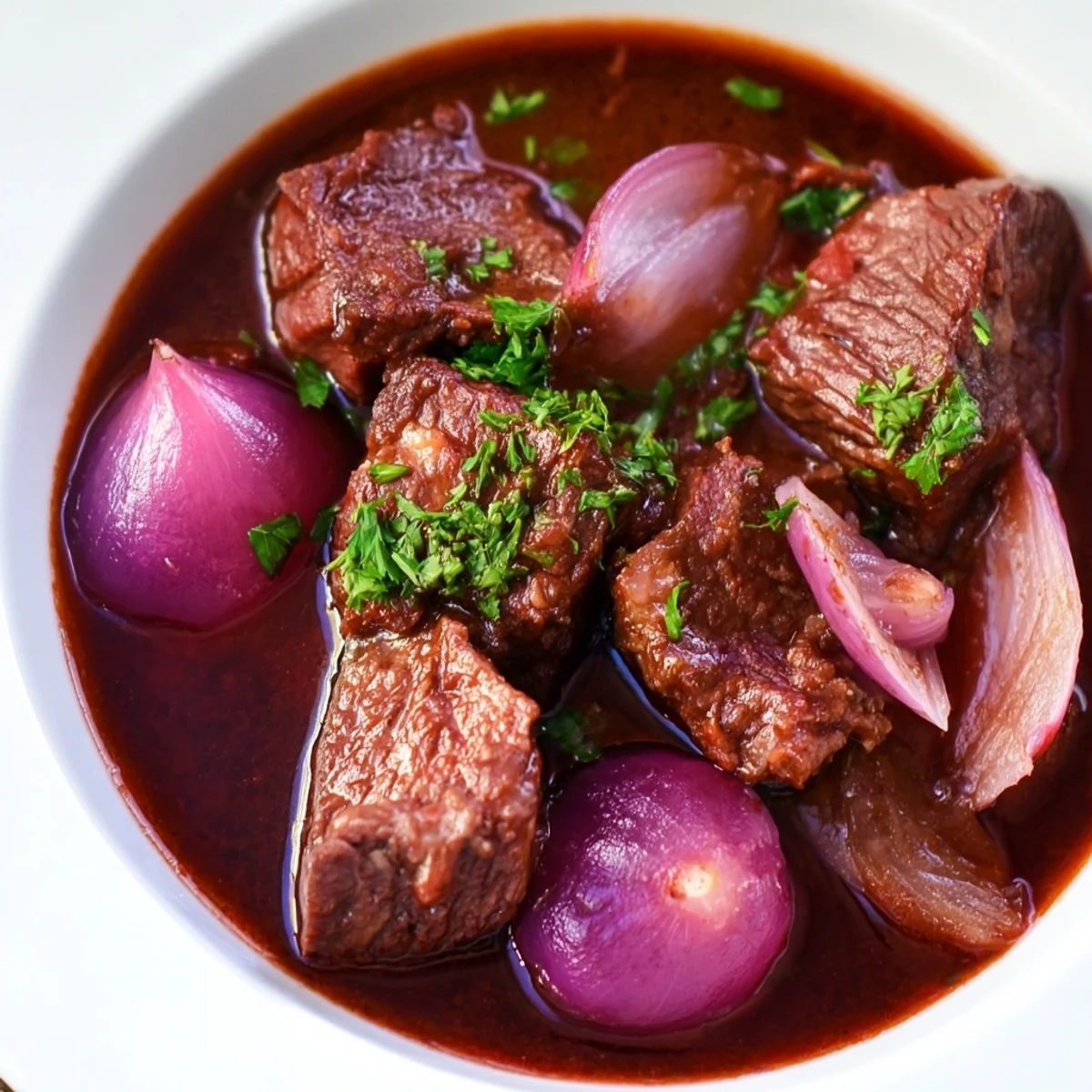
 This dish features beef chuck slowly braised until tender alongside sweet red onions and aromatic herbs. The slow-cooking process infuses the meat with a rich, deep flavor enhanced by a robust red wine sauce. Aromatics like garlic, carrots, and celery add warmth and balance, while bay leaves and thyme provide an earthy note. Ideal for a comforting dinner, this preparation yields melt-in-the-mouth beef with complex layers of taste.
There's something almost meditative about watching beef chuck transform from tough and humble into something so tender it melts on your tongue. I learned this lesson years ago when I found myself with a cut of beef that seemed impossible to work with—until a neighbor mentioned her grandmother's method of slow braising with red wine and time. That first batch, with the kitchen filling with the most intoxicating aroma of caramelized onions and thyme, was when I understood that patience in cooking isn't a burden but a gift.
I made this for my sister's dinner party on a cold November evening, and I remember her husband going quiet mid-conversation after his first bite—not in a polite way, but genuinely stopped talking to focus on eating. That's when I realized this wasn't just dinner; it was the kind of meal that makes people slow down and pay attention.
Ingredients
- Beef chuck (1.5 kg / 3.3 lbs), cut into large cubes: This cut has just the right amount of marbling and connective tissue to become silky rather than stringy after braising.
- Red onions (3 large), sliced: Unlike yellow onions, red ones add a subtle sweetness and their color bleeds beautifully into the sauce—don't skip this part.
- Garlic (3 cloves), minced: Added after the onions have softened so it doesn't burn and turn bitter.
- Carrots (2), peeled and sliced: They add natural sweetness and help thicken the sauce as they break down.
- Celery (2 stalks), sliced: The backbone of flavor that most people don't notice but absolutely would miss.
- Dry red wine (400 ml / 1 2/3 cups): Choose something you'd actually drink—the cheap stuff tastes cheap, even after hours of cooking.
- Beef stock (500 ml / 2 cups): Quality matters here since it's the foundation of your sauce.
- Olive oil (3 tbsp): For searing and building flavor from the very beginning.
- Tomato paste (2 tbsp): A small amount adds depth without making the dish taste tomatoey.
- Bay leaves (2) and fresh thyme (4 sprigs): The aromatic duo that tells your nose something special is happening in the oven.
- Salt and fresh black pepper: Don't rush the seasoning—taste and adjust at the end when flavors have concentrated.
- Fresh parsley (for garnish): A last-minute brightness that cuts through the richness beautifully.
Instructions
- Get your oven ready:
- Preheat to 160°C (325°F) while you prepare everything else. A low, gentle heat is what transforms tough meat into something spoon-tender.
- Prepare the beef:
- Pat the chuck cubes completely dry with paper towels—this helps them brown instead of steam. Season boldly with salt and pepper; you're building flavor from the surface.
- Sear the meat:
- Heat olive oil in your Dutch oven over medium-high heat until it shimmers. Working in batches so you don't crowd the pan, sear each piece until deep golden brown on all sides—this takes patience but builds the foundation of everything that comes next.
- Caramelize the vegetables:
- Reduce heat to medium and add the red onions, carrots, and celery to the same pot. Let them soften and catch some color for 8 to 10 minutes, stirring occasionally; you'll notice the onions turning translucent and sweet-smelling.
- Add aromatics and depth:
- Stir in the minced garlic and tomato paste, cooking for about 2 minutes until the kitchen smells absolutely alive with flavor. This short window is crucial—you want fragrant, not burned.
- Deglaze and combine:
- Return the beef to the pot and pour in the red wine. Use a wooden spoon to scrape up all those golden, stuck-on bits from the bottom—that's concentrated flavor you don't want to waste.
- Build the braising liquid:
- Add the beef stock, bay leaves, and thyme sprigs, stirring gently to combine. Bring everything to a simmer, then cover the pot and slide it into the oven.
- The long, slow transformation:
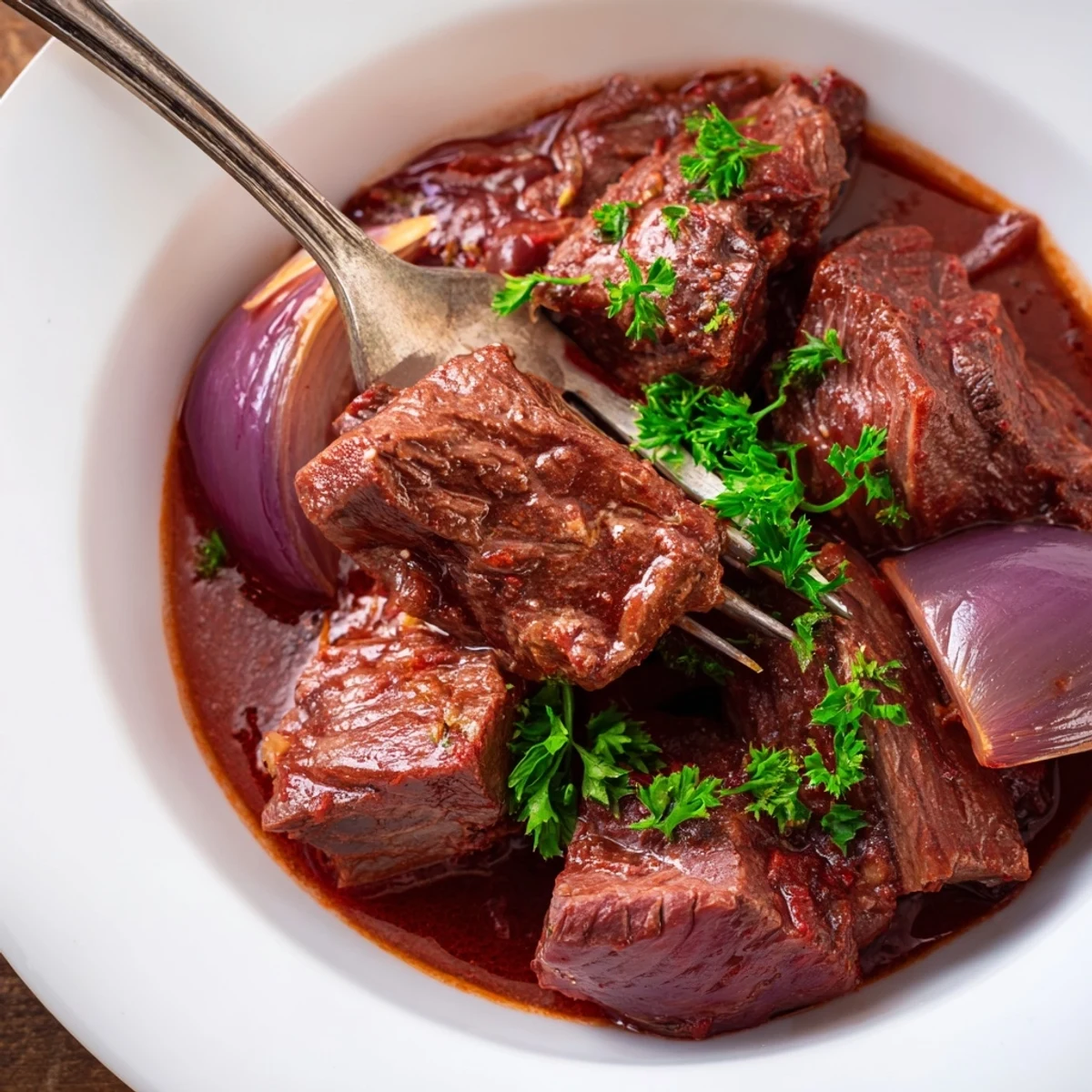
- Braise for 2 to 2.5 hours, checking once or twice but mostly letting time do the work. The beef is ready when you can pull a piece apart with a fork and the sauce has become rich and glossy.
- Finish and serve:
- Remove the bay leaves and thyme sprigs, then taste and adjust seasoning. Serve hot, scattering fresh parsley over the top if you have it.
 Pin this
 Years later, I still remember my daughter asking why this dish tasted so different from anything we usually made, and I realized it wasn't just the ingredients—it was the care, the time, and the way the house filled with anticipation while it cooked. Food made with intention tastes like something.
Make It Your Own
Braised beef is forgiving once you understand the core technique. Some people swap out red onions for shallots if they prefer something more delicate and subtle. Others add a splash of balsamic vinegar in the last few minutes for acidity that brightens the whole dish. I've seen versions with mushrooms tucked in alongside the vegetables, and they add an earthy note that feels almost luxurious.
Serving and Pairing Ideas
This braise is bold and rich, so it needs something to ground it. Creamy mashed potatoes are the classic choice, soaking up every drop of sauce, but polenta works just as well and adds an elegant touch. A hunk of crusty bread is honestly all you need if you're in the mood for something simpler. As for wine, pour yourself something full-bodied like a Cabernet Sauvignon or Merlot while you cook and eat—it bridges the flavors beautifully.
The Science and Soul of Braising
Braising is one of cooking's great kindnesses to home cooks. The low, moist heat breaks down collagen in tough cuts of meat, turning it into gelatin that gives the dish its silky mouthfeel and rich sauce. What's happening is chemistry, but it feels like magic—especially when you're not standing over the stove.
- Cover the pot so steam can't escape and everything braises evenly in a gentle, forgiving environment.
- A knob of cold butter stirred in at the very end makes the sauce glossy and rich—optional but worth it if you have it.
- This dish actually tastes better the next day after flavors have had time to meld, so don't hesitate to make it ahead.
 Pin this
 This is the kind of meal that reminds you why cooking matters—not because it's complicated, but because it's generous. Give yourself permission to make it, give yourself time, and trust the process.
Recipe FAQs
- → What cut of beef works best for this dish?
-
Beef chuck is ideal due to its marbling and connective tissue, which break down during slow braising to create tender, flavorful meat.
- → Can I substitute red onions with another variety?
-
Shallots can be used for a milder, sweeter flavor while still providing aromatic depth to the dish.
- → How important is the red wine in the cooking process?
-
Red wine adds acidity and richness, enhancing the sauce's complexity and tenderizing the beef during slow cooking.
- → What are good side options to accompany this dish?
-
Creamy mashed potatoes, polenta, or crusty bread complement the tender beef and rich sauce perfectly.
- → Can this dish be made gluten-free?
-
Yes, the ingredients listed are naturally gluten-free, but always verify labels, especially for beef stock and tomato paste.