
 Pin this
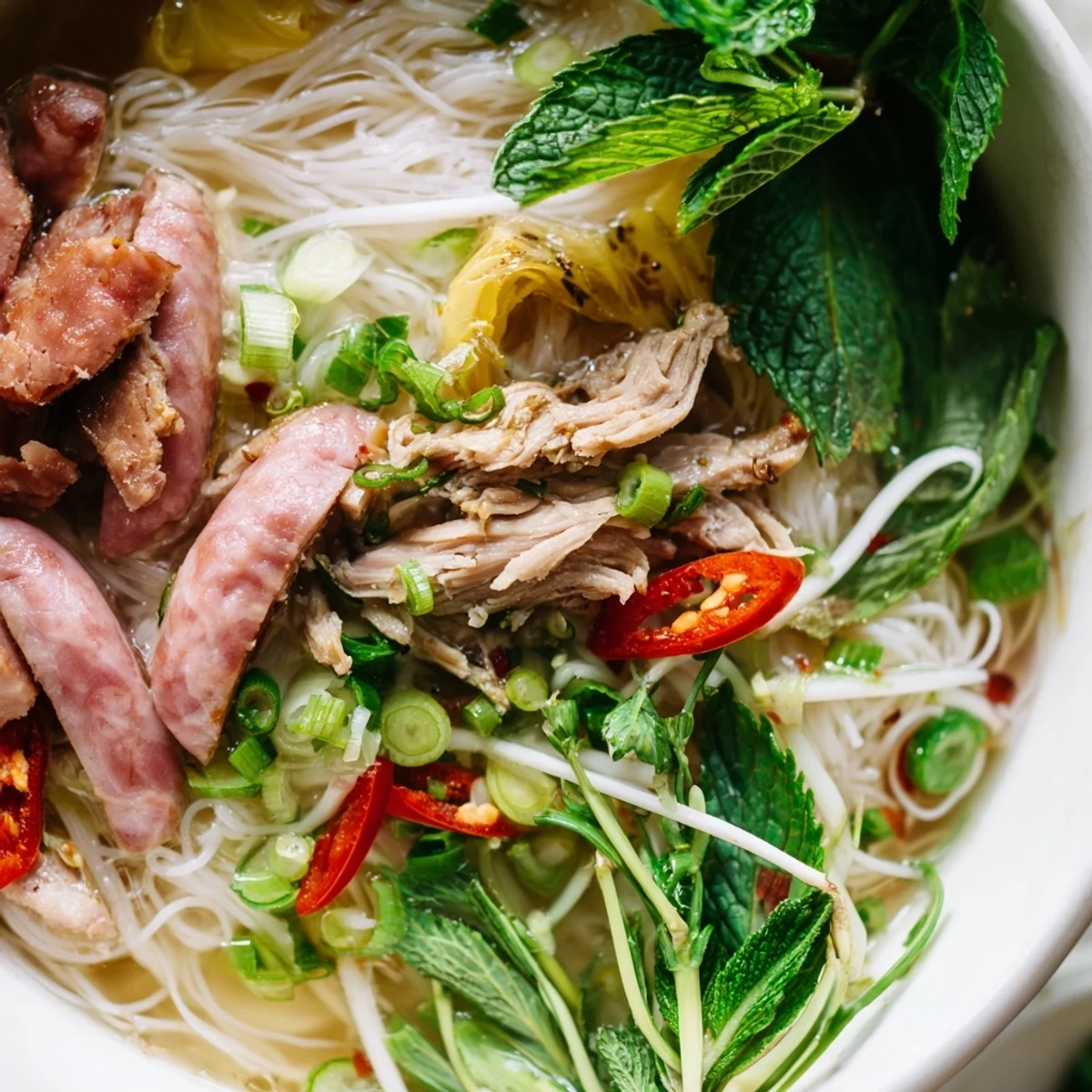
 Bun Thang represents the pinnacle of Hanoi's refined noodle soup tradition, combining delicate flavors and precise preparation techniques. This iconic dish features a crystal-clear broth simmered with chicken, aromatics, and traditional seasonings, then topped with an array of meticulously prepared ingredients: tender shredded chicken breast, silky egg crepes cut into julienne strips, Vietnamese pork sausage, and springy rice vermicelli noodles.
The magic lies in the balance of textures and the clean, savory broth that ties everything together. Fresh herbs like cilantro, Vietnamese coriander, and mint add brightness, while optional shrimp paste provides authentic depth. Perfect for lunch or dinner, this comforting yet elegant bowl showcases the sophisticated culinary heritage of Vietnam's capital city.
The steam still rising from my bowl on that tiny blue plastic stool in Hanoi's Old District. I'd watched the vendor position each ingredient with such deliberate care, like she was composing a watercolor rather than assembling lunch. That first spoonful taught me how clear broth could carry such depth, how silk-thin egg ribbons could transform everything.
Last winter, I spent an entire Sunday perfecting my broth, calling my mother between simmering stages to compare notes. When my roommate finally came home, the house smelled like ginger and star anise and something deeper I couldn't name. We sat at the kitchen table with our steaming bowls while rain tapped against the window, eating in comfortable silence.
Ingredients
- Whole chicken: Starting with a whole bird creates the most flavorful foundation, and poaching keeps the meat impossibly tender
- Fresh ginger and onion: Char these briefly over an open flame if you can, it adds a subtle smoky depth that makes all the difference
- Rice vermicelli: Use the thin variety and don't overcook them, they should have a pleasant bounce, not mushiness
- Vietnamese pork sausage: This springy, pink sausage is essential for authentic texture and a mild sweetness that balances the broth
- Eggs: Whisked into impossibly thin crepes then julienned, these delicate ribbons are the signature touch that makes Bun Thang special
- Fresh herbs: Don't skip the Vietnamese coriander, its citrusy, peppery notes are what make this distinctly Hanoi
Instructions
- Build your foundation broth:
- Place chicken in a large pot with cold water, bring to a gentle boil, and immediately lower to the barest simmer, skimming any foam that rises to the surface for the first 15 minutes. Add peeled onion and smashed ginger, letting them infuse the liquid with their aromatic warmth.
- Extract and shred the chicken:
- After 30 minutes, carefully remove the chicken and let it cool enough to handle. Pull the meat into thin, elegant strips, reserving the breast for your soup and saving the rest for another use.
- Deepen the broth's character:
- Continue simmering the strained broth with aromatics for another 45 minutes, then season with fish sauce, salt, and just enough rock sugar to round out the flavors. The broth should taste balanced and clear, not salty.
- Create delicate egg ribbons:
- Whisk eggs with a pinch of salt and pour a thin layer into a warm nonstick skillet, tilting to coat the bottom evenly. Cook until just set, flip briefly, then stack and slice these golden crepes into fine strips with a sharp knife.
- Prepare the remaining components:
- Cook vermicelli according to package directions, rinse thoroughly with cold water to stop the cooking and prevent sticking. Slice the pork sausage into matchsticks, preparing all your garnishes so you're ready to assemble quickly.
- Compose your bowl:
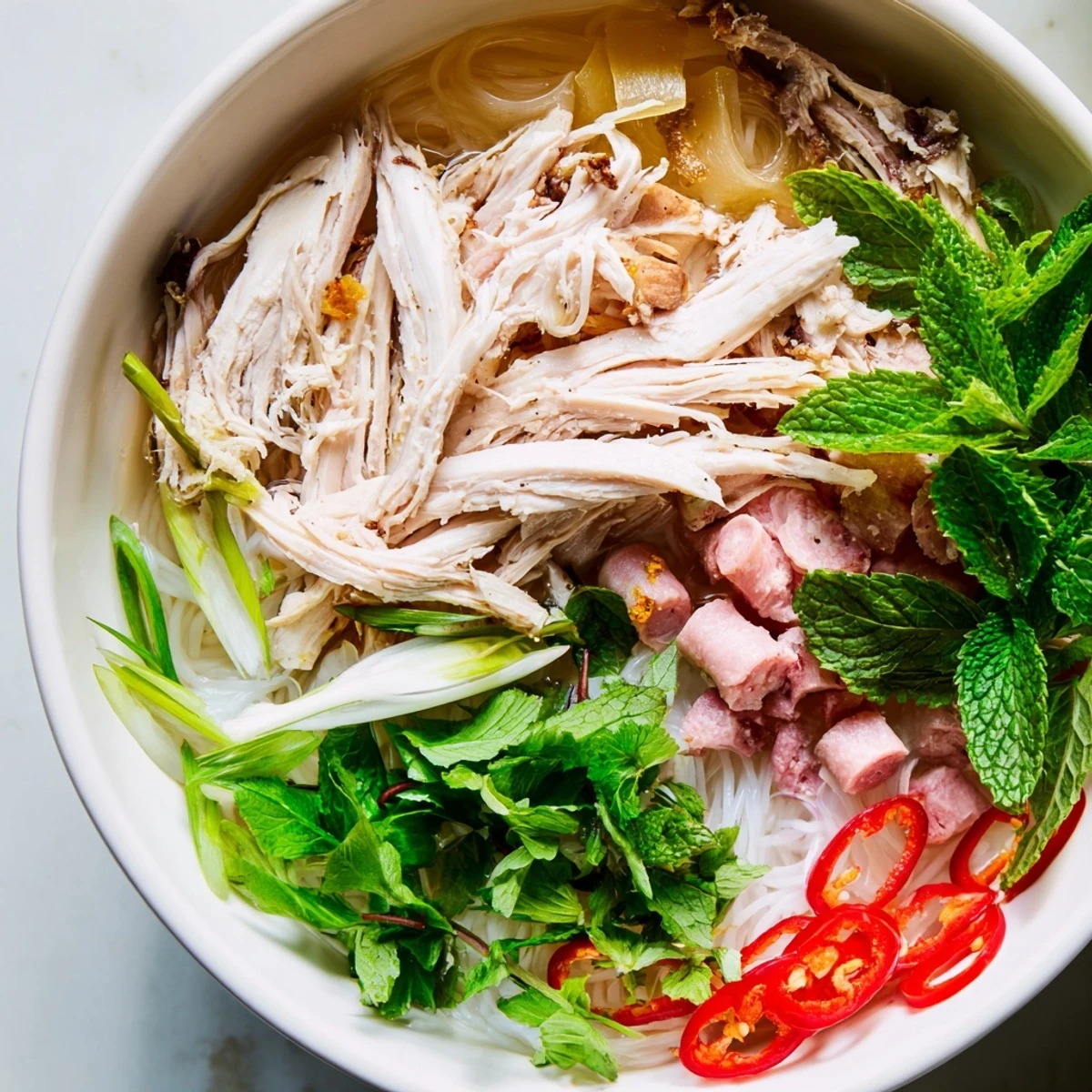
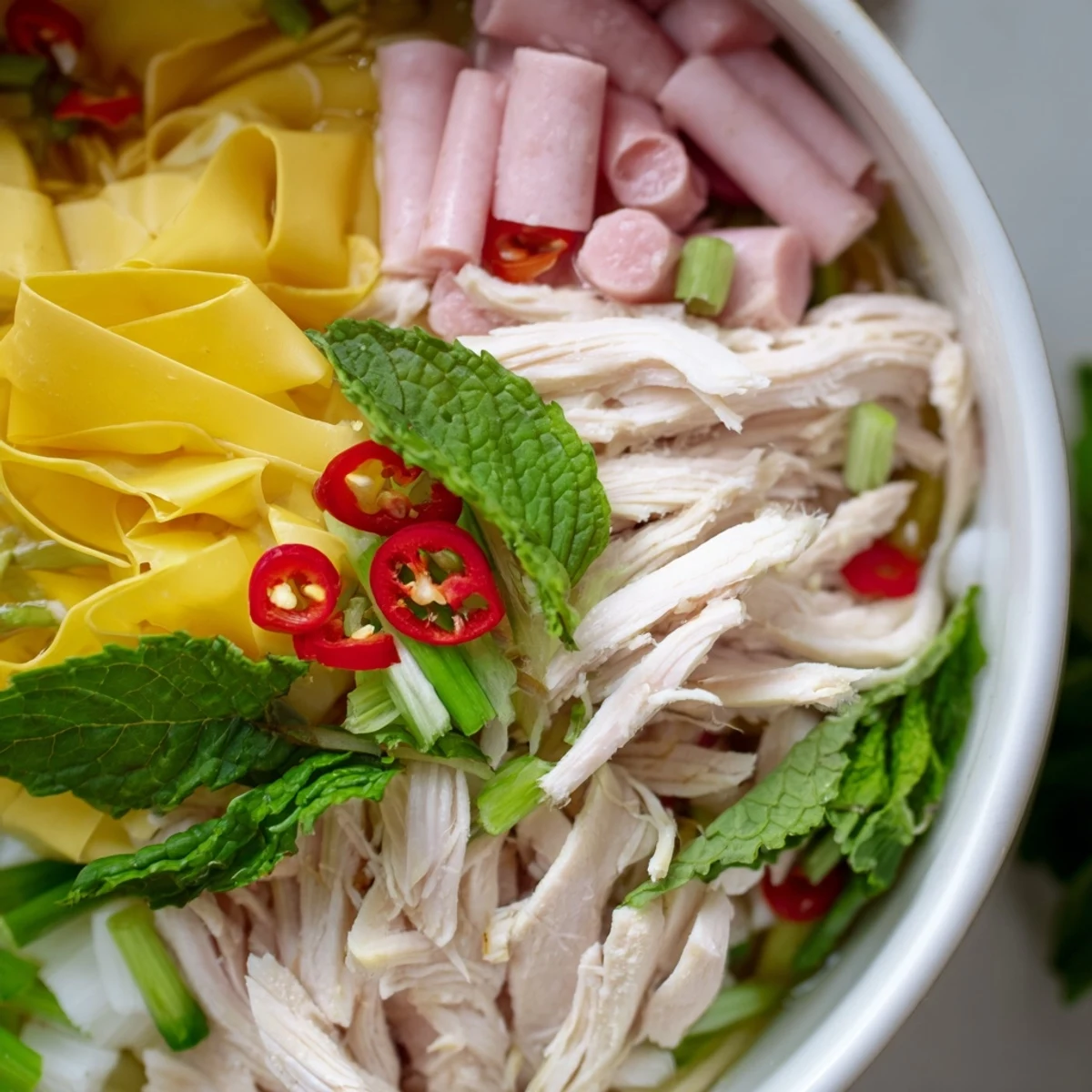
- Divide noodles among four warmed bowls, arranging shredded chicken, egg ribbons, and sausage in separate sections like a beautiful mosaic. Scatter scallions, cilantro, Vietnamese coriander, mint, and chili on top, then ladle hot broth over everything just before serving.
 Pin this
 Something meditative happens when you juliennne egg crepes into uniform ribbons, each one destined to float in that fragrant broth. My friend Minh once told me this soup represents the Vietnamese philosophy of balance, the yin and yang finding harmony in a single bowl.
The Art of Broth Clarity
A clear broth signals skill and patience, achieved through gentle simmering and careful skimming. Rush the process with high heat, and your broth will remain cloudy despite straining. The reward of this extra attention is a bowl that tastes as clean as it looks.
Mastering the Egg Ribbons
The thinner your egg crepes, the more delicate your final soup. Use the smallest skillet you have and pour just enough egg to create a translucent layer. Stack cooked crepes and roll them tightly before slicing for uniform, elegant ribbons.
Building Your Bun Thang Bowl
Traditional assembly places ingredients in distinct sections, each element visible and separate until the broth unites them. This arrangement shows respect for every component, creating a visual promise of the complex flavors to come.
- Work quickly when assembling so broth remains piping hot
- Prepare all garnishes before you start assembling the bowls
- Let each diner squeeze their own lime wedges at the table
 Pin this
 There's something profound about a soup that requires such patience and precision, yet tastes like comfort itself. The first time I served this to friends, nobody spoke until their bowls were empty.
Recipe FAQs
- → What makes Bun Thang different from other Vietnamese noodle soups?
-
Bun Thang stands out for its delicate, refined preparation and clear, light broth. Unlike richer noodle soups, it features precisely julienned toppings including egg crepes, pork sausage, and shredded chicken, creating an elegant balance of flavors and textures that reflects Hanoi's sophisticated culinary tradition.
- → Can I prepare the components ahead of time?
-
Absolutely. The broth can be made 1-2 days in advance and refrigerated. Cooked chicken, egg crepes, and sliced pork sausage can be prepared the day before and stored separately. Rice vermicelli noodles cook quickly, so prepare them fresh just before assembling the bowls for the best texture.
- → What can I substitute for Vietnamese pork sausage?
-
Thinly sliced lean ham, roast pork, or even steamed chicken breast work well as alternatives. For a vegetarian version, use fried or steamed tofu strips. The key is maintaining the texture contrast and mild savory flavor that the sausage traditionally provides.
- → How do I achieve a crystal-clear broth?
-
Simmer the broth gently rather than boiling vigorously, and skim off any foam or impurities that rise to the surface during cooking. Straining the finished broth through a fine mesh strainer or cheesecloth removes remaining particles, resulting in the signature clarity that defines authentic Bun Thang.
- → Is shrimp paste necessary for authentic flavor?
-
Shrimp paste (mam tom) is traditional but optional. It adds a deep, pungent umami element that many Hanoi locals appreciate. If you're new to this ingredient, start with a small amount or serve it on the side. Lime wedges provide a nice acidic balance to the rich, savory broth.
- → What's the secret to making perfect egg crepes?
-
Use a nonstick skillet over medium-low heat and pour just enough egg mixture to create a thin, even layer. Don't overcook—the crepe should be just set and slightly pale. Let it cool completely before slicing into thin julienne strips for that delicate, ribbon-like texture in the finished bowl.