
 Pin this
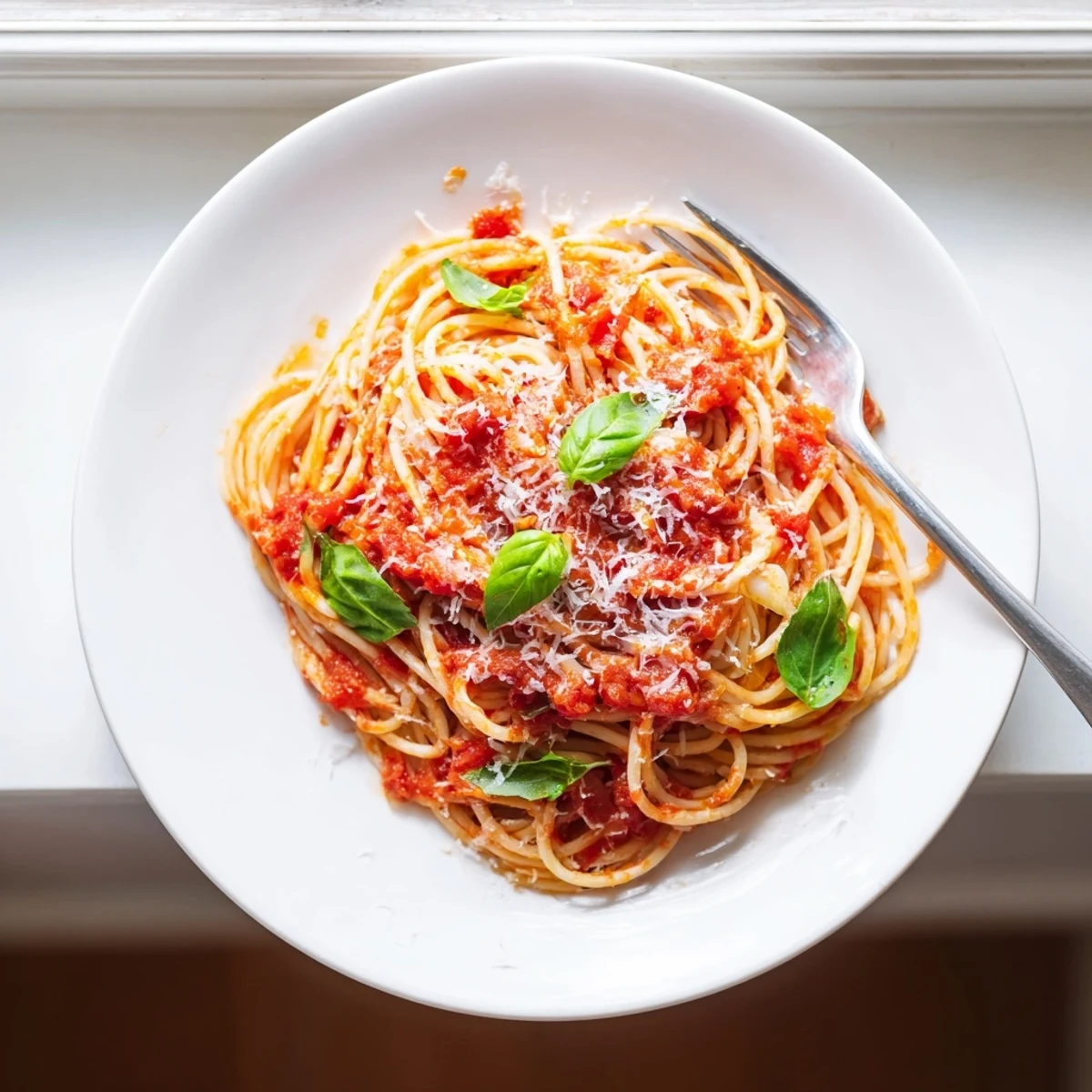
 This classic Italian pasta features tender noodles coated in a rich, homemade tomato sauce. The sauce begins with aromatic onion and garlic sautéed in olive oil, then simmered with crushed tomatoes, dried oregano, and basil for 10-12 minutes to develop deep flavors. A touch of sugar balances the acidity while salt and pepper enhance the natural taste.
The dish comes together in just 30 minutes, making it perfect for busy weeknights. Toss the al dente pasta directly with the simmered sauce, using a splash of reserved pasta water to achieve the ideal consistency. Finish with freshly grated Parmesan and bright basil leaves for an authentic Italian touch.
The smell of garlic hitting olive oil on a Tuesday evening is enough to make anyone believe that simplicity is the highest form of cooking. My upstairs neighbor once knocked on my door just to ask what I was making, and I handed her a plate through the doorway without even thinking. This is that kind of pasta, the kind that creates small interruptions in other peoples evenings.
I started making this version during a particularly rainy October when cooking became the only thing that felt grounding. My roommate would drift into the kitchen halfway through, drawn by the onion and garlic, and we would eat standing at the counter with wooden spoons before it ever reached a plate.
Ingredients
- 400 g dried pasta: Spaghetti is classic but penne holds the sauce beautifully in every crevice, so pick whatever shape matches your mood.
- 2 tbsp olive oil: Use the good stuff here since it forms the flavor base and there are nowhere to hide behind.
- 2 cloves garlic, minced: Fresh garlic only, and mince it finer than you think you need to so it melts into the oil without bitters bites.
- 1 medium onion, finely chopped: A yellow onion gives sweetness that balances the acidity of the canned tomatoes perfectly.
- 800 g canned crushed tomatoes: San Marzano cans are worth the extra dollar for their natural sweetness and lower water content.
- 1 tsp sugar: This tiny addition tames any harshness from the tomatoes and makes the sauce taste like it simmered for hours.
- 1 tsp dried oregano: Rub it between your palms directly into the pot to wake up the oils before they hit the heat.
- 1 tsp dried basil: Dried basil works here but add it early so it rehydrates and releases flavor into the sauce.
- Salt and freshly ground black pepper: Salt the pasta water generously until it tastes like mild seawater, then season the sauce in layers.
- 30 g freshly grated Parmesan cheese: Grating it yourself from a wedge melts differently and tastes worlds better than the pre shredded kind.
- Fresh basil leaves: Tear them with your fingers instead of cutting to keep the edges from blackening on the plate.
Instructions
- Get the water going:
- Fill your largest pot with water, salt it boldly, and bring it to a rolling boil before adding the pasta so it cooks evenly.
- Build the aromatics:
- Warm olive oil in a large skillet over medium heat, add the onion and let it soften for three minutes until translucent, then stir in the garlic for one minute until your kitchen smells irresistible.
- Simmer the sauce:
- Pour in the crushed tomatoes, sugar, oregano, and basil, season with salt and pepper, and let it bubble uncovered for ten to twelve minutes while you stir occasionally and taste as you go.
- Marry pasta and sauce:
- Toss the drained pasta directly into the skillet with the sauce, splashing in a little reserved pasta water until everything is glossy and coated.
- Finish and serve:
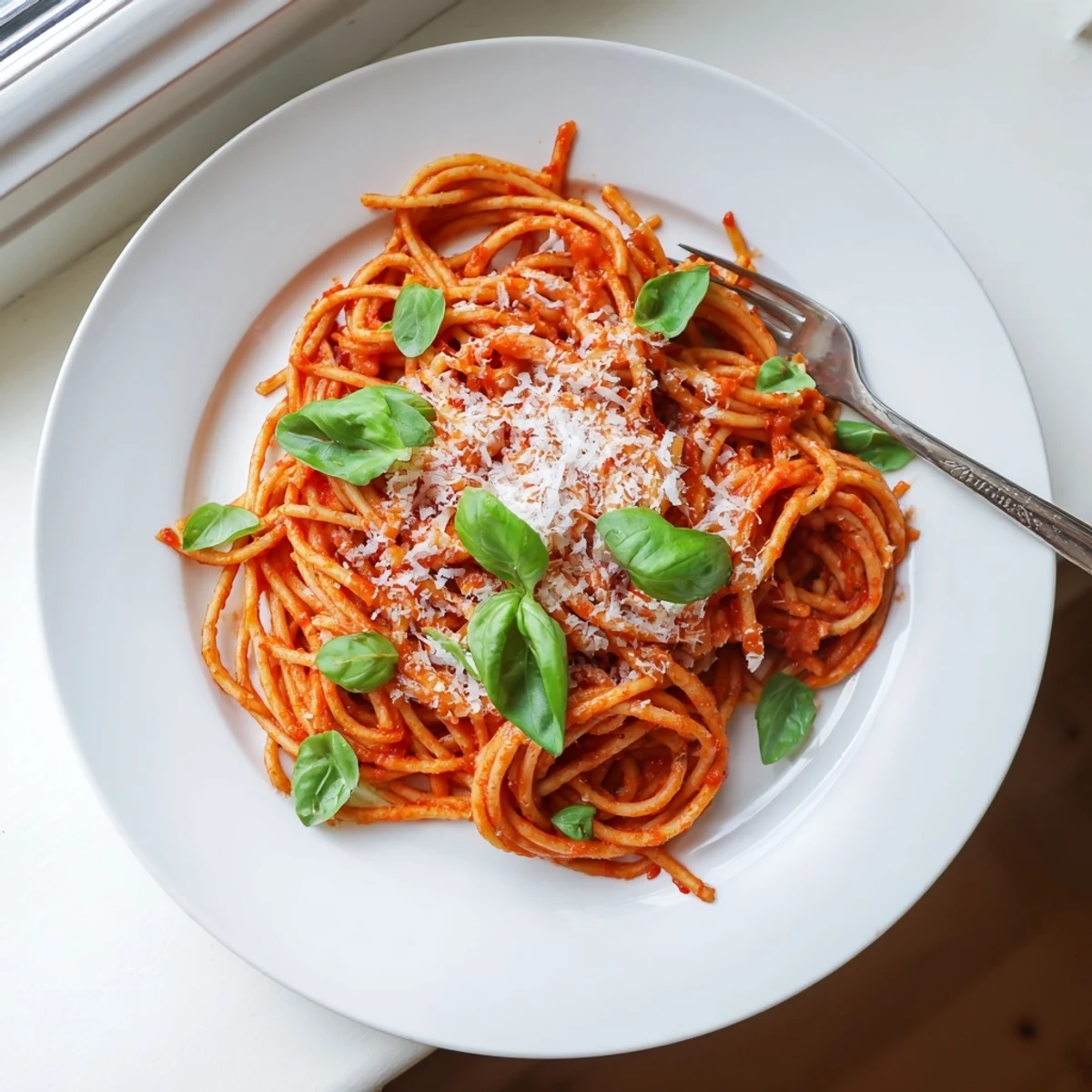
- Slide onto plates while still hot, shower with freshly grated Parmesan, and scatter torn basil leaves over the top.
 Pin this
 There is something quietly powerful about a meal that asks for almost nothing and gives back everything. This pasta has seen me through breakups, deadlines, and celebrations, and it never once asked me to be impressive.
What to Serve Alongside
A crisp green salad with a sharp lemon vinaigrette cuts through the richness of the tomato sauce and makes the whole meal feel more complete. A glass of Chianti or any medium bodied red wine turns a weeknight dinner into something that feels deliberate and special.
Making It Your Own
A pinch of chili flakes stirred into the sauce transforms the entire dish into something with real warmth and personality. For a vegan version, simply skip the Parmesan or use a plant based alternative and finish with a drizzle of your best olive oil instead.
Tools and Timing
You really only need a large pot, a strainer, a big skillet, and a wooden spoon, so cleanup stays minimal. The whole process takes about thirty minutes from the moment you open the pantry to the moment you sit down, which makes this faster than delivery and infinitely more satisfying.
- Start the sauce while the water comes to a boil so everything finishes at the same time.
- Taste the sauce right before adding the pasta because that is your last chance to adjust salt or acidity.
- Remember that the pasta continues to cook for a few seconds in the hot sauce, so drain it just barely before al dente.
 Pin this
 Keep this recipe close because you will return to it more often than you expect. It is the quiet workhorse of any kitchen, ready whenever you are.
Recipe FAQs
- → Can I use fresh tomatoes instead of canned?
-
Yes, you can use fresh tomatoes. Peel and crush about 1.5 kg of ripe tomatoes, or substitute with 800g of canned crushed tomatoes as the recipe calls for.
- → How do I prevent the sauce from becoming too acidic?
-
Add 1 teaspoon of sugar to the sauce while simmering. This helps balance the natural acidity of the tomatoes without making the sauce noticeably sweet.
- → Can I make this dish vegan?
-
Absolutely. Simply omit the Parmesan cheese or use a vegan alternative. The tomato sauce and pasta are naturally plant-based and full of flavor.
- → What pasta shapes work best with this sauce?
-
Spaghetti, penne, fusilli, or rigatoni all work wonderfully. Choose shapes with ridges or hollows to catch the sauce effectively, or long strands like spaghetti for a traditional presentation.
- → How long can I store leftovers?
-
Store leftover pasta in an airtight container in the refrigerator for up to 3-4 days. Reheat gently with a splash of water to loosen the sauce before serving.
- → Can I freeze this pasta dish?
-
It's best to freeze the sauce separately from the pasta. The tomato sauce freezes well for up to 3 months. Cook fresh pasta when ready to serve for the best texture.