
 Pin this
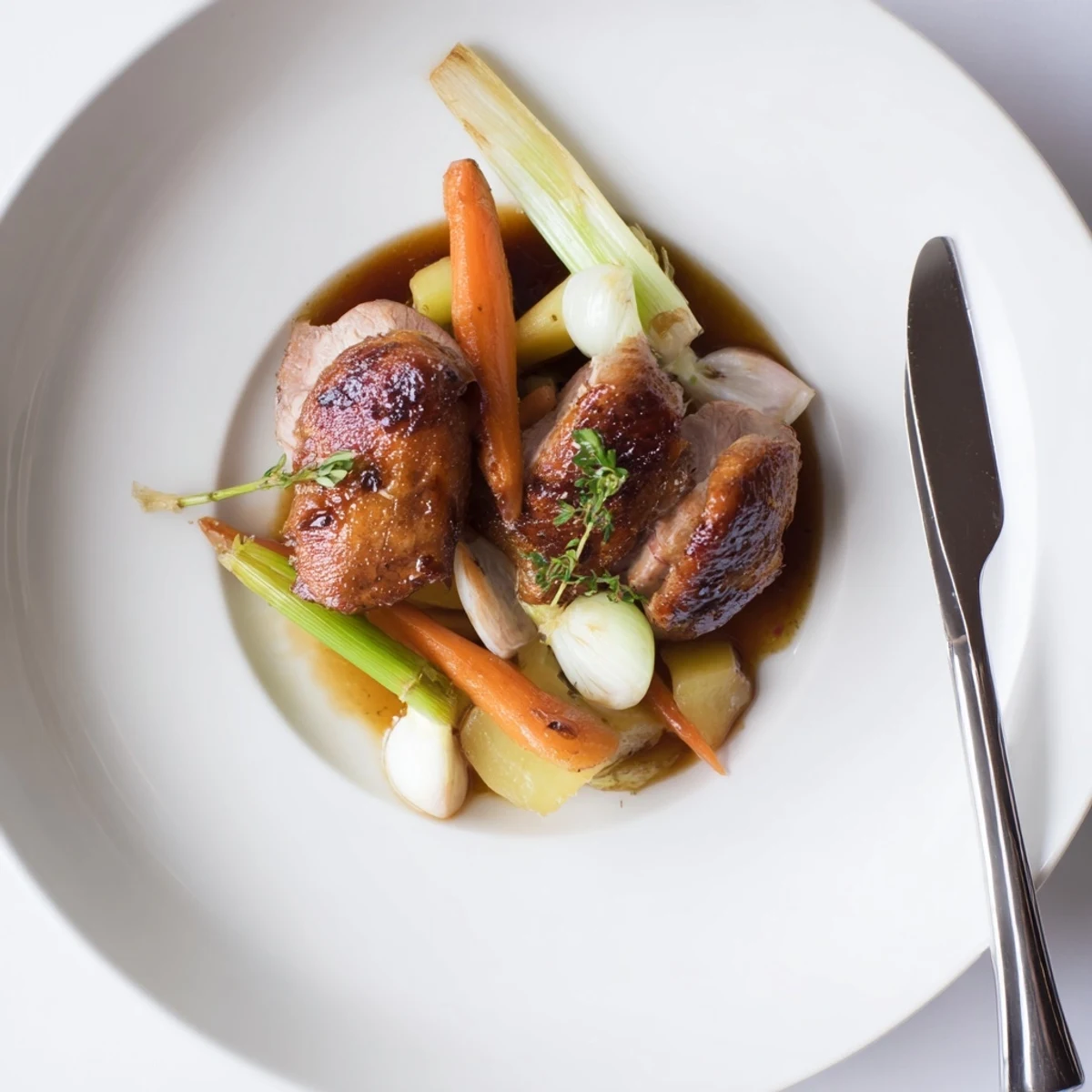
 Begin by patting the bird dry and seasoning well, then sear in a heavy pot to render fat and build color. Sauté carrots, parsnips, leeks, onion and garlic, deglaze with white wine, add stock and herbs, nestle the bird atop the vegetables and braise covered for about 1½ hours. Finish uncovered at high heat to crisp the skin, rest, carve and serve with the braised vegetables and pan juices. Total time roughly 2¼ hours; serves four.
The sound of duck fat sizzling in a Dutch oven is one of those kitchen noises that makes everyone wander in and ask what is for dinner. My neighbor actually leaned over the fence once asking if I was running a restaurant. There is something deeply satisfying about the transformation that happens when a whole duck goes from pale and floppy to burnished and fragrant over the course of a lazy afternoon.
I made this for a rainy Saturday dinner with friends who claimed they did not like duck and by the end of the evening they were scraping the last of the braised vegetables from the pot with pieces of bread. The parsnips had absorbed so much of the rich cooking liquid that they practically dissolved on the tongue. Nobody talked much during the main course and I took that as the highest compliment.
Ingredients
- Whole duck (about 4 to 5 lbs), trimmed: Ask your butcher to remove excess fat and giblets since this saves you time and makes searing much cleaner.
- Kosher salt and black pepper: Season more generously than you think because duck skin needs that assertive edge.
- Carrots and parsnips, chunked: Cut them into similar sized pieces so they finish cooking at the same rate and hold their shape during the long braise.
- Leeks (white and light green only), sliced: Rinse them thoroughly since hidden grit between the layers will ruin an otherwise silky sauce.
- Yellow onion, quartered: Leave the root end attached when quartering so the pieces stay intact rather than falling apart during braising.
- Celery stalks and smashed garlic: Smashing the garlic releases more flavor than mincing and you can simply push it aside if you do not want to eat it whole later.
- Olive oil: Just a couple tablespoons since the duck will render plenty of its own fat as it sears.
- Dry white wine: Something you would actually drink since the flavor concentrates as it reduces and any harshness in the wine will amplify.
- Low sodium chicken stock: Low sodium gives you control over the final seasoning since regular stock can make the braising liquid overwhelmingly salty after reduction.
- Fresh thyme, rosemary, and a bay leaf: Fresh herbs make a noticeable difference here because their oils perfume the entire pot during the long oven braise.
- Fresh parsley, chopped (optional): A handful at the end cuts through the richness with a flash of green freshness.
Instructions
- Get the oven ready:
- Preheat to 350F and make sure your rack is positioned in the lower third of the oven so the Dutch oven fits comfortably with room for heat to circulate.
- Prep and season the duck:
- Pat the duck thoroughly dry with paper towels then season inside and out with salt and pepper, getting into every crevice and the cavity.
- Sear the duck to build flavor:
- Heat olive oil in your Dutch oven over medium high heat until it shimmers, then place the duck breast side down and let it sear undisturbed for 5 to 7 minutes until the skin turns deeply golden and crisp, flip and brown the other side for another 5 minutes, then remove and set aside.
- Manage the rendered fat:
- Pour off all but about two tablespoons of the rendered duck fat from the pot and save it in a jar in the fridge because it is liquid gold for roasting potatoes later.
- Bloom the vegetables:
- Add all the prepared vegetables and garlic to the pot and sauté for 7 to 8 minutes, letting them pick up some color and begin to soften while scraping up any fond stuck to the bottom.
- Deglaze with wine:
- Pour in the white wine and use a wooden spoon to scrape up every last browned bit from the bottom of the pot, then let the wine reduce by half which should take about 2 to 3 minutes and your kitchen will smell incredible.
- Braise low and slow:
- Nestle the duck back into the pot on top of the vegetables, pour in the chicken stock, tuck in the herbs and bay leaf, cover with a tight lid, and transfer to the oven for one and a half hours, basting the duck with the braising liquid once at the halfway mark.
- Crisp the finish:
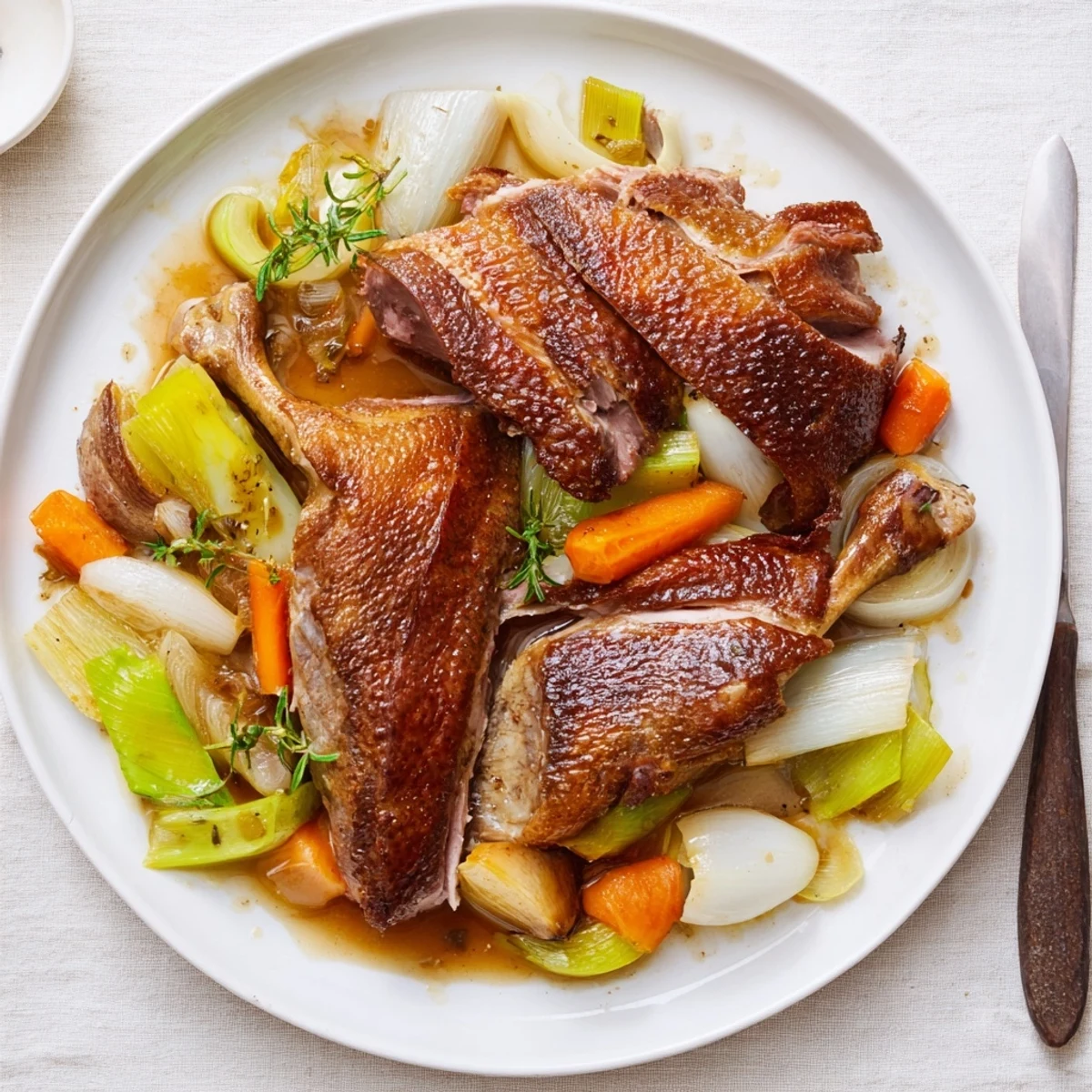
- Remove the lid and crank the oven up to 425F, then roast uncovered for 20 minutes until the duck skin puffs and turns beautifully crisp while the sauce reduces and concentrates.
- Rest and serve:
- Transfer the duck to a cutting board and let it rest for 10 minutes before carving, then serve over the braised vegetables with ladles of the cooking juices and a scatter of fresh parsley.
 Pin this
 There was a moment during that dinner when the conversation stopped entirely and the only sound was contented chewing and the clink of wine glasses being refilled. That is when a recipe graduates from something you tried once to something you will make for years.
Choosing the Right Wine for Braising
A Loire Valley Chenin Blanc brings bright acidity and subtle orchard fruit notes that cut through the richness of duck perfectly. A light Pinot Noir works beautifully too if you prefer a red wine braise with deeper berry undertones. The key is avoiding anything too oaky or heavily oaked chardonnay because those bitter tannins concentrate during reduction and can make the sauce taste chalky and harsh.
Getting the Crispiest Skin Possible
Parboiling the duck for just a few minutes before roasting is a restaurant trick that tightens the skin and renders a surprising amount of subcutaneous fat. After parboiling, pat it bone dry and let it sit uncovered in the fridge for a few hours or overnight so the surface dries out completely. That extra step takes some planning but the payoff is skin that shatters like glass when you bite into it.
Making It Your Own
Root vegetables are endlessly forgiving in a braise so feel free to swap in turnips, rutabaga, sweet potatoes, or quartered small potatoes depending on what looks best at the market. The technique stays the same no matter what you tuck underneath the duck.
- Throw in a handful of whole pearl onions during the last 30 minutes for a classic French touch.
- A tablespoon of whole grain mustard stirred into the finished braising liquid makes a surprisingly elegant quick sauce.
- Always taste the sauce before serving and adjust with salt, pepper, or a squeeze of lemon juice since the flavors mellow as it sits.
 Pin this
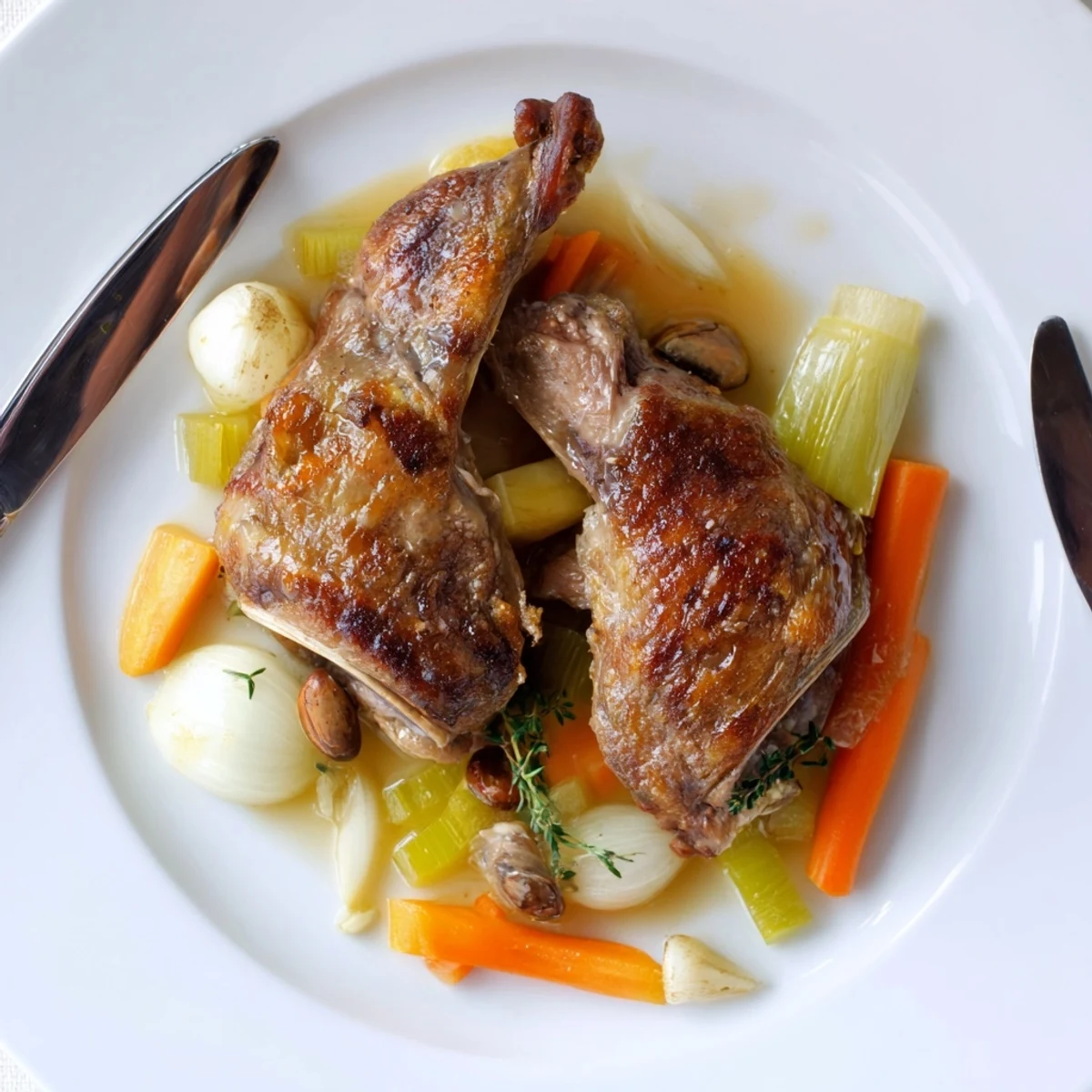
 Cooking a whole duck feels like an event worth gathering people around the table for. Serve it with good wine and crusty bread and let the evening unfold at its own pace.
Recipe FAQs
- → How do I get the skin extra crispy?
-
Dry the skin thoroughly, render most fat by searing breast-side down, remove excess fat before braising, then finish uncovered at high heat for 20 minutes to crisp and brown the skin.
- → Can I swap vegetables if I don't have parsnips?
-
Yes. Substitute turnips, potatoes or rutabaga; choose sturdy root vegetables that hold up to long, moist cooking and absorb the braising flavors.
- → What wine works best for deglazing and pairing?
-
Use a dry white like Chenin Blanc to deglaze; for pairing, a Loire Chenin or a light Pinot Noir complements the richness without overpowering the meat.
- → How do I make a quick pan sauce from the braising juices?
-
Skim excess fat, reduce the strained braising liquid over medium-high heat until slightly thickened, whisk in a knob of butter off heat for gloss, and season to taste.
- → Is parboiling the duck necessary?
-
Parboiling is optional; a brief parboil can help tighten skin for extra crispness, but thorough searing and finishing in high heat achieve similar results.
- → How should leftovers be stored and reheated?
-
Cool quickly, refrigerate in an airtight container up to 3 days. Reheat gently in a low oven to preserve texture; refresh the skin under a hot broiler briefly if needed.