
 Pin this
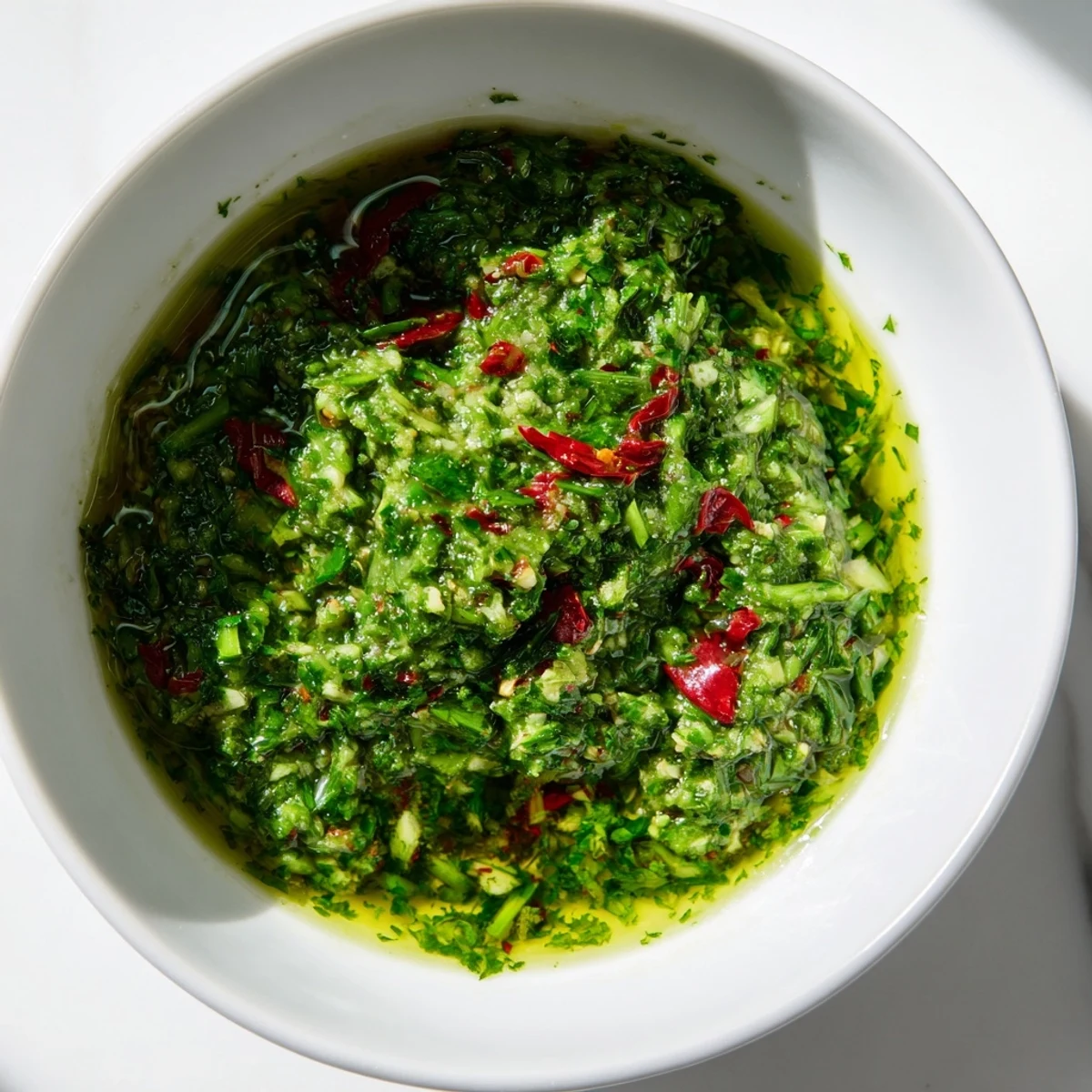
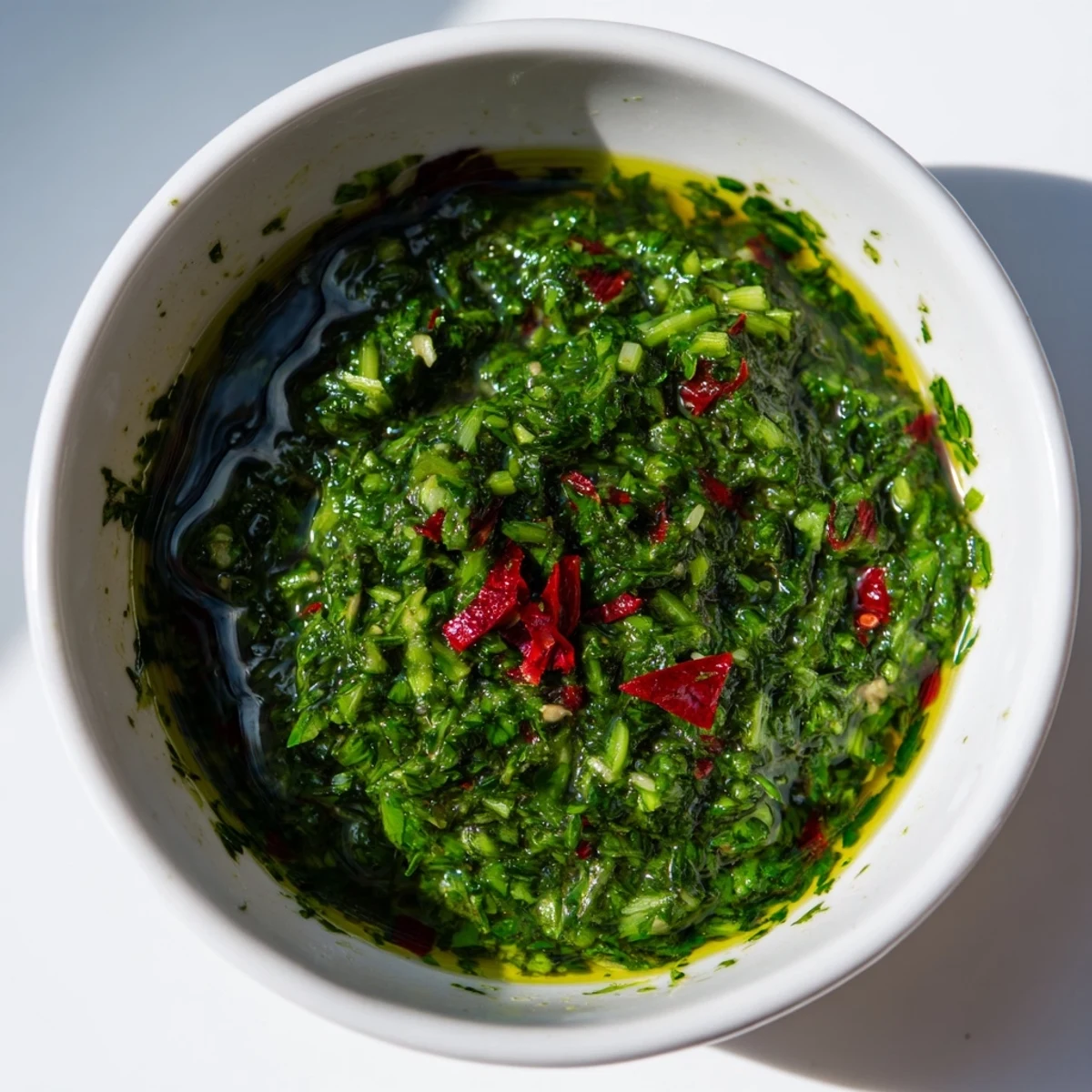
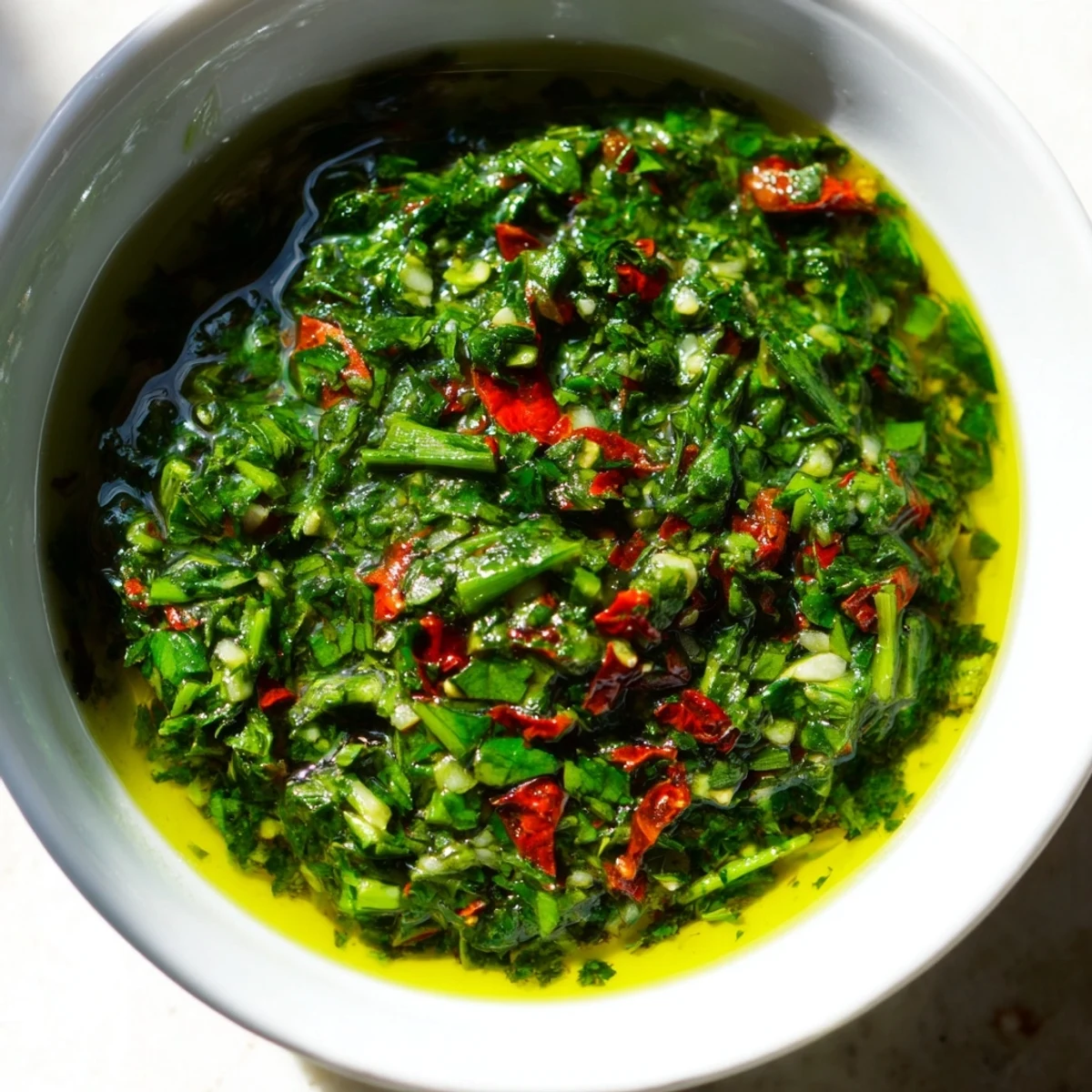
 This vibrant chimichurri transforms the classic Argentinian sauce with the unique flavor of garlic scapes—those curly green shoots from hardneck garlic plants. The combination of fresh parsley, cilantro or oregano, shallots, and red wine vinegar creates a bright, herbaceous condiment that cuts through rich grilled meats while complementing lighter fare like seafood and vegetables.
Ready in just 10 minutes with no cooking required, this sauce comes together quickly in a food processor. The garlic scapes provide a milder, fresher garlic flavor compared to cloves, while the fresh herbs bring garden-f brightness. Red wine vinegar and lemon juice add the perfect tangy balance to the rich olive oil base.
This versatile sauce keeps for up to three days in the refrigerator, developing even deeper flavors as it sits. It's excellent brushed onto grilled meats during the final minutes of cooking, drizzled over roasted potatoes, or served as a dipping sauce for crusty bread. The texture should remain slightly chunky rather than completely smooth for the most authentic experience.
The first time I encountered garlic scapes at the farmers market, I had no idea what those curly green shoots were. The farmer told me they're the flower buds from garlic plants, harvested to encourage bigger bulb growth. I bought a bundle on impulse and threw them into everything that week, but this chimichurri became the revelation that made me an annual scape fanatic.
Last summer I made a double batch for a backyard barbecue and watched my friend's skeptical expression turn to pure delight after his first bite. He asked for the jar to take home, and now we have a standing agreement that I bring chimichurri to every gathering. Something about the bright, punchy flavors just makes people happy.
Ingredients
- Garlic scapes: These have a milder, sweeter garlic flavor than bulbs and add beautiful texture to the sauce
- Fresh parsley and cilantro or oregano: The herb foundation that gives chimichurri its signature vibrant green color and fresh taste
- Shallot: Provides a subtle, sweet onion backdrop that bridges the gap between garlic and herbs
- Red wine vinegar and lemon juice: The essential acid duo that brightens all the rich, grilled flavors this sauce will accompany
- Extra virgin olive oil: Use the good stuff here since it carries half the flavor and creates that luxurious mouthfeel
Instructions
- Prep your aromatics:
- Roughly chop the garlic scapes, parsley, cilantro or oregano, shallot, and chili if using. No need to be too precise since everything gets blitzed anyway.
- Build the base:
- Toss all those chopped herbs and aromatics into your food processor or blender. Pulse until they're finely chopped but not completely pulverized you want some texture remaining.
- Add the liquids and seasonings:
- Pour in the olive oil, red wine vinegar, lemon juice, salt, and pepper. Pulse again until everything comes together into a thick, vibrant green sauce. It should look chunky and gorgeous, not smooth like pesto.
- Adjust the consistency:
- If the sauce seems too thick, add a tablespoon of water and pulse to combine. Give it a taste and tweak the salt, pepper, or acid until it sings.
 Pin this
 My partner now requests this sauce on everything from scrambled eggs to roasted sweet potatoes. It's become the condiment that rescues boring meals and makes special ones unforgettable. There's something magical about having a jar of bright green sauce ready in the fridge.
Making It Your Own
I've experimented with swapping in different herbs depending on what's growing in the garden or wilting in the crisper drawer. Sometimes all parsley works beautifully, other times half basil creates a completely different vibe. The ratios are forgiving as long as you keep that fresh herb foundation strong.
Perfect Pairings
While this sauce was born for grilled steaks and lamb chops, I've discovered it creates instant magic with roasted vegetables, grain bowls, and even as a sandwich spread. The acid cuts through rich foods while the herbs brighten lighter ones. It's essentially a universal flavor enhancer.
Storage & Make Ahead Wisdom
This chimichurri actually tastes better after a few hours in the fridge as the flavors meld and deepen. The color will darken slightly, which is completely natural. Just bring it to room temperature before serving and give it a good stir to reincorporate any oil that may have separated.
- Make a double batch and freeze half in ice cube trays for instant flavor bombs later
- Use any leftover sauce as a marinade for chicken or tofu before grilling
- If it thickens in the fridge, whisk in a little more oil or water before serving
 Pin this
 Once you start keeping chimichurri in your refrigerator rotation, you'll wonder how you ever lived without it. Simple, fresh, and endlessly versatile.
Recipe FAQs
- → What are garlic scapes?
-
Garlic scapes are the curly green flower shoots that emerge from hardneck garlic plants in early summer. They have a mild, fresh garlic flavor that's less pungent than garlic cloves, with a texture similar to asparagus or green beans. Look for them at farmers markets from late spring through early summer.
- → Can I substitute regular garlic?
-
Yes, you can substitute 2-3 cloves of fresh garlic for the garlic scapes. The flavor will be stronger and more pungent than using scapes, so you may want to start with less and adjust to taste. Keep in mind the texture will also be slightly different without the fibrous quality of scapes.
- → How long does this chimichurri keep?
-
This chimichurri sauce will stay fresh for up to 3 days when stored in an airtight container in the refrigerator. The herbs may oxidize slightly and darken over time, but the flavor remains excellent. For best results, bring the sauce to room temperature 15-20 minutes before serving.
- → What does chimichurri pair well with?
-
Chimichurri is incredibly versatile and pairs beautifully with grilled steak, flank steak, or skirt steak. It also complements chicken thighs, pork tenderloin, grilled fish like salmon or halibut, shrimp, and portobello mushrooms. Try it drizzled over roasted potatoes, grilled zucchini, or as a sandwich spread.
- → Can I make this without a food processor?
-
Absolutely. Finely chop all the herbs, garlic scapes, shallot, and chili by hand, then whisk in the oil, vinegar, and lemon juice. The traditional method actually produces a chunkier, more rustic texture that many prefer. Just ensure everything is minced very finely for the best consistency.
- → Is there a difference between using cilantro or oregano?
-
Cilantro creates a brighter, more citrus-forward chimichurri with a slight Latin American influence. Oregano yields a more traditional Argentinian flavor profile with earthier, woodsy notes. Both work beautifully, so choose based on your preference or what you have available. You can also use a mix of both herbs.