
 Pin this
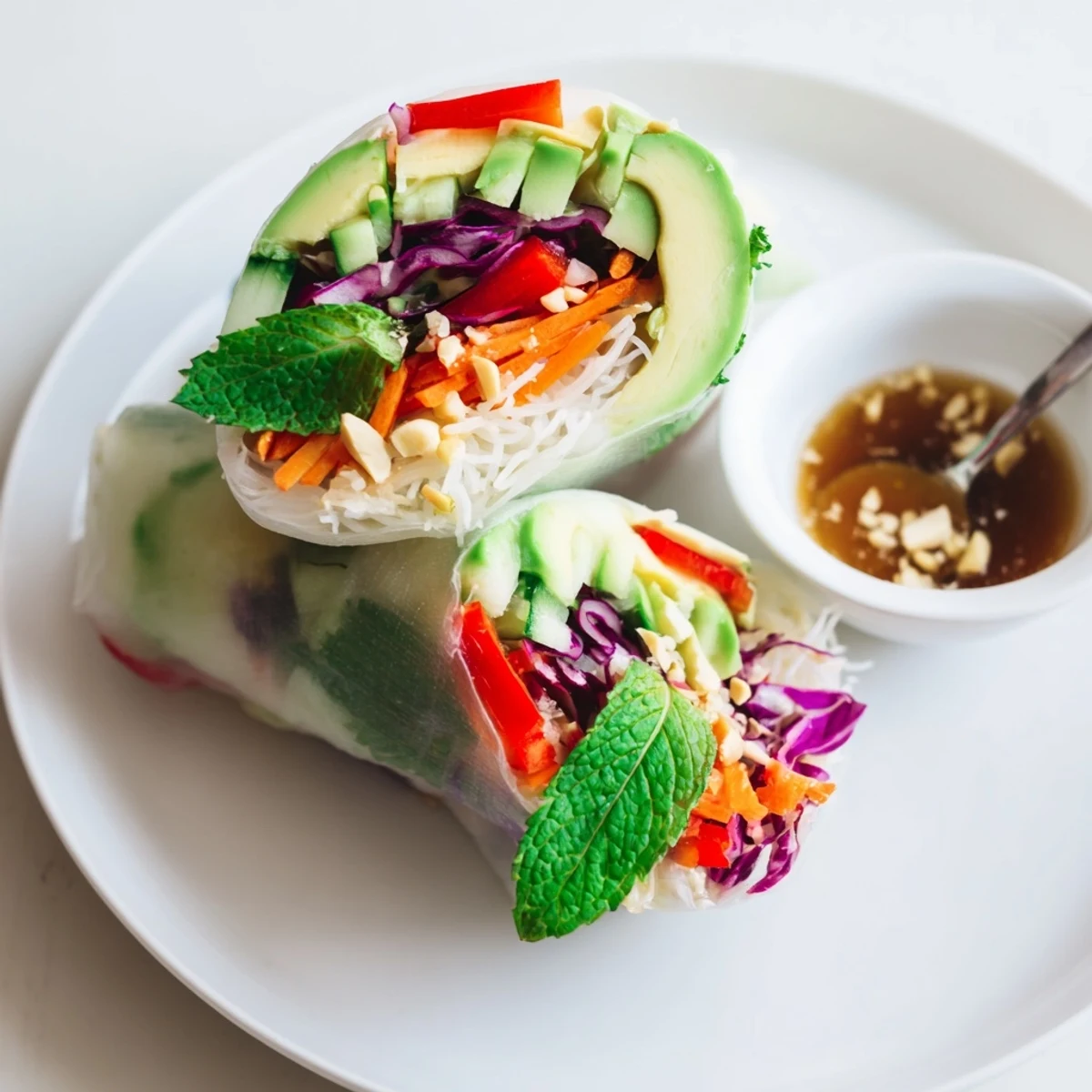
 These gluten-free spring rolls layer julienned carrot, cucumber, red bell pepper, shredded cabbage, avocado and fresh herbs with softened rice vermicelli inside rice paper wrappers. Soak wrappers briefly until pliable, assemble compactly and roll tightly to seal. Whisk tamari, rice vinegar, maple, sesame oil, ginger and garlic for a bright dipping sauce. Best served immediately; store rolls covered with a damp towel up to a few hours.
The summer my garden exploded with vegetables, I stood at the kitchen counter staring at a pile of carrots and cabbage wondering what on earth to do with all of it. Spring rolls had always intimidated me, those translucent wrappers seeming to require some ancient art I never learned. But desperation and an overabundance of mint changed everything. That first messy attempt turned into a weekly ritual I still crave when the weather turns warm.
My neighbor dropped by unannounced one afternoon while I was elbow deep in rice paper and immediately declared she could not eat anything so healthy looking. Two rolls later she was asking for the recipe and rummaging through my fridge for extra peanut sauce.
Ingredients
- 1 medium carrot, julienned: Cut them as thin as you can manage because slender strips fold beautifully inside the rolls without tearing the delicate wrappers.
- 1/2 cucumber, julienned: English cucumber works best here since the seeds are minimal and the skin stays tender.
- 1 red bell pepper, julienned: The sweetness balances the earthy herbs and adds a bright pop of color that makes each roll look like a tiny stained glass window.
- 1 cup red cabbage, thinly shredded: This gives you that satisfying crunch factor that keeps every bite interesting.
- 1 avocado, sliced: Add this last during assembly because it acts like creamy glue holding everything together inside the roll.
- 1 cup fresh mint leaves: Do not skip this because the mint is what makes these taste distinctly fresh and not just like a salad wrapped in paper.
- 1 cup fresh cilantro leaves: Paired with the mint, cilantro creates an herb combination that smells like a Vietnamese garden.
- 8 gluten free rice paper wrappers: Check the label carefully because not all brands are certified gluten free even though rice is naturally safe.
- 100 g rice vermicelli noodles: These provide substance and bulk so your rolls actually feel like a meal and not just a crunchy snack.
- 3 tbsp gluten free soy sauce or tamari: Tamari tends to be richer and smoother than regular soy sauce, which makes the dipping sauce deeper in flavor.
- 2 tbsp rice vinegar: The gentle acidity here brightens everything and keeps the sauce from feeling too heavy or salty.
- 1 tbsp maple syrup or honey: A tiny bit of sweetness rounds out the sauce and balances the salty soy and sharp ginger perfectly.
- 1 tsp toasted sesame oil: Just a teaspoon transforms the entire sauce with that nutty, aromatic depth that makes people ask what your secret is.
- 1 tsp grated fresh ginger: Fresh ginger matters here because the powdered version tastes flat and dusty by comparison.
- 1 clove garlic, minced: One clove is enough to add warmth without overpowering the delicate flavors inside the rolls.
- 1 tbsp chopped peanuts (optional): Leave these out for nut free needs, but if you can manage them, the crunch on top is wonderful.
Instructions
- Cook the noodles:
- Prepare the rice vermicelli according to the package directions, drain them well, and rinse under cold water so they stop cooking and do not turn gummy.
- Prep the vegetables:
- Juliienne and slice everything as uniformly as possible, then arrange it all on a large platter or cutting board like an assembly line so rolling goes smoothly.
- Soften the wrappers:
- Fill a wide shallow bowl with warm water and dip each rice paper wrapper for about ten to fifteen seconds until it feels pliable but still has some structure left.
- Build the rolls:
- Lay the softened wrapper flat, place a modest amount of noodles, vegetables, and herbs along the lower third, then tuck avocado slices on top so they stay nestled inside.
- Roll them tight:
- Fold the left and right sides inward over the filling, then roll upward from the bottom like a small burrito, keeping gentle pressure so everything stays snug.
- Mix the dipping sauce:
- Whisk together the tamari, rice vinegar, maple syrup, sesame oil, ginger, garlic, and chopped peanuts in a small bowl until everything blends into a smooth sauce.
- Serve immediately:
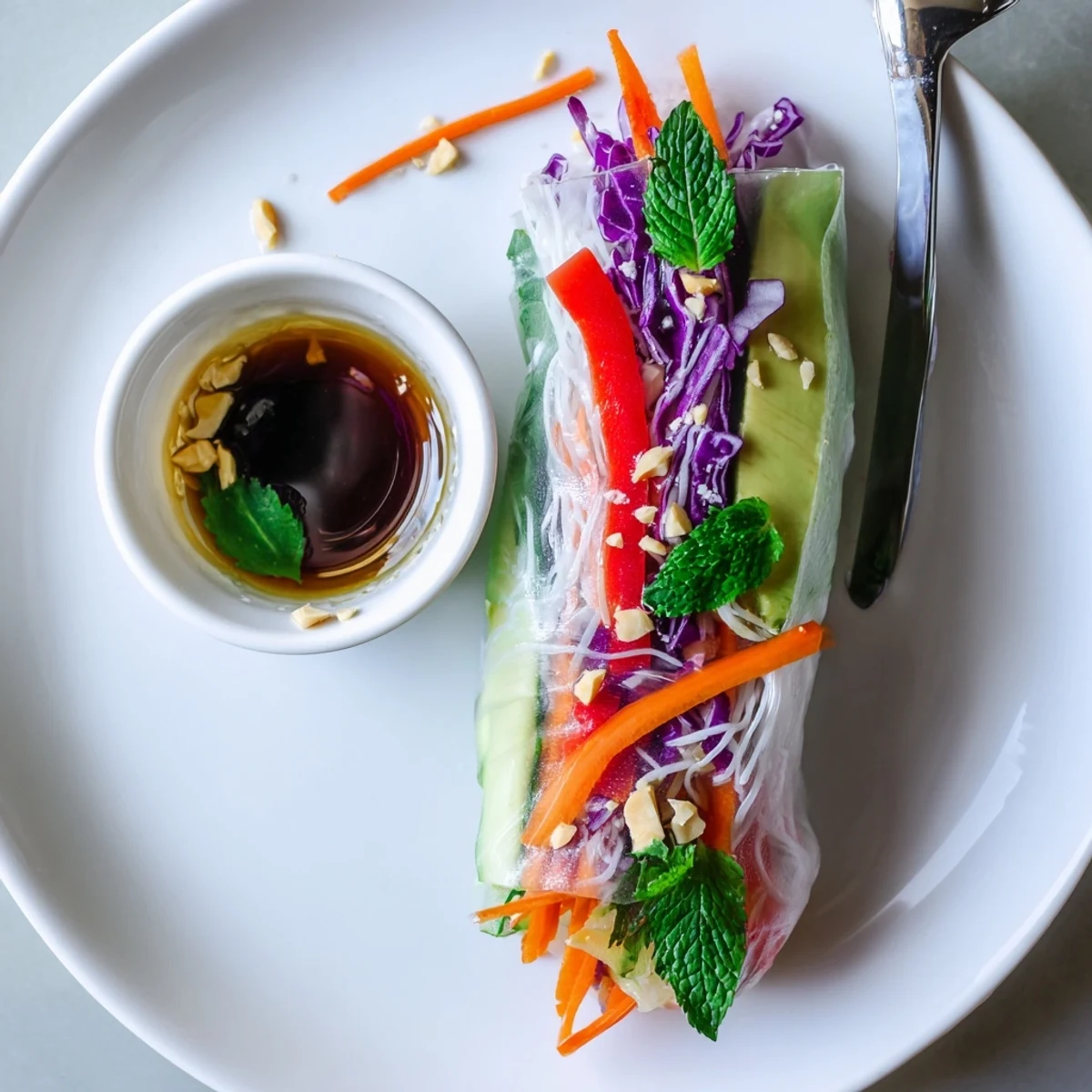
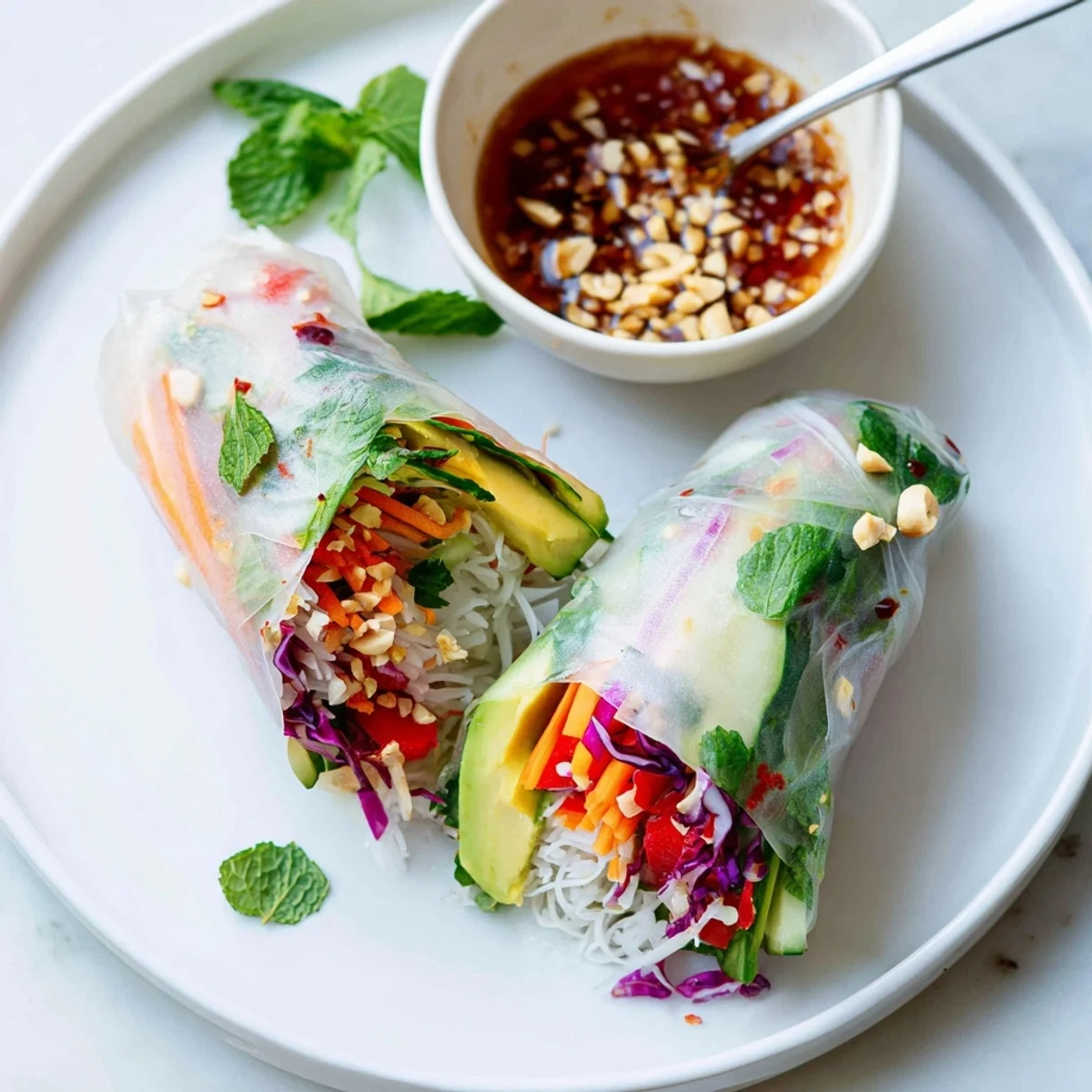
- Arrange the rolls on a plate with the sauce alongside and watch them disappear because these are honestly best the moment they are made.
 Pin this
 There is something meditative about the repetitive motion of dipping, filling, and rolling that slows down my entire evening.
What to Serve Alongside
A simple miso soup or a bowl of edamame turns these rolls into a complete meal without much extra effort. I have also served them alongside grilled chicken skewers at a backyard gathering, and the combination disappeared faster than anything else on the table.
Making Ahead and Storing
These rolls are at their absolute best within the first hour of making them, but life does not always cooperate with ideal timing. If you need to prepare them ahead, cover the tray tightly with a damp paper towel and plastic wrap, then refrigerate for up to four hours. The wrappers will toughen slightly overnight, so I would not recommend saving them beyond a single day.
Customizing Your Rolls
Think of this recipe as a template rather than a rulebook because almost anything crisp and fresh works inside a rice paper wrapper. Tofu strips, cooked shrimp, or even leftover roasted chicken turn this snack into something heartier.
- Lettuce leaves or bean sprouts add an extra layer of crunch that makes each bite more satisfying.
- Sriracha drizzled inside the roll or mixed into the dipping sauce brings welcome heat for anyone who likes a kick.
- Always double check that your rice paper and soy sauce are certified gluten free because cross contamination can hide in unexpected places.
 Pin this
 Share these with someone you love, or sit alone on the porch with a plate of them and call it a perfect summer evening. Either way, they will become part of your story too.
Recipe FAQs
- → How long should I soak rice paper wrappers?
-
Submerge each wrapper in warm water for 10–15 seconds until pliable but not mushy. A quick test: it should bend easily without tearing; any longer and it becomes fragile to roll.
- → How can I keep rolls from becoming soggy?
-
Pat all vegetables dry and keep fillings compact. Roll tightly and serve right away; if holding briefly, place rolls under a damp towel and refrigerate to slow moisture transfer.
- → What are good protein additions?
-
Add firm tofu (pan-seared or baked) or cooked shrimp for extra protein. Slice protein thinly and dry well before adding to prevent excess moisture inside the roll.
- → How can I make the dipping sauce nut-free?
-
Omit chopped peanuts and use sesame seeds if you want a nut-free crunch. Ensure tamari or soy sauce and any packaged ingredients are certified nut-free.
- → Can I substitute vegetables without changing texture?
-
Yes — use thinly sliced lettuce, bean sprouts or julienned daikon for crunch. Keep cuts uniform and thin so they layer neatly and roll smoothly.
- → How should I store leftovers?
-
Store rolls in a single layer covered with a damp towel in an airtight container in the fridge for a few hours. Avoid long storage; rice paper will eventually firm and lose its fresh bite.