
 Pin this
 This Korean ground beef bowl brings together rich, savory flavors in a quick 25-minute meal. Lean ground beef is browned and simmered in a bold sauce made with soy sauce, brown sugar, sesame oil, garlic, ginger, and gochujang for a satisfying sweet-and-spicy kick.
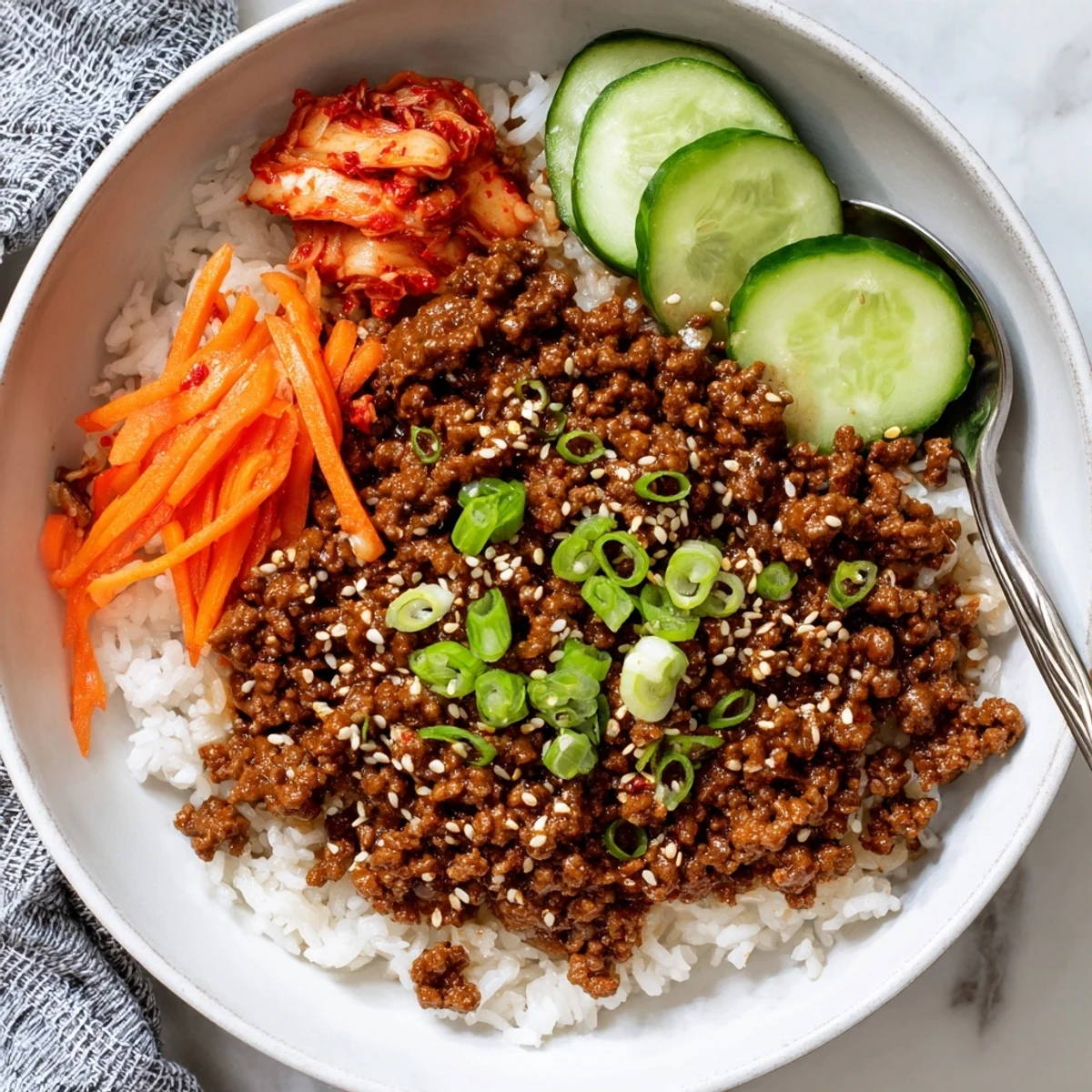
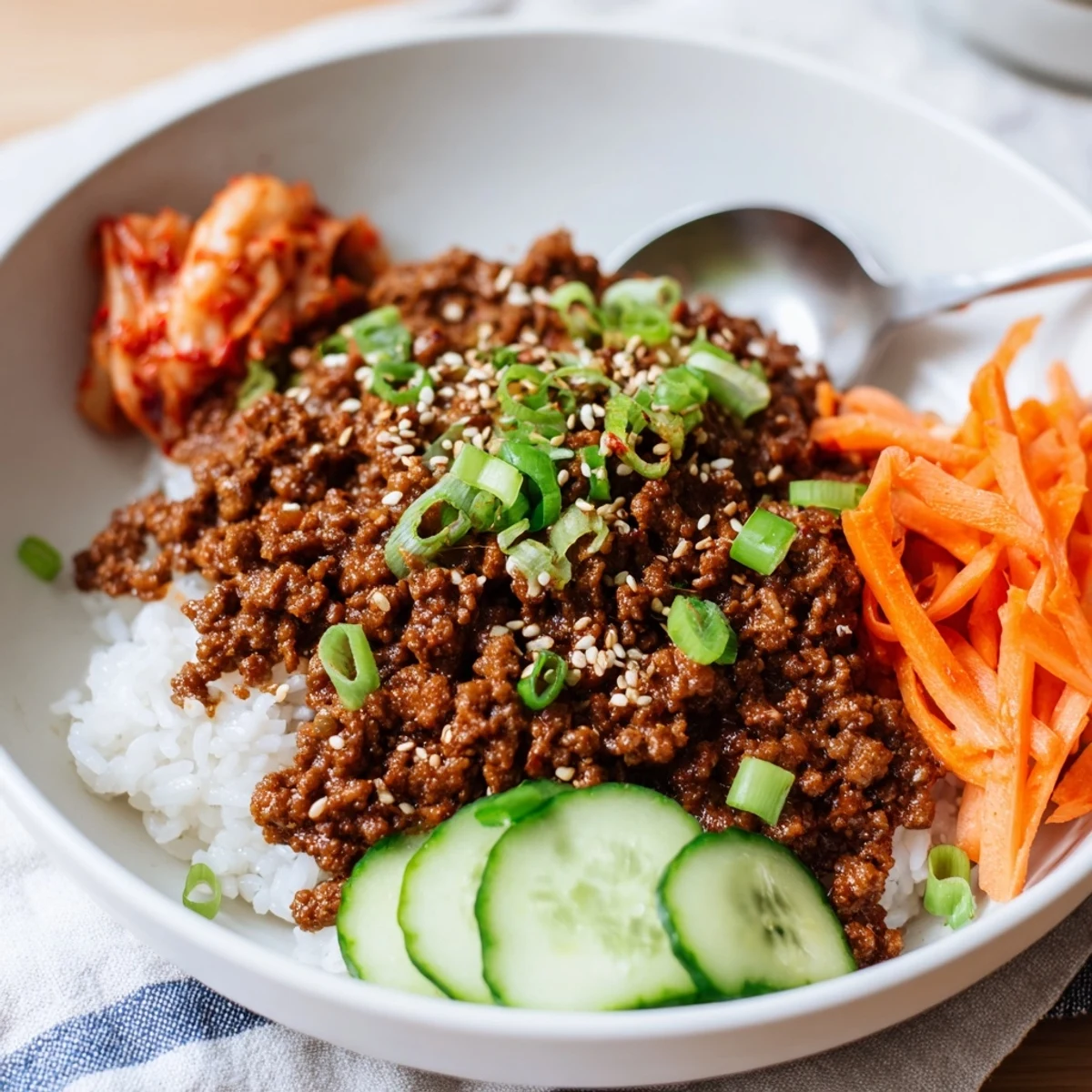
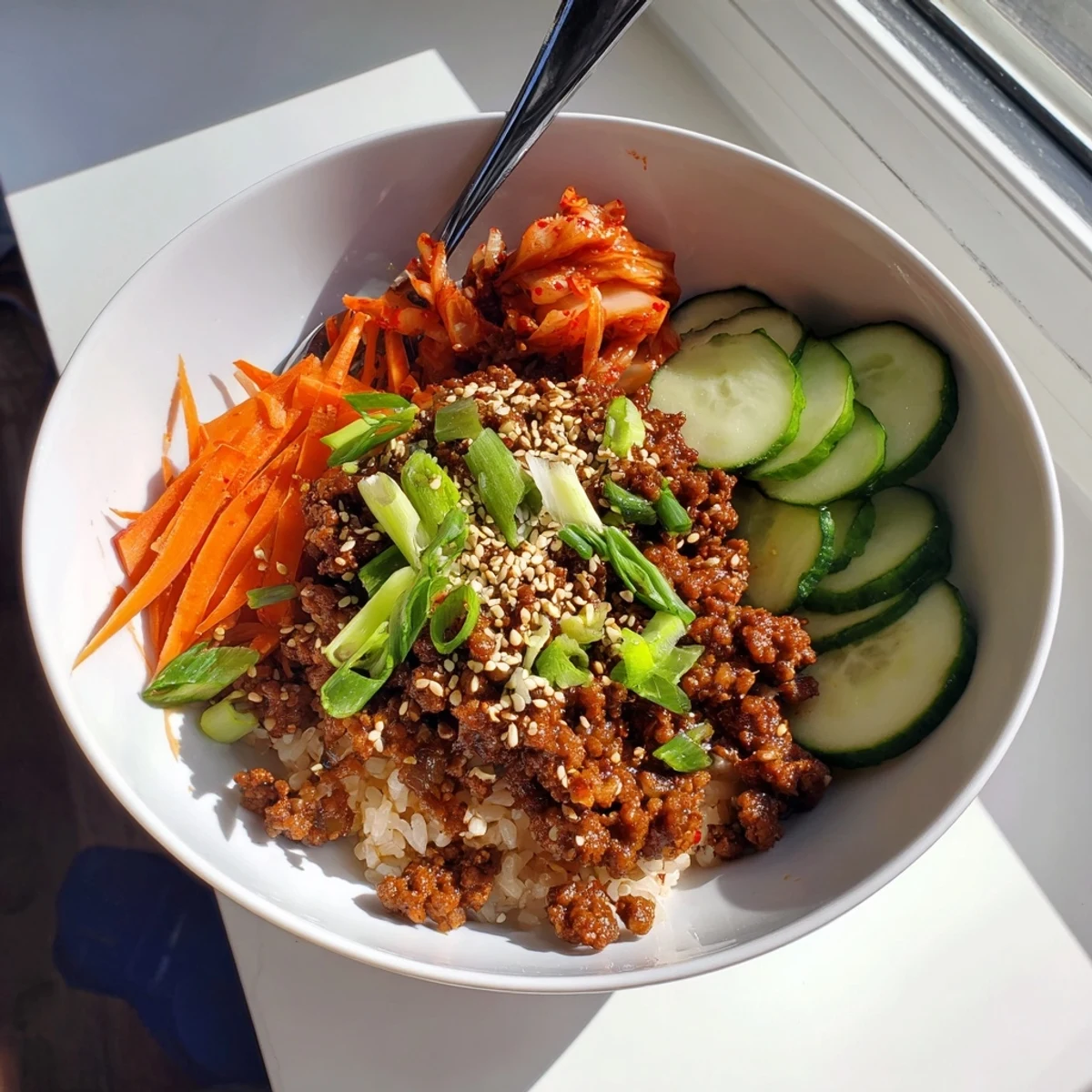
Served over fluffy jasmine or short-grain rice and finished with fresh garnishes like julienned carrot, cucumber, sliced green onions, and toasted sesame seeds. Add kimchi on the side for extra depth.
Easily customizable with ground chicken or turkey, adjustable heat levels, and gluten-free tamari. A perfect weeknight dinner for the whole family.
The sizzle of ground beef hitting a hot pan on a Tuesday evening is its own kind of therapy, and this Korean inspired bowl has rescued more weeknight dinners than I can count. My neighbor Mrs. Park once caught me hovering over her fence asking what that unbelievable smell was, and she laughed and handed me a jar of homemade gochujang through the chain link. That jar changed everything about how I cook ground beef forever.
I made this for my sister the night she moved into her first apartment, standing in a kitchen with exactly one working burner and a borrowed spatula. We sat on the floor eating off paper plates because the boxes with dishes had vanished somewhere between the truck and the doorstep, and she declared it the best housewarming dinner anyone had ever made her.
Ingredients
- 1 lb (450 g) lean ground beef: Lean is the move here because excess fat makes the sauce greasy instead of silky.
- 2 cups cooked jasmine or short grain rice: Short grain rice clings to the sauce beautifully, but jasmine works if that is what you have.
- 1/4 cup low sodium soy sauce: Regular soy sauce will overpower the balance of sweet and heat you are building.
- 2 tbsp brown sugar: This is what helps the sauce thicken and caramelize in those final minutes.
- 1 tbsp sesame oil: Toasted sesame oil is non negotiable for that deep nutty aroma.
- 3 cloves garlic, minced: Fresh garlic matters here because it blooms in the hot pan and becomes sweet and fragrant.
- 1 tbsp grated fresh ginger: Freeze your ginger and grate it straight from frozen for the finest texture.
- 1/2 to 1 tsp crushed red pepper flakes: Start with half a teaspoon and taste before adding more.
- 2 tsp rice vinegar: A small splash of acidity lifts the whole dish and cuts through the richness of the beef.
- 1 tbsp gochujang (optional): If you can find it, this Korean chili paste adds a fermented depth that nothing else can replicate.
- 2 green onions, sliced: Slice them on a sharp diagonal so they look as good as they taste.
- 1 tbsp toasted sesame seeds: Toast them in a dry pan for thirty seconds and watch them transform from bland to magical.
- 1 carrot, julienned: The crunch and sweetness are a perfect contrast to the saucy beef.
- 1 small cucumber, thinly sliced: Peel it or leave the skin on, either way it brings freshness to every bite.
- Kimchi (optional, for serving): A spoonful of tangy fermented cabbage on the side makes the whole meal feel complete.
Instructions
- Whisk the sauce together:
- In a small bowl, combine the soy sauce, brown sugar, sesame oil, minced garlic, grated ginger, red pepper flakes, rice vinegar, and gochujang if you are using it. Whisk until the sugar dissolves and the mixture looks glossy and unified.
- Brown the beef:
- Heat a large skillet over medium high heat and add the ground beef, breaking it apart with a spatula as it cooks. Let it develop some caramelized edges without stirring constantly, about five to seven minutes, then drain any excess fat.
- Coat with sauce:
- Pour the sauce over the browned beef and stir well so every crumb gets covered. Let it simmer for two to three minutes until the sauce reduces slightly and clings to the meat in a thick, glossy layer.
- Build your bowls:
- Divide the warm cooked rice among four bowls, creating a soft bed for the beef. Spoon the saucy ground beef mixture generously over each portion of rice.
- Finish with toppings:
- Scatter sliced green onions, toasted sesame seeds, julienned carrot, and thin cucumber slices over each bowl. Add kimchi on the side if you have it and serve right away while everything is hot and fresh.
 Pin this
 There was a rain soaked Saturday when my roommate and I ate this standing at the kitchen counter, neither of us willing to carry our bowls to the table because the smell was too distracting. We went back for seconds before the skillet had even cooled down.
Making It Your Own
Ground chicken or turkey works beautifully if you prefer something lighter, though you may need a splash of oil to keep it from drying out. For a gluten free version, swap the soy sauce for tamari and check the label on your gochujang since some brands sneak wheat in there.
Spice Is Personal
The beauty of this recipe is how easily the heat level adapts to whoever is sitting at your table. Half a teaspoon of red pepper flakes gives a gentle warmth, while a full teaspoon with a tablespoon of gochujang will make your lips tingle in the best way.
Serving and Storing
Leftovers keep well in an airtight container in the refrigerator for up to three days, though the rice will firm up and benefit from a splash of water before reheating. I often make a double batch of just the beef and sauce to keep on hand for quick lunches throughout the week.
- A fried egg on top turns this into something worthy of a weekend brunch.
- Reheat gently on the stove rather than the microwave for the best texture.
- Always taste for salt and spice before serving because components mellow as they sit.
 Pin this
 Some dinners are about showmanship, but this one is about comfort arriving fast when you need it most. Keep these ingredients in your rotation and you will never dread a weeknight again.
Recipe FAQs
- → Can I use ground chicken or turkey instead of beef?
-
Yes, ground chicken or turkey works well as a leaner alternative. Cook it the same way, breaking it apart until fully browned and no longer pink throughout.
- → How spicy is this Korean ground beef bowl?
-
The heat level is fully adjustable. Use 1/2 teaspoon of red pepper flakes for mild warmth, or increase to 1 teaspoon and add gochujang for a noticeably spicy kick.
- → Can I make this gluten-free?
-
Absolutely. Simply replace the soy sauce with tamari, which is gluten-free. Double-check that your gochujang label is also certified gluten-free.
- → What type of rice works best?
-
Short-grain white rice or jasmine rice are ideal choices. Short-grain rice gives an authentic Korean texture, while jasmine rice offers a lighter, fluffier base.
- → How should I store leftovers?
-
Store the beef mixture and rice separately in airtight containers in the refrigerator for up to 3 days. Reheat the beef in a skillet or microwave, and add fresh toppings before serving.
- → Is gochujang necessary for this dish?
-
Gochujang is optional but recommended. It adds authentic Korean depth and a fermented chili complexity that elevates the overall flavor beyond what chili flakes alone provide.