
 Pin this
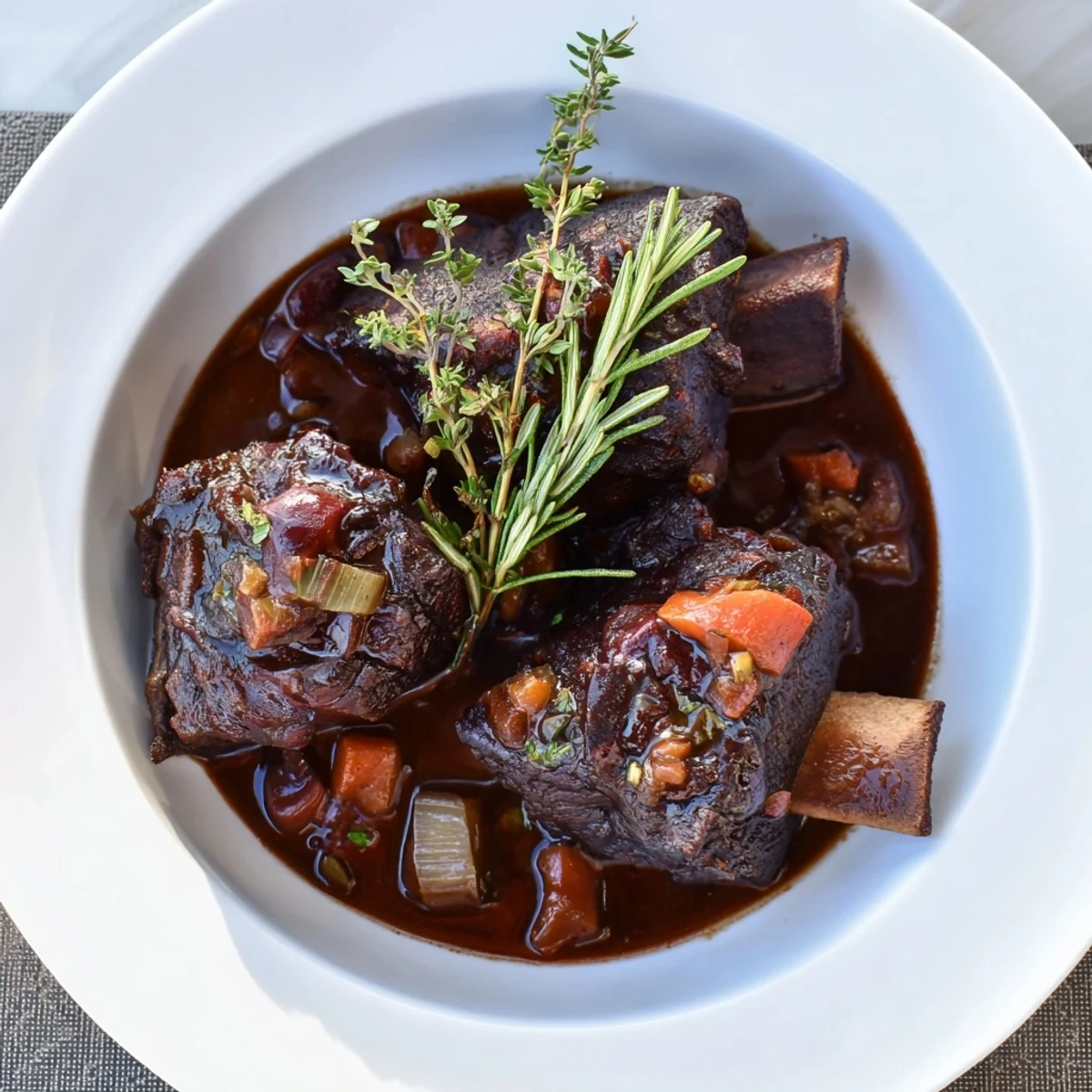
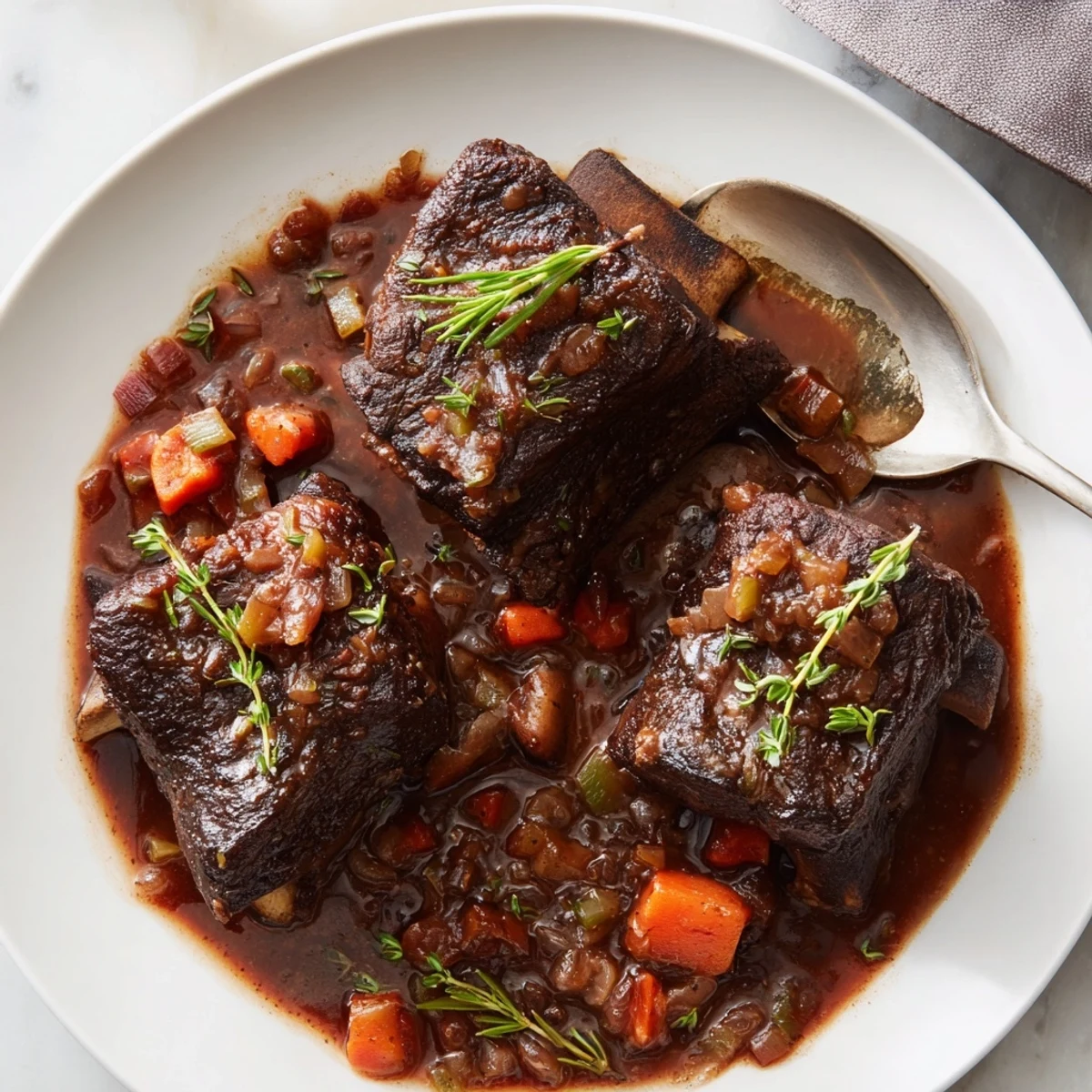
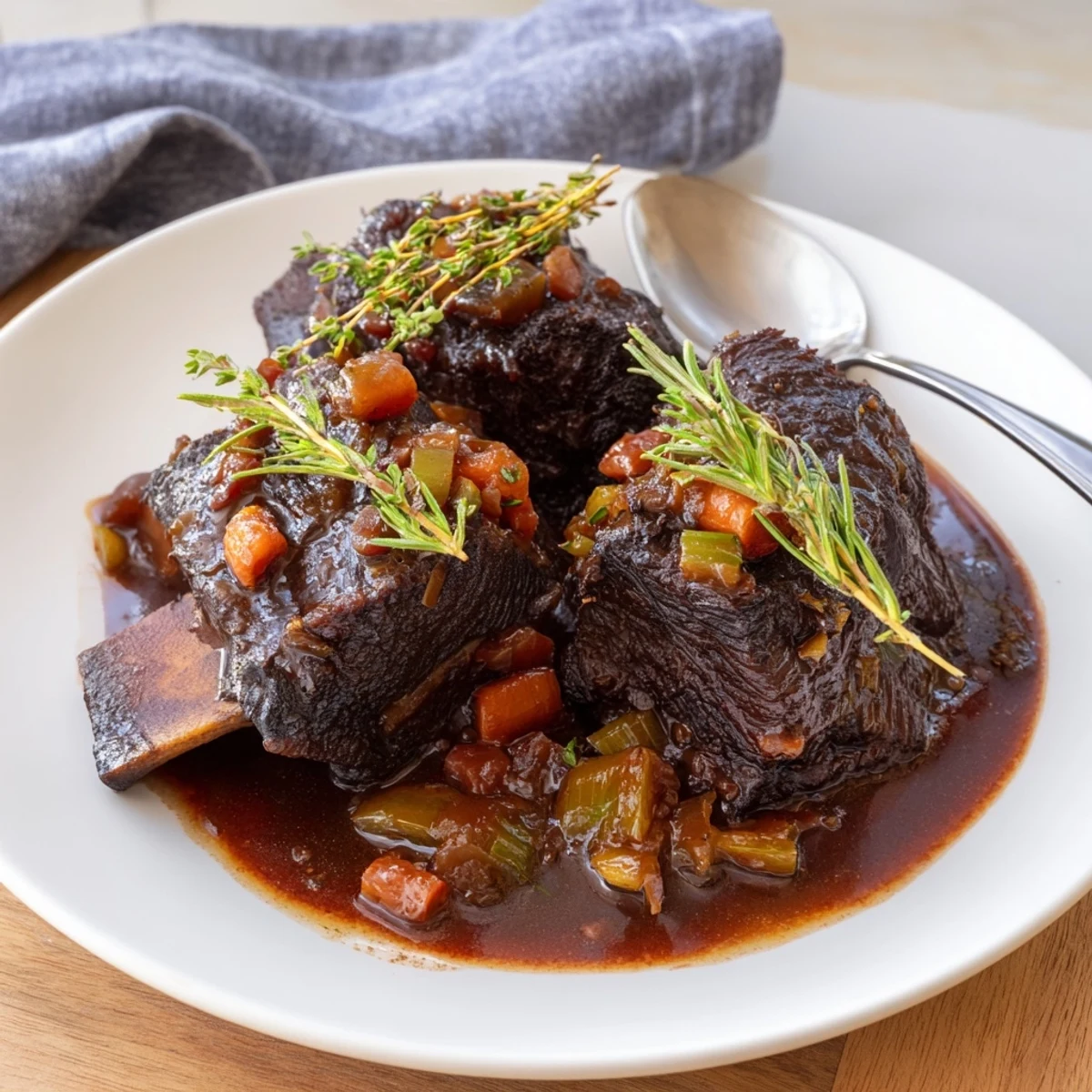
 These oven-braised beef short ribs are seared to a deep golden crust, then slowly cooked in a rich braising liquid of dry red wine, beef broth, and aromatic vegetables until fork-tender.
The low-and-slow oven method breaks down the connective tissue, resulting in meat that literally falls off the bone. Fresh thyme, rosemary, and bay leaves infuse the sauce with earthy, herbaceous depth.
Plan ahead for about 3 hours of total cooking time. The flavors improve dramatically when made a day in advance, making this an ideal make-ahead dish for gatherings.
The screen door slammed shut behind me as I carried a tray of these short ribs out to the back porch, the november air biting at my face while the steam curled upward like something alive.
My neighbor Dave wandered over mid braise, attracted by the smell drifting across the yard, and ended up staying for two hours.
Ingredients
- 4 lbs bone in beef short ribs: Bone in is non negotiable here because the marrow melts into the sauce and creates body you simply cannot fake.
- Salt and freshly ground black pepper: Season aggressively before searing because this is your only chance to get salt directly into the meat.
- 2 tbsp olive oil: A neutral oil works but olive oil adds a subtle fruitiness that rounds out the braise.
- 1 large onion, chopped: Cut it fairly large so it holds shape and slowly dissolves into sweetness over the long cook.
- 2 carrots, chopped: They contribute natural sweetness that balances the wine acidity perfectly.
- 2 celery stalks, chopped: Celery is the quiet backbone of aromatics so never skip it even if you think it does not matter.
- 4 garlic cloves, minced: Fresh garlic only because the jarred stuff turns bitter during long braising.
- 2 tbsp tomato paste: Browning it briefly builds a deep umami base that transforms the entire dish.
- 2 cups dry red wine: Use something you would actually drink because you can taste a bad wine after three hours of concentration.
- 2 cups beef broth: Low sodium lets you control salt levels throughout the cooking process.
- 2 sprigs fresh thyme: Fresh herbs are worth the splurge here since dried thyme can lean medicinal in a long braise.
- 2 sprigs fresh rosemary: A little goes a long way so two sprigs is plenty to perfume the whole pot.
- 2 bay leaves: Remove them before serving because nobody wants to bite into a hidden bay leaf.
Instructions
- Preheat and prepare:
- Set your oven to 325 degrees Fahrenheit and pat those ribs completely dry with paper towels before seasoning them generously on all sides.
- Build the crust:
- Heat olive oil in a Dutch oven over medium high heat until it shimmers, then sear the ribs on every side until you get a deep mahogany crust, roughly 3 to 4 minutes per side.
- Sweat the aromatics:
- Drop the onion, carrots, and celery into the same pot and let them cook in those rendered beef juices until softened and fragrant, about 5 minutes before adding the garlic for one final minute.
- Toast and deglaze:
- Stir in the tomato paste and let it cook until it darkens slightly, then pour in the entire bottle of red wine while scraping up every caramelized bit stuck to the bottom of the pot.
- Build the braise:
- Nestle the seared ribs back into the pot, pour in the beef broth, tuck in the herb sprigs and bay leaves, then bring everything to a gentle simmer on the stovetop.
- The long wait:
- Cover with a tight lid and slide the pot into the oven for 2.5 to 3 hours, checking near the end until a fork slides through the meat like it is cutting through warm butter.
- Finish the sauce:
- Lift the ribs out gently and strain the braising liquid, then let it settle so you can spoon off excess fat before reducing it on the stove until it coats the back of a spoon.
- Plate and pour:
- Arrange the ribs on warm plates or a platter with the vegetables and ladle that gorgeous sauce generously over everything.
 Pin this
 Dave sat at my kitchen table that night, sauce on his chin, declaring it the best thing he had eaten all year, and honestly I agreed with him.
Serving Suggestions
Mashed potatoes are the obvious move here but do not sleep on creamy polenta because it soaks up sauce like nothing else.
Make It Your Own
Toss a handful of halved cremini mushrooms in with the vegetables if you want an extra layer of earthy depth that pairs beautifully with the wine.
Getting Ahead
This dish is genuinely better on day two so plan accordingly and make it the night before for the best results.
- Reheat gently over low heat on the stove rather than the microwave so the meat stays tender.
- The fat solidifies on top when chilled, making it incredibly easy to lift off before reheating.
- Always taste the reheated sauce for salt because flavors shift and mellow overnight.
 Pin this
 Some dinners are worth the wait, and these ribs will remind everyone at your table exactly why slow food matters.
Recipe FAQs
- → What cut of beef short ribs works best for braising?
-
Bone-in beef short ribs are ideal for braising because the bone adds flavor and helps keep the meat tender during the long cooking process. Look for thick, meaty ribs with good marbling throughout.
- → Can I braise short ribs without red wine?
-
Yes, you can substitute the red wine with additional beef broth combined with a tablespoon of balsamic vinegar or lemon juice to add acidity. The dish will have a slightly different depth of flavor but will still be delicious.
- → How do I know when the short ribs are done braising?
-
The ribs are ready when the meat is fork-tender and easily pulls away from the bone. This typically takes 2.5 to 3 hours at 325°F. If the meat is still tough, continue braising in 30-minute increments until it reaches the desired tenderness.
- → What should I serve with braised beef short ribs?
-
Creamy mashed potatoes, polenta, or crusty bread are classic pairings that soak up the rich braising sauce. Roasted root vegetables or a simple green salad also complement the dish beautifully.
- → Can I make braised short ribs ahead of time?
-
Absolutely. In fact, the flavors deepen and improve after a night in the refrigerator. Let the ribs cool completely, store them in their sauce, and reheat gently on the stovetop over low heat until warmed through.
- → How do I thicken the braising sauce?
-
After removing the ribs, skim excess fat from the liquid and simmer the sauce on the stovetop until it reduces to your preferred consistency. You can also create a slurry with cornstarch and cold water if you want a thicker sauce quickly.