
 Pin this
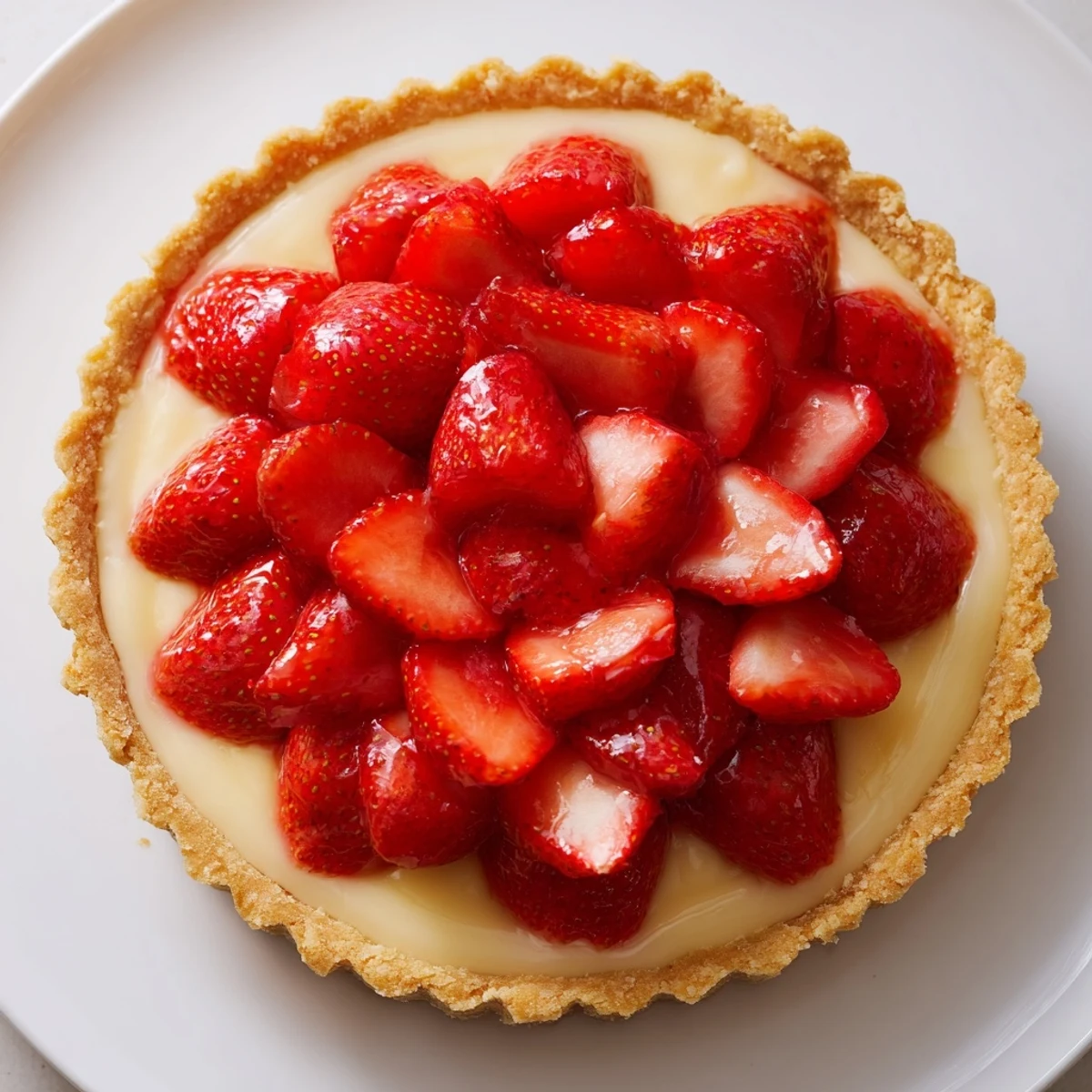
 Préparez une pâte sablée riche et croustillante, cuisez-la à blanc puis garnissez-la d'une crème pâtissière vanillée soyeuse. Disposez des fraises fraîches et nappez-les d'une confiture d'abricot chauffée pour un glaçage brillant. Comptez 30 min de préparation, 30 min de cuisson et environ 2 heures au total, incluant refroidissement et repos au frais. Astuce : filmez la crème au contact et ajoutez un zeste de citron pour de la vivacité.
One spring afternoon, as a basket of strawberries perfumed the kitchen, I decided to tackle the tarte aux fraises that had always intimidated me. The idea of making creamy, silky pastry cream and arranging glossy strawberries felt equal parts art and science. There was something almost meditative about the way flour dust clung to my hands and the hum of the oven filled the air. By the time the tart chilled, I was quietly thrilled by what patience (and a fair bit of cleaning up) could accomplish.
That first attempt, my roommate hovered hopefully nearby, pulled by the aroma of baking pastry—she insisted on ‘testing’ the crust scraps. We ended up laughing at our impromptu contest to slice the strawberries prettiest, and somehow more ended up in our mouths than on the tart. Even with a slightly askew fruit arrangement, our pride was unmistakable when the finished tarte made it to the table.
Ingredients
- Flour (250g): Essential for the crisp, buttery base—sifting it avoids lumps in the dough.
- Unsalted cold butter (125g): Using it straight from the fridge is the secret to tender, flaky pastry.
- Powdered sugar (80g): This fine sugar yields a melt-in-your-mouth crust and blends easily.
- Egg (1): Just one binds the pastry while keeping it rich.
- Pinch of salt: Understated, but it balances sweetness and boosts the butter flavor.
- Whole milk (500ml): For a creamy and delicate custard—don’t swap for skim.
- Vanilla bean or extract: Real vanilla makes the crème pâtissière sing; scrape those seeds if using a pod.
- Sugar (100g): Provides sweetness and silky texture to the cream.
- Egg yolks (4): They make the filling lush, golden, and velvety.
- Cornstarch (40g): Helps thicken the pastry cream quickly without curdling.
- Butter (30g): Stirred in at the end, it transforms the custard to ultimate silkiness.
- Fresh strawberries (500g): Pick ripe and fragrant berries—a disappointing strawberry simply won’t do, trust me.
- Apricot jam (2 tbsp): For glossing the fruit—press it through a sieve for the smoothest finish.
- Water (1 tbsp): Just enough to loosen up the jam for a delicate glaze.
Instructions
- Mix and chill the dough:
- Tumble the flour, sugar, and salt into a bowl, and rub in cold butter with your fingers until it looks like damp sand. Crack in the egg and gently knead until the mixture just comes together, then wrap and let it rest in the fridge for 30 minutes.
- Blind-bake the crust:
- Preheat your oven (180C), roll out your pastry, and line your tart tin, patching any cracks. Prick the base, cover with parchment and baking beans, and bake until lightly golden—removing the beans for the final 10 minutes so it crisps up evenly.
- Make the vanilla pastry cream:
- Warm the milk with vanilla until steamy; meanwhile, whisk yolks with sugar and cornstarch until pale and thick. Stream a bit of hot milk into the eggs to temper, then return all to the pan and whisk over medium heat until it thickens, pulling it off the heat to stir in butter for a glossy finish—cover with cling film so no skin forms as it cools.
- Prep the strawberries:
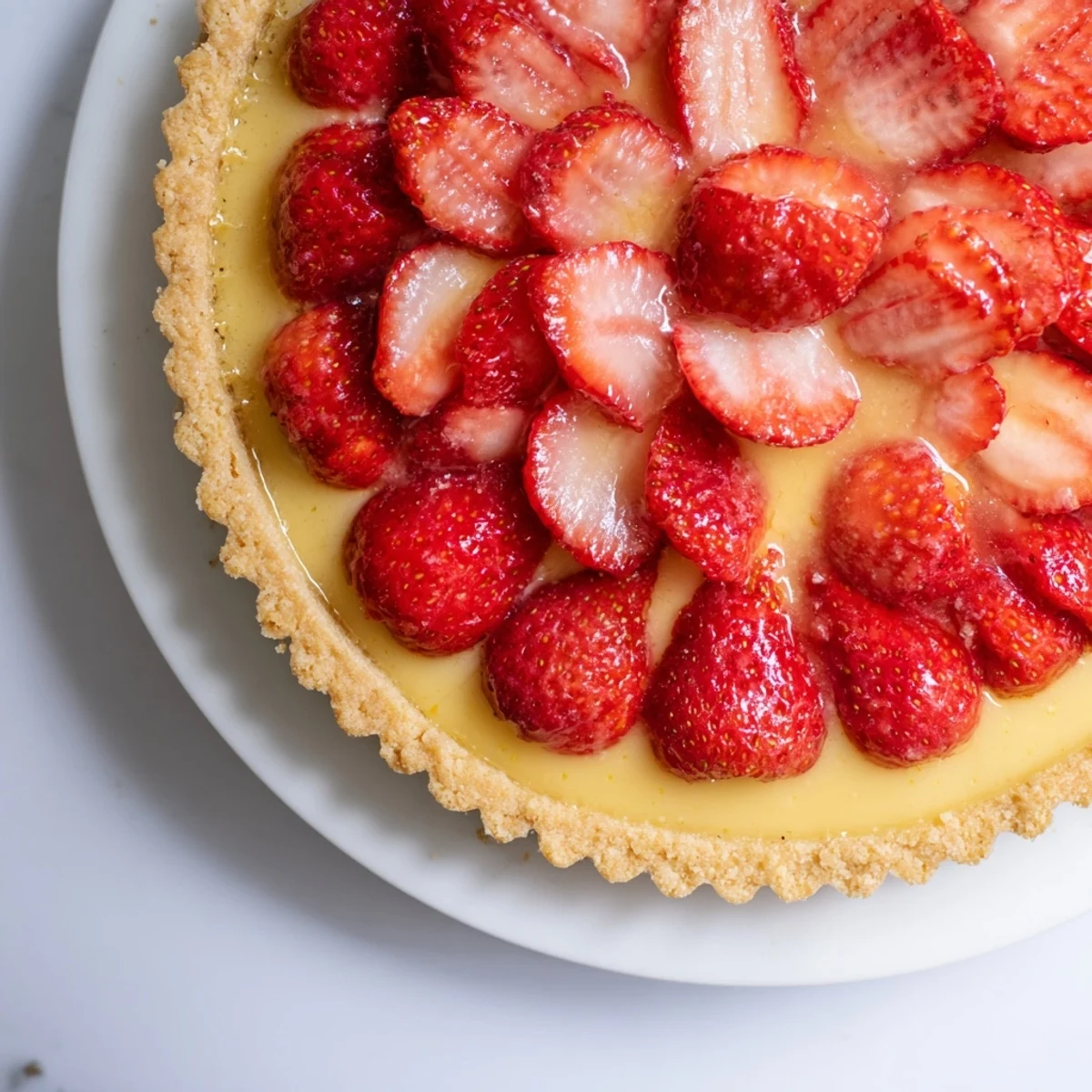
- Wash, hull, and slice your strawberries however you like—some halved, some fanned out. Set them on a kitchen towel to dry so they won’t make your tart watery.
- Assemble with care:
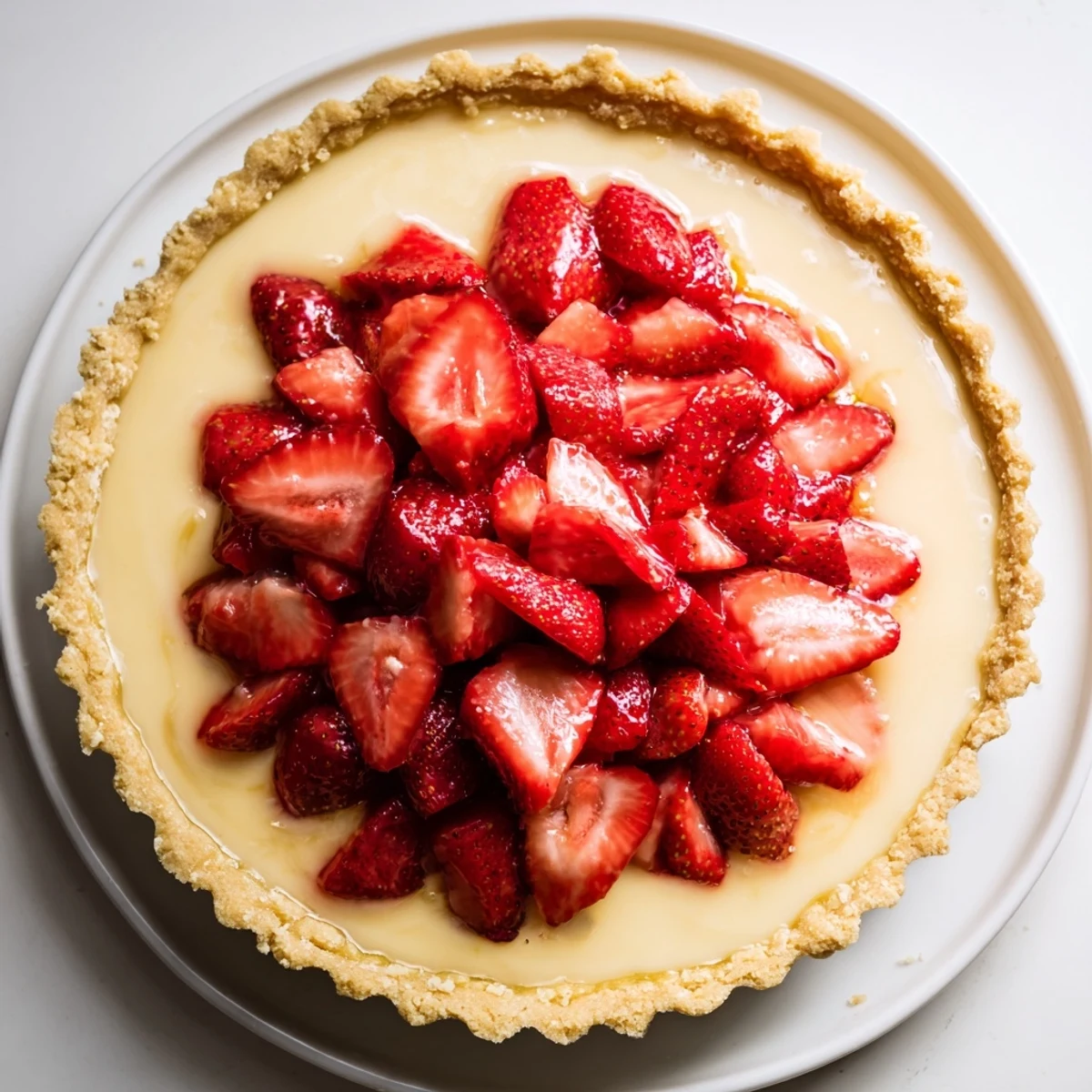
- Spoon the chilled pastry cream into the cooled crust, swooping it smooth. Now for the fun—arrange your strawberries in whatever pattern you fancy, overlapping for an abundant look.
- Glaze and finish:
- Gently heat apricot jam with water, then paint it over the strawberries for a beautiful sheen. Chill the tart for at least an hour to set the cream and firm up the flavors before slicing.
 Pin this
 There was a day when my little cousin, face sticky with jam, declared this tart ‘better than candy’ and demanded seconds. Watching someone’s eyes light up at their first bite turned this recipe from a proud experiment into something rather special.
How to Get Your Pastry Cream Just Right
Stirring constantly and not turning your back is my golden rule to prevent scrambled eggs in the cream. I like to switch to a spatula as the custard thickens, scraping every edge for an extra-smooth result. Allow plenty of time for it to cool before filling the tart—it’s worth the wait.
Making the Crust Ease and Troubles
One trick is to roll the pastry between two sheets of parchment so nothing sticks to your counter or pin. If the dough breaks when moving it to the pan, just patch it together gently with your fingers—the finished tart is forgiving once filled. Even my wobbliest attempts tasted wonderful thanks to good butter and a gentle bake.
Finesse the Strawberry Finish
Glossing those strawberries feels like the final brushstroke. I always use a super-soft brush and start in the center, working outwards to avoid dislodging berries or leaving streaks. Fresh, shiny fruit makes the whole tart irresistible.
- If strawberries aren’t peak-sweet, sprinkle a little sugar on before glossing.
- A squeeze of lemon juice wakes up dull berries.
- Let the tart fully chill so every slice holds together beautifully.
 Pin this
 Making tarte aux fraises is equal parts tradition and joyful mess. Each imperfect slice tastes of sunshine and small victories—enjoy every forkful.
Recipe FAQs
- → Comment éviter une pâte détrempée ?
-
Cuire la pâte à blanc avec des poids pour garder le fond croustillant. Bien refroidir la pâte avant d'ajouter la crème pâtissière et napper les fruits juste avant de servir pour limiter l'humidité.
- → Comment obtenir une crème pâtissière sans grumeaux ?
-
Tempérez les jaunes avec un peu de lait chaud avant de remettre sur le feu, fouettez sans cesse et laissez épaissir à feu moyen. Passez éventuellement au tamis puis filmez au contact pour éviter la croûte.
- → Peut-on remplacer la maïzena ?
-
Oui, on peut utiliser la même quantité de farine pour épaissir, mais la texture sera moins soyeuse. La maïzena donne une crème plus brillante et légère.
- → Quel fruit choisir et comment les préparer ?
-
Des fraises bien colorées et fermes conviennent le mieux. Lavez, équeutez et coupez selon la taille, disposez-les harmonieusement juste avant le nappage pour conserver leur fraîcheur.
- → Comment réussir le nappage brillant ?
-
Chauffez doucement la confiture d'abricot avec un peu d'eau, passez-la si nécessaire et badigeonnez délicatement au pinceau. Un nappage tiède glisse mieux et apporte un bel éclat.
- → Peut-on préparer à l'avance et comment conserver ?
-
Préparez la pâte et la crème la veille ; conservez la crème filmée au contact au réfrigérateur. Montez la tarte le jour même, nappez les fruits peu avant le service pour garder leur tenue.