 Pin this
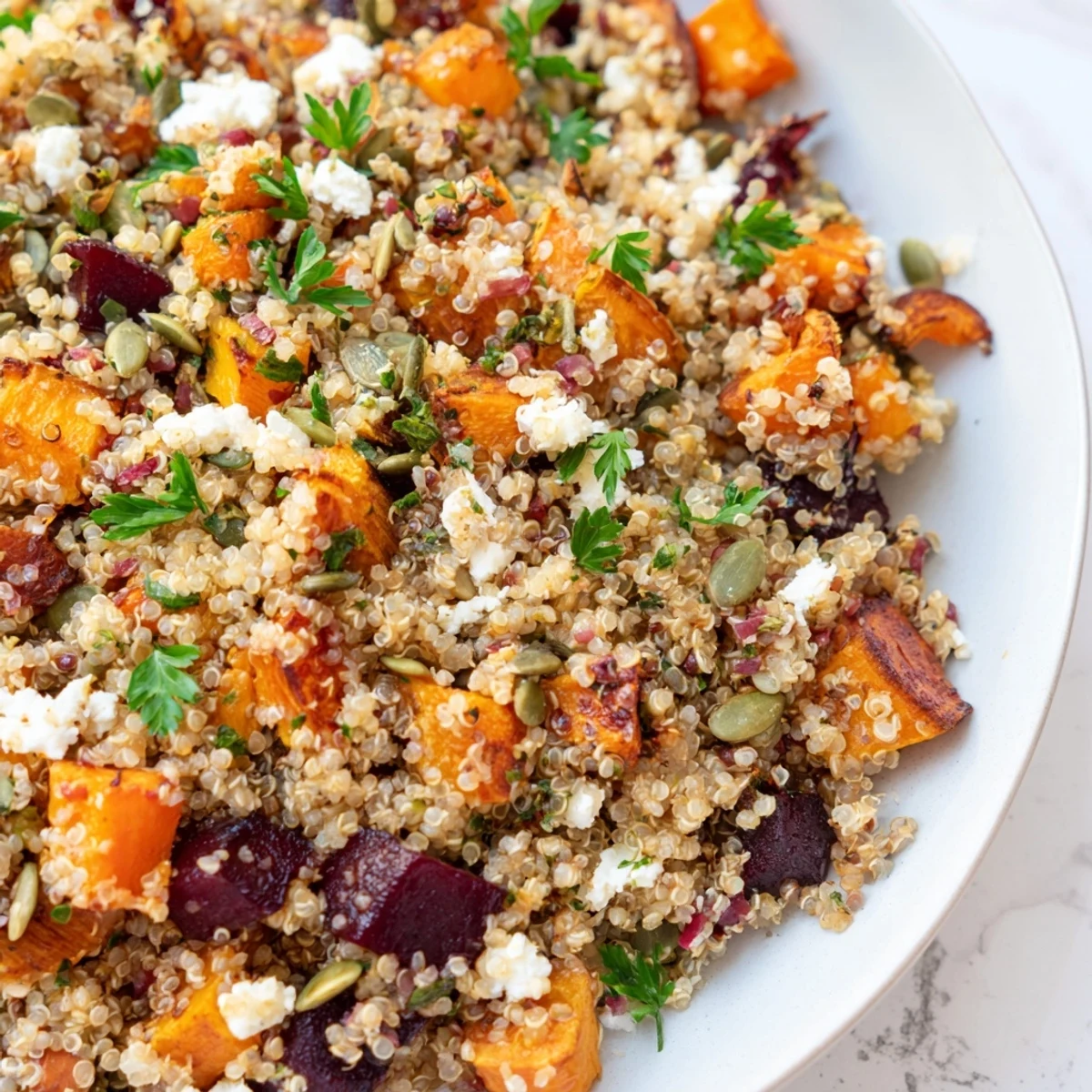
 This warm quinoa dish combines fluffy, tender grains with caramelized root vegetables like carrots, beets, parsnips, and sweet potatoes. Roasted to golden perfection with herbs, the vegetables add earthiness and depth. Toasted pumpkin seeds bring a crunchy texture contrast, while a bright vinaigrette featuring olive oil, apple cider vinegar, Dijon mustard, and honey ties all flavors together. Served warm and optionally topped with feta, it makes a wholesome, gluten-free, vegetarian main or salad perfect for cozy meals.
I discovered this salad on a gray November afternoon when my farmer's market haul looked too beautiful to waste. The beets were still warm from being pulled from the earth, the carrots practically glowed orange, and I had just learned how to properly toast quinoa. Something clicked that day—not just the flavors, but the feeling of turning simple vegetables into something that tasted like comfort.
I made this for my neighbor last spring when she mentioned feeling tired of the same lunch rotation. She came back a week later asking for the recipe, and I realized then that this salad had quietly become one of my go-to moves for feeding people well. There's something about serving something warm and intentional that shifts a meal from ordinary to remembered.
Ingredients
- Quinoa: Rinsing it matters more than you'd think—it removes a bitter coating that lingers if you skip this step, and I learned that the hard way once.
- Carrots and parsnips: Cut them the same size so they roast evenly, creating those caramelized edges that are honestly the best part.
- Beets: They stain everything, so peel them after roasting if you want to keep your hands less vivid, though I've stopped caring.
- Sweet potato: Adds natural sweetness that plays against the earthiness of the beets in a way that feels almost orchestrated.
- Olive oil and herbs: The combination of thyme and rosemary does something almost magical with root vegetables, deepening their flavor in minutes.
- Pumpkin seeds: These add a textural contrast and a subtle nuttiness that grounds the whole dish.
- Feta cheese: Optional, but if you use it, crumble it generously—the salty tang cuts through the sweetness beautifully.
- Fresh parsley: A small gesture that brings brightness and reminds you this dish is alive, not heavy.
- Apple cider vinegar and Dijon mustard: The dressing needs both of these to balance the richness of the oil and the sweetness of the vegetables.
Instructions
- Set your oven to 425°F:
- Line a baking sheet with parchment paper and let the oven preheat fully so your vegetables get that immediate sear.
- Coat the vegetables:
- Toss your diced carrots, parsnips, beets, and sweet potato with olive oil, salt, pepper, thyme, and rosemary until every piece glistens. Spread them across the baking sheet in a single layer where they can actually touch the hot surface.
- Roast until golden:
- This takes about 30 to 35 minutes, and you'll want to stir them halfway through so they caramelize evenly. They should look slightly browned at the edges and feel tender when you pierce them with a fork.
- Cook the quinoa:
- Combine your rinsed quinoa with vegetable broth in a saucepan, bring to a boil, then reduce to low heat, cover, and let it simmer for 15 minutes until the liquid disappears. When you fluff it with a fork, each grain should be separate and light.
- Whisk the dressing:
- Combine olive oil, apple cider vinegar, Dijon mustard, honey, salt, and pepper in a small bowl and whisk until the dressing emulsifies slightly and tastes bright and balanced.
- Bring it together:
- Combine the warm quinoa and roasted vegetables in a large bowl, then add the pumpkin seeds and fresh parsley. Pour the dressing over everything and toss gently so nothing breaks apart.
- Finish and serve:
- Sprinkle feta over the top if you're using it, and serve while everything still holds a little warmth.
 Pin this
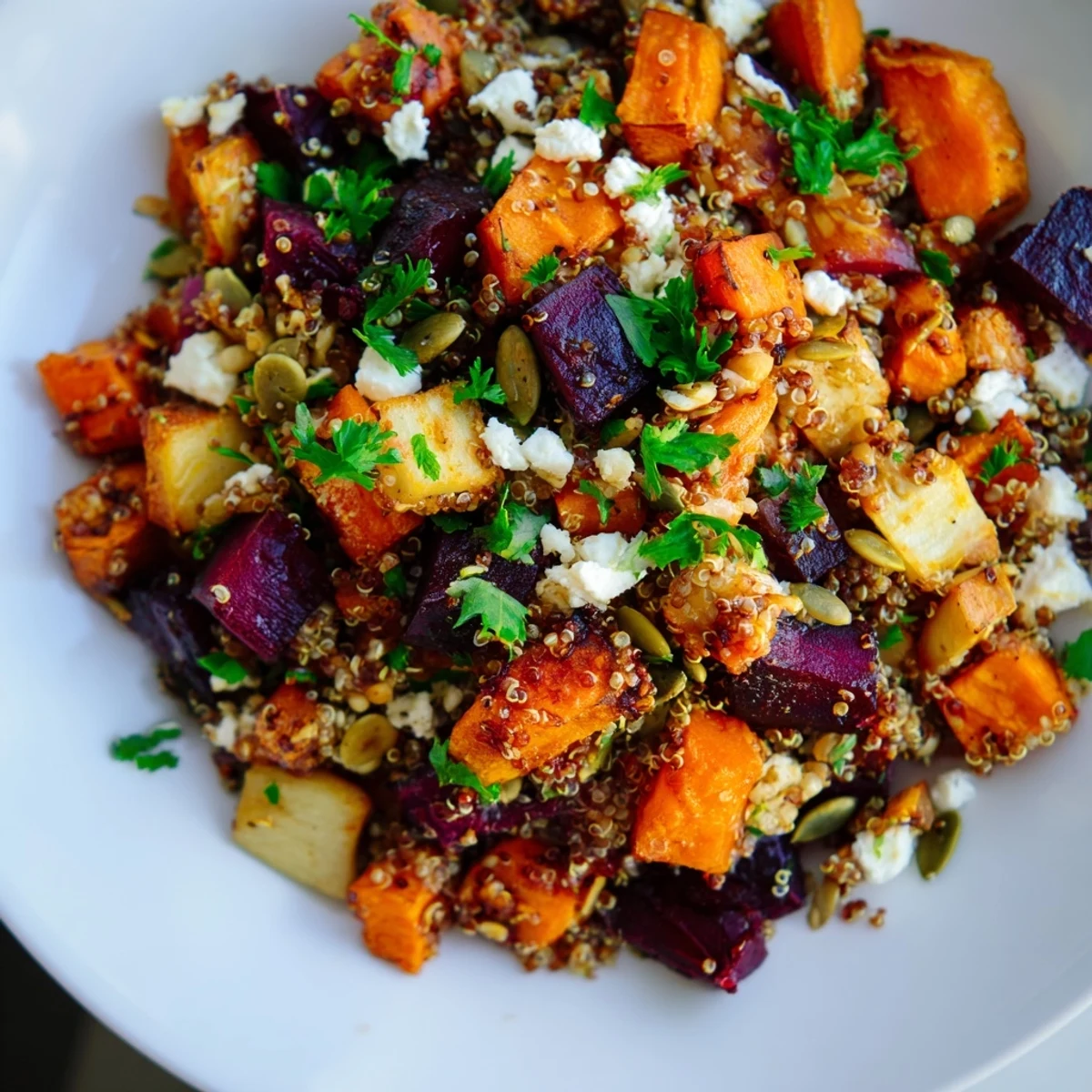
 There's a moment when you first taste this salad warm, the sweetness of roasted beets meeting the earthiness of quinoa, and you understand why people talk about food as nourishment and not just fuel. That's the moment this dish stopped being a recipe and became something I return to.
The Magic of Roasting
Roasting vegetables at high heat transforms their flavor entirely—the natural sugars caramelize, the edges crisp, and what was raw becomes almost sweet. I used to boil or steam root vegetables until I realized I was basically erasing their personality. Now I roast everything, and the difference is immediate.
Why This Salad Stays with You
Unlike delicate greens that wilt and disappear, this salad has real substance. The quinoa provides protein and that satisfying grain texture, the vegetables deliver sweetness and earthiness, and the pumpkin seeds give you something to bite into. It's a meal, not a side dish pretending to be one.
Seasonal Shifts and Simple Swaps
The beauty of this salad is its flexibility without losing its character. In winter, lean into the earthiness of beets and parsnips. In fall, add roasted Brussels sprouts or butternut squash. Spring might mean swapping in roasted asparagus or even raw cucumber for brightness. The base always works.
- Walnuts or pecans work beautifully instead of pumpkin seeds if that's what you have on hand.
- A squeeze of fresh lemon juice over the finished salad adds a brightness that feels almost like a secret ingredient.
- Make a double batch and eat it throughout the week—it actually improves as the flavors continue to mingle.
 Pin this
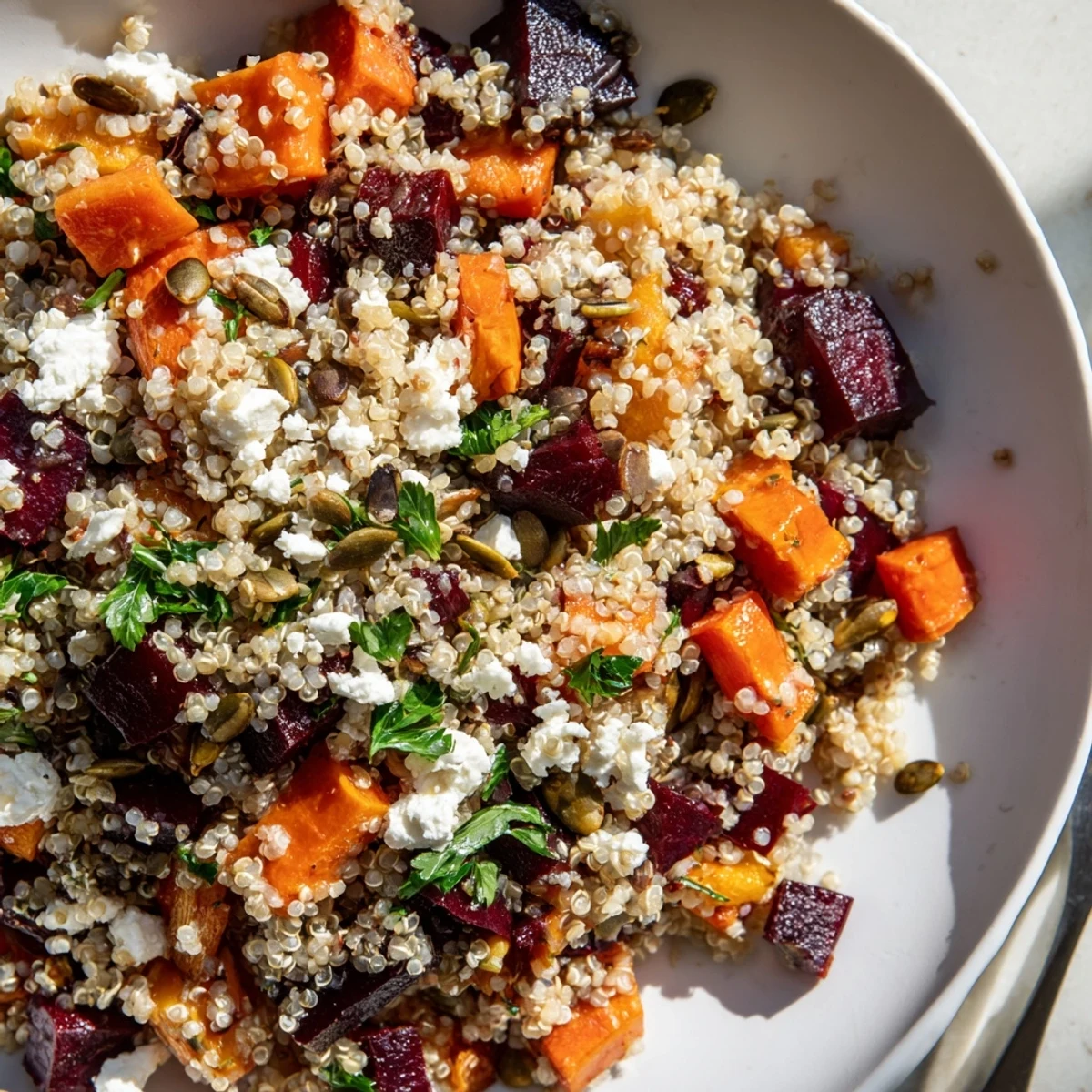
 This salad taught me that the most nourishing meals aren't complicated, just intentional. It's become the dish I make when I want to feel grounded.
Recipe FAQs
- → What type of quinoa works best?
-
Rinsed white quinoa is ideal for a fluffy, light texture, but tri-color quinoa can add visual appeal and earthier notes.
- → How should the root vegetables be prepared?
-
Peel and dice carrots, parsnips, beets, and sweet potato evenly for uniform roasting and caramelization.
- → Can I substitute pumpkin seeds?
-
Yes, walnuts or pecans add a similar crunch and complement the roasted vegetables nicely.
- → Is it possible to make this dish vegan?
-
Omit the feta cheese or replace it with a plant-based alternative to keep it vegan-friendly.
- → What herbs enhance the roasted vegetables?
-
Dried thyme and rosemary are used for their aromatic and savory qualities, enriching the roasting process.