
 Pin this
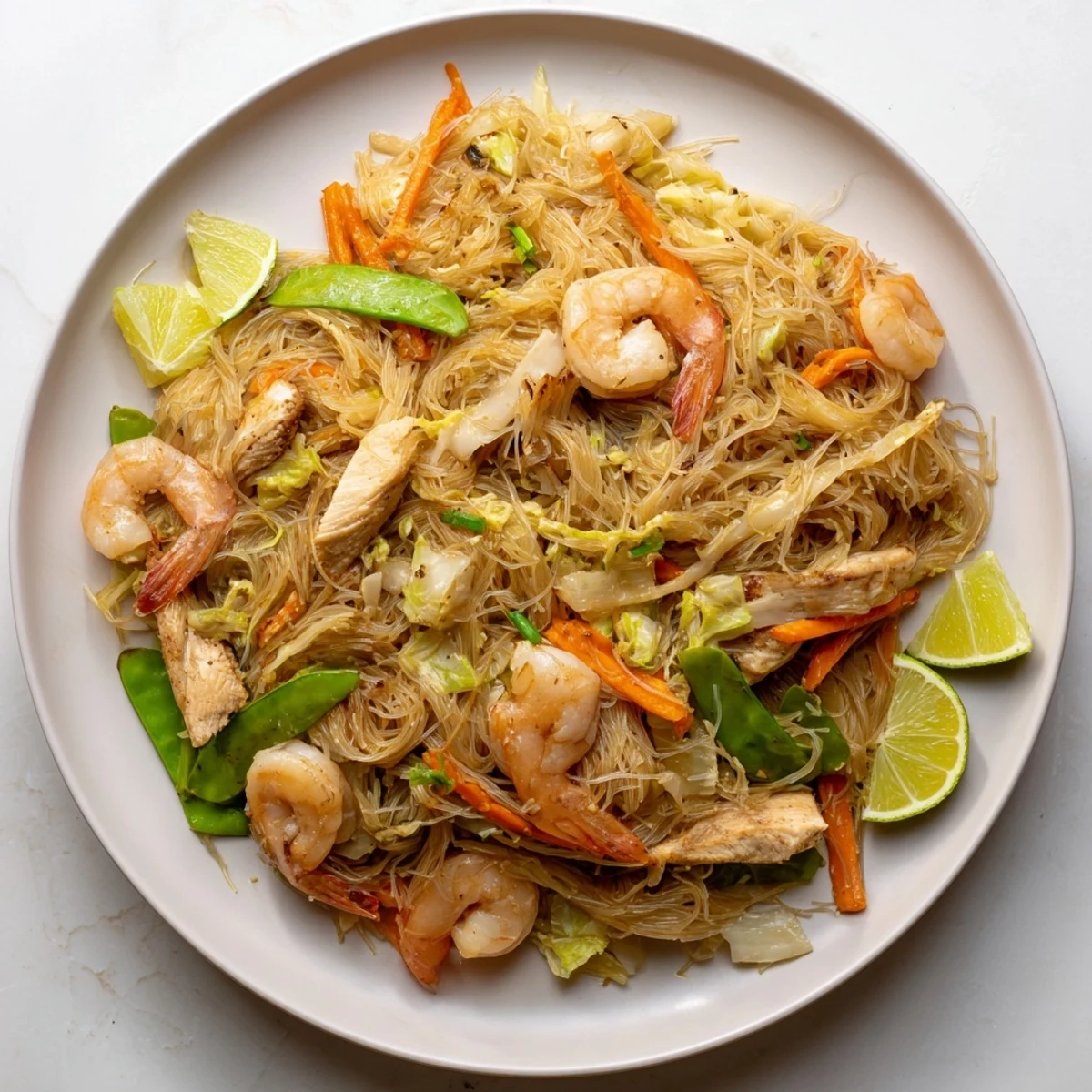
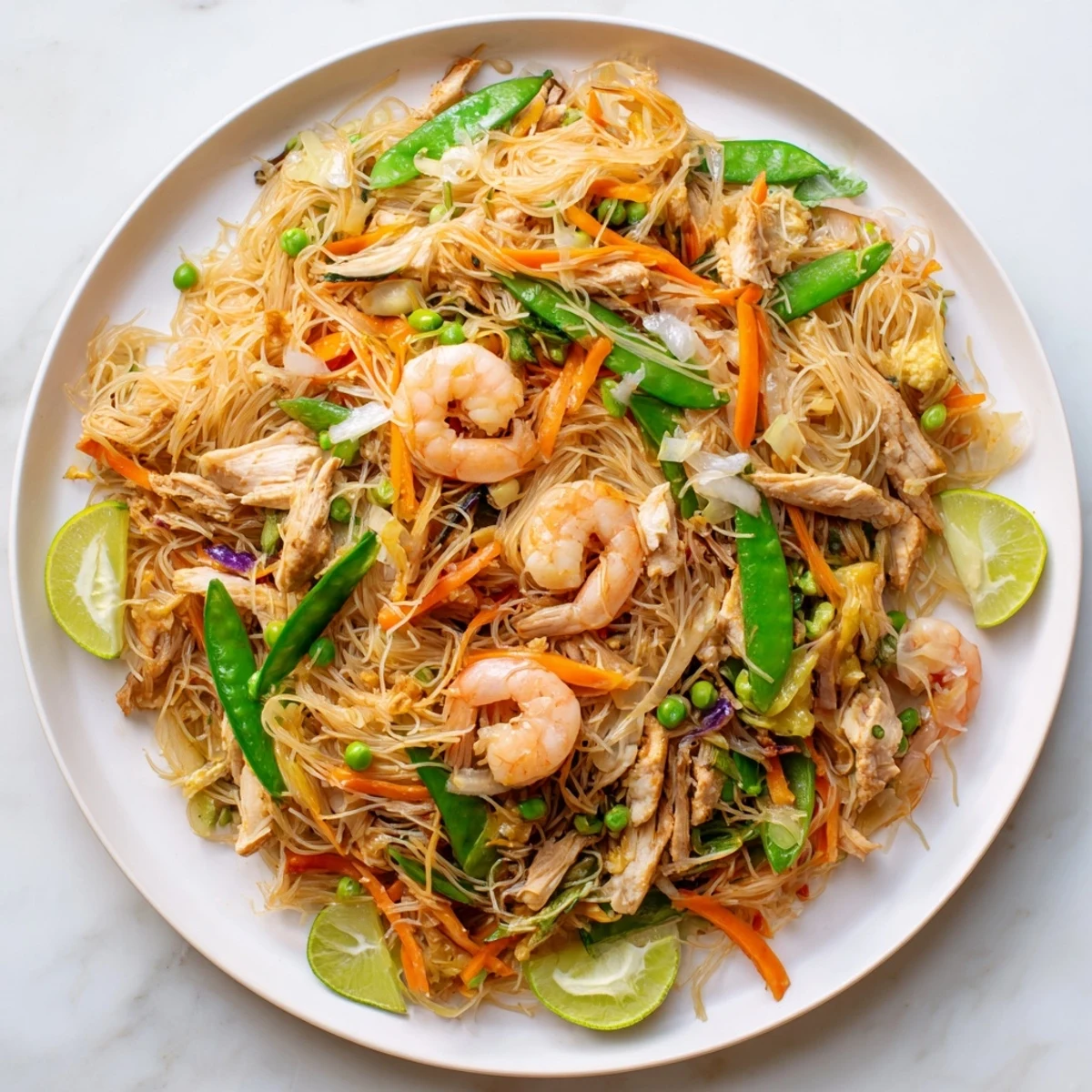
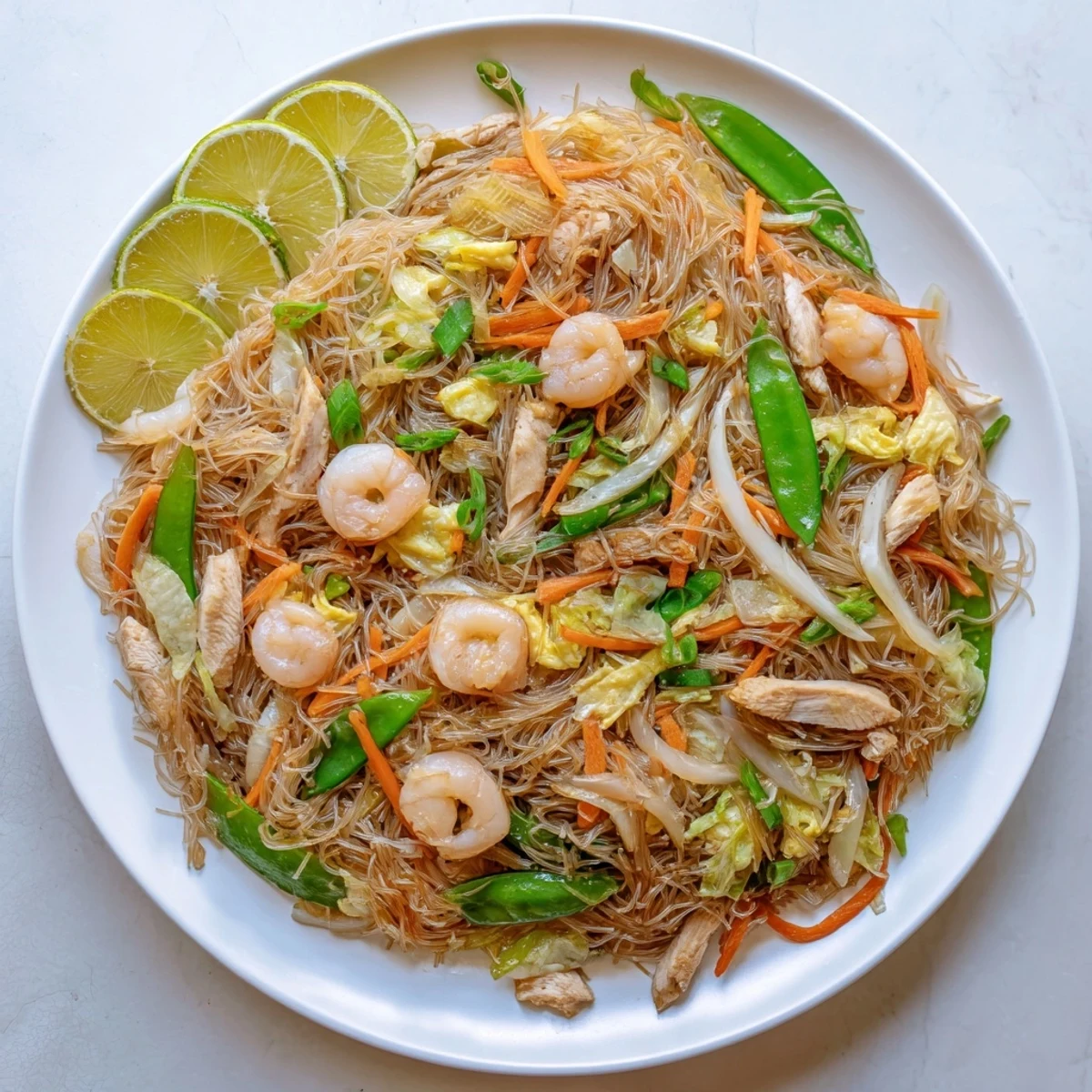
 Experience the authentic flavors of Filipino cuisine with this classic stir-fried noodle dish. Bihon rice vermicelli absorbs a rich blend of soy and oyster sauces, creating savory strands that perfectly complement tender chicken, succulent shrimp, and crisp vegetables like julienned carrots, shredded cabbage, and snow peas.
The preparation involves soaking thin rice noodles until softened, then quickly stir-frying them with aromatics like garlic and onion. Proteins are cooked first to develop flavor, followed by vegetables that retain their satisfying crunch. Everything comes together in a seasoned broth that the noodles eagerly soak up, resulting in each strand being coated in umami-rich goodness.
Finished with fresh scallions and served with calamansi wedges for a bright citrus kick, this dish balances textures and flavors beautifully. The slight acidity from the citrus cuts through the savory elements, while the variety of vegetables provides color, nutrition, and crunch. Perfect for family gatherings or weeknight dinners, this satisfying dish delivers restaurant-quality results right from your kitchen.
My Lola would wake up before dawn on Sundays, the clatter of her wok echoing through our small apartment as she prepared pancit for the family gathering. The aroma of garlic and onions hitting hot oil became my childhood alarm clock, signaling that something special was being made for the relatives who would soon fill our living room. She never measured anything, yet her pancit bihon always tasted exactly the same—perfectly balanced, comforting, and somehow capable of feeding twice as many people as the recipe suggested.
Last birthday, I attempted to recreate her recipe for my own friends, nervous that I had forgotten some secret ingredient she never wrote down. When my friend Marco took his first bite and immediately asked for seconds, I knew I had finally unlocked the mystery. Pancit bihon is more than noodles and vegetables—it is the dish that appears at every Filipino celebration, the one that guarantees long life and good fortune according to old superstitions.
Ingredients
- 200 g boneless skinless chicken breast thinly sliced: Cutting against the grain keeps these tender even after highheat stirfrying
- 100 g medium shrimp peeled and deveined: Fresh shrimp adds sweetness but frozen works perfectly in a pinch
- 200 g dried bihon rice vermicelli noodles: These thin noodles cook quickly and absorb sauce beautifully
- 1 small carrot julienned: The crunch contrasts perfectly with the soft noodles
- 1 cup green cabbage shredded: Cabbage wilts just enough to stay slightly crisp in the finished dish
- 1/2 cup snow peas trimmed and halved: These add sweetness and a bright pop of green color
- 1 small onion sliced: Yellow onion works best for its balanced sweetness
- 3 cloves garlic minced: Fresh garlic is nonnegotiable here—powder simply will not do
- 2 tbsp soy sauce: This provides the foundational salty umami flavor
- 1 tbsp oyster sauce: The secret ingredient that adds depth and slight sweetness
- 1 tsp fish sauce: Just enough to enhance the other flavors without overwhelming
- 1/2 tsp ground black pepper: Freshly cracked pepper makes a noticeable difference
- 1 cup chicken broth: Homemade broth is ideal but quality storebought works perfectly
- 2 tbsp chopped scallions: These add a fresh oniony finish and beautiful color
- 1 lemon or calamansi cut into wedges: The acid cuts through the richness and brightens every bite
Instructions
- Prepare the noodles:
- Soak the bihon noodles in warm water for 10 minutes until pliable but not mushy then drain well and set aside.
- Build the aromatic base:
- Heat 2 tablespoons of oil in a large wok or skillet over mediumhigh heat and sauté garlic and onion until fragrant and translucent.
- Cook the proteins:
- Add chicken slices and cook until lightly browned and cooked through then add shrimp and stirfry until pink about 2 minutes before removing both from the pan.
- Stirfry the vegetables:
- In the same pan add carrots cabbage and snow peas and stirfry for 2–3 minutes until just tender and still vibrant.
- Create the sauce:
- Return the cooked chicken and shrimp to the pan then pour in soy sauce oyster sauce fish sauce and chicken broth and bring to a gentle simmer.
- Combine everything:
- Add the drained bihon noodles and toss gently with tongs to combine and absorb the sauce cooking for 3–4 minutes until noodles are heated through.
- Season and adjust:
- Season with black pepper and taste the dish adjusting with more salt or sauces if needed before removing from heat.
- Finish and serve:
- Transfer to a serving platter garnish generously with chopped scallions and serve with lemon or calamansi wedges on the side.
 Pin this
 My cousin once forgot to soak the noodles beforehand and ended up with crunchy bits in her pancit. We laughed about it all night but now she keeps a timer in the kitchen just for the noodles.
Making It Your Own
Swap proteins for tofu cubes or add sliced pork belly for extra richness. Bell peppers celery or even young corn can join the vegetable mix without changing the cooking time much.
Serving Suggestions
Pancit bihon traditionally appears alongside lumpia or fried chicken. A cold light lager or crisp white wine balances the savory flavors beautifully.
MakeAhead Tips
Prep all ingredients the night before and store them in separate containers in the refrigerator. The stirfry comes together in minutes when everything is ready to go.
- Keep the noodles separate from the sauce until the last minute
- Reheat gently with a splash of water to refresh the noodles
- Serve extra calamansi on the side for those who love it extra tangy
 Pin this
 This recipe has fed my family through birthdays holidays and random Tuesday nights. I hope it brings the same warmth to your table.
Recipe FAQs
- → What makes Pancit Bihon different from other noodle dishes?
-
Pancit Bihon features thin rice vermicelli noodles that become incredibly tender yet maintain a pleasant bite. Unlike wheat-based noodles, these rice noodles absorb flavors beautifully while remaining light and digestible. The signature Filipino seasoning blend of soy sauce, oyster sauce, and fish sauce creates a distinct umami profile that sets it apart from other Asian noodle preparations.
- → How do I prevent the noodles from becoming mushy?
-
The key is proper soaking—immerse the dried bihon in warm water for exactly 10 minutes until pliable but not overly soft. Drain thoroughly before adding to the wok. When cooking, toss gently with tongs and cook just until the noodles absorb the sauce and become heated through, typically 3-4 minutes. Avoid overcooking or the strands will lose their appealing texture.
- → Can I prepare the components ahead of time?
-
Absolutely. You can slice all vegetables, portion the proteins, and even soak the noodles several hours in advance. Store each component separately in the refrigerator. When ready to serve, simply follow the stir-frying steps. The actual cooking takes less than 15 minutes, making it perfect for entertaining or busy weeknights when prep time is limited.
- → What vegetables work best in this dish?
-
Traditional choices include carrots for sweetness and color, cabbage for bulk and crunch, and snow peas for fresh flavor. However, bell peppers, celery, snap peas, or bok choy make excellent additions. The key is selecting vegetables that maintain some crispness after quick stir-frying, providing textural contrast against the tender noodles.
- → Why is calamansi served alongside?
-
Calamansi or lemon wedges provide a bright, acidic contrast that cuts through the rich, savory flavors of the stir-fry. A squeeze of fresh citrus juice right before eating balances the soy-based sauce and enhances the natural sweetness of the vegetables and proteins. This simple garnish elevates the entire dish, adding freshness that makes each bite more vibrant and satisfying.
- → Is this dish suitable for large gatherings?
-
Pancit Bihon is a staple at Filipino celebrations for good reason. The dish scales up easily, serves a crowd economically, and holds its heat well when kept warm. Plus, the presentation—colorful vegetables visible among the golden noodles—looks impressive on any buffet table. Most importantly, the flavor appeals universally across ages and palates, making it a reliable crowd-pleaser.