
 Pin this
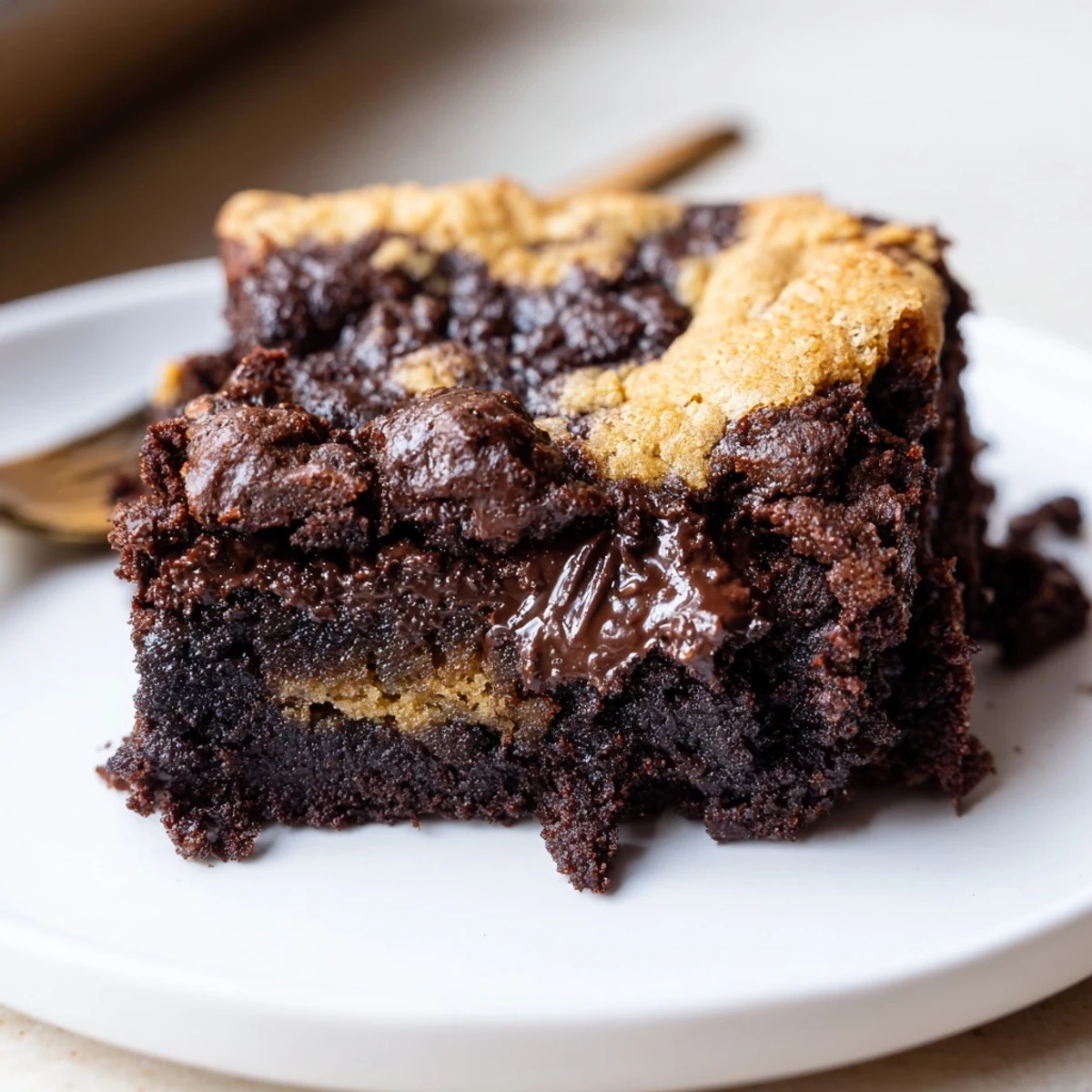
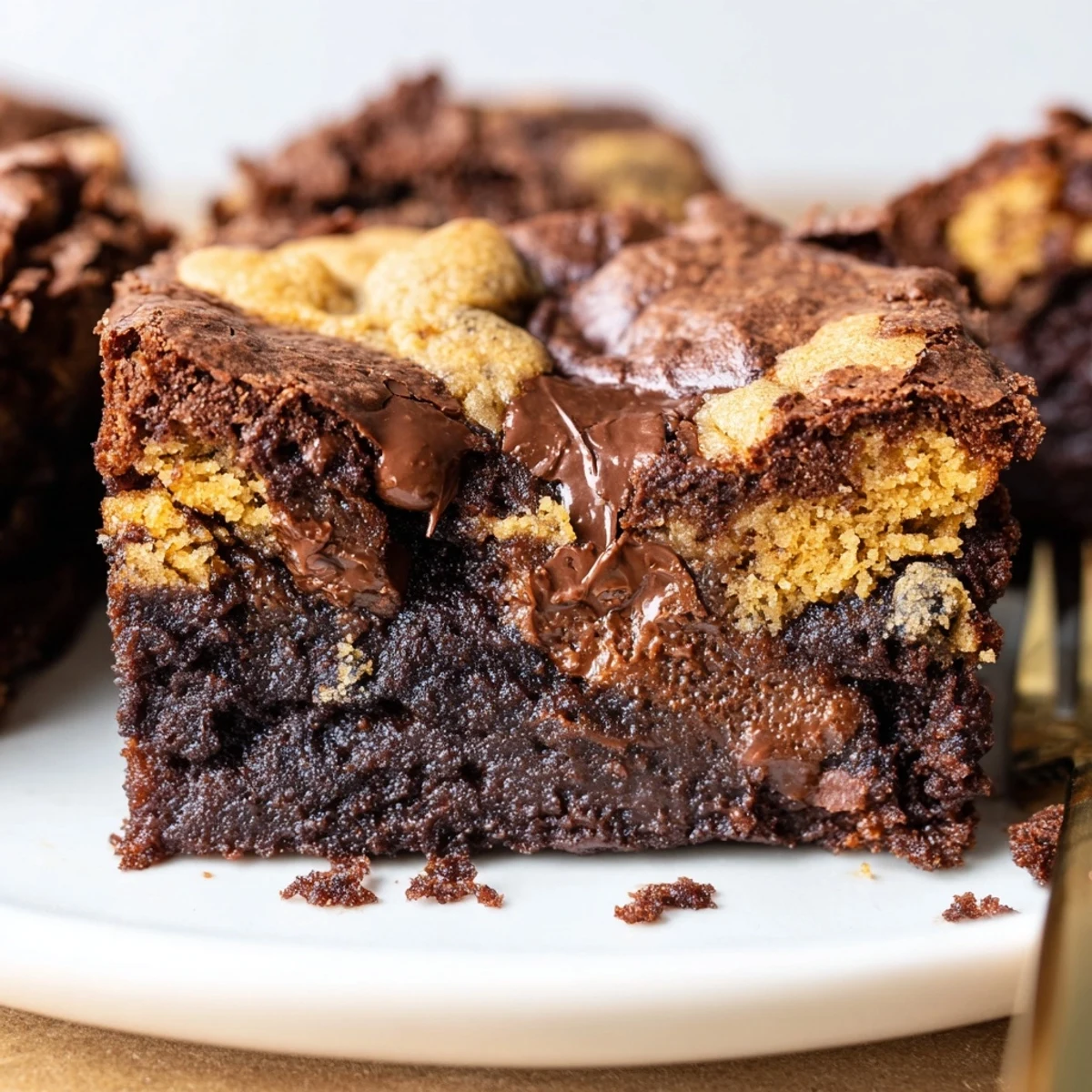
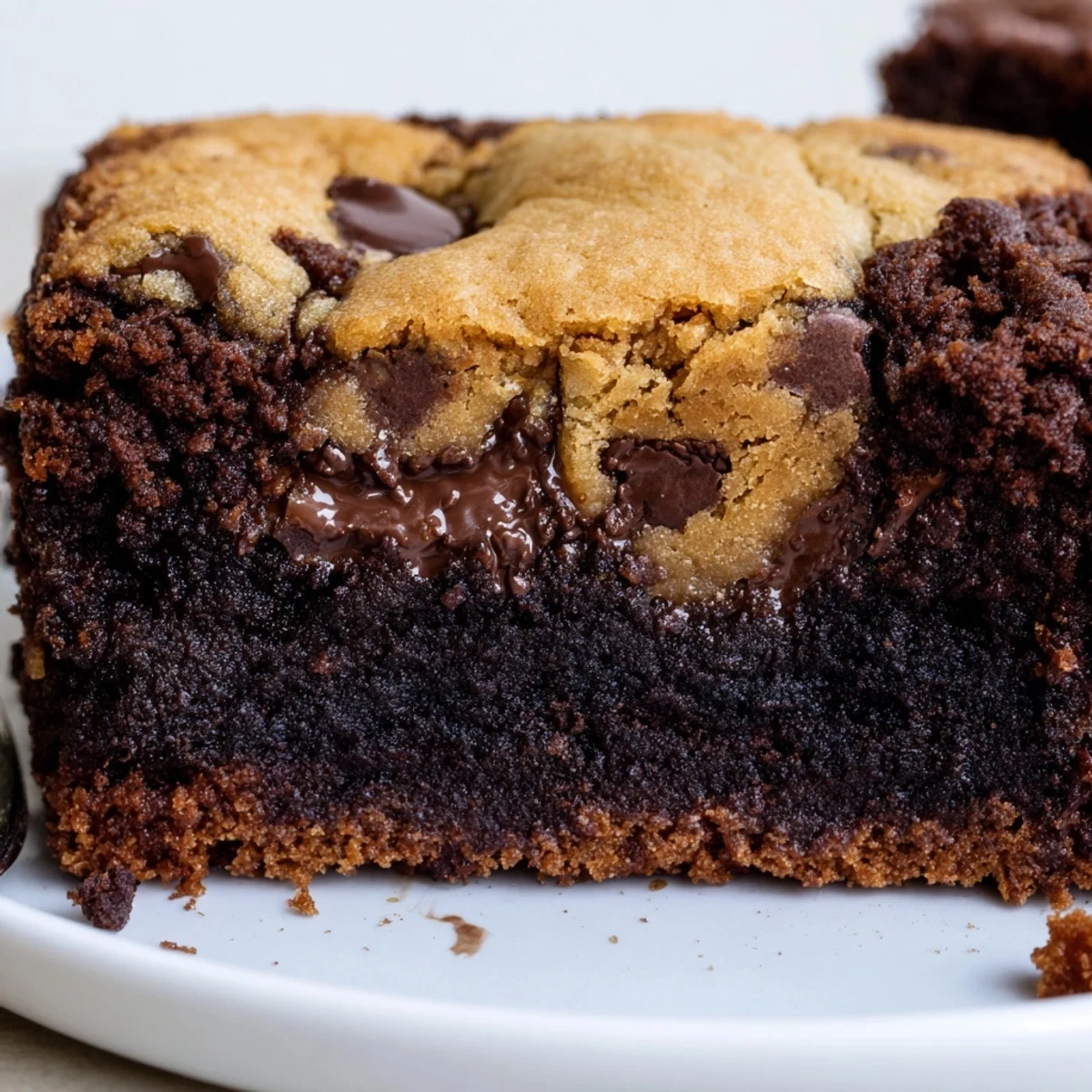
 These fudgy, chewy brookies combine a dense cocoa-rich brownie base with a soft, chocolate-chip cookie topping. Melted butter, sugar and eggs make the brownie glossy and tender; the cookie layer is creamed butter and sugars folded with flour and chips. Spoon cookie dough over brownie batter, bake at 175°C until top is golden and center has moist crumbs. Chill briefly for cleaner slices or serve warm with ice cream.
My oven had two distinct zones: the cookie shelf and the brownie shelf, or so I told anyone who asked why I kept both going at the same time. The brookie was born from a Tuesday night when I could not commit, honestly could not commit, and ended up spooning cookie dough straight onto brownie batter in the same pan. That lopsided first batch was ugly and uneven and gone in fifteen minutes flat.
I brought a pan of these to a potluck where three people independently asked if I had bought them from a bakery, and I just smiled and said nothing because sometimes mystery is the best seasoning.
Ingredients
- Unsalted butter (brownie layer): Melted butter gives the brownie base its fudgy density, and using unsalted lets you control the salt level precisely.
- Granulated sugar (brownie layer): Two hundred grams sounds like a lot but this is dessert, and sugar helps create that desirable crackly top.
- Eggs (brownie layer): Two large eggs bind everything and contribute richness; use room temperature eggs for smoother batter.
- Vanilla extract: Good vanilla lifts the chocolate without stealing the spotlight, so do not skip it.
- All purpose flour (brownie layer): Sixty five grams is intentionally low to keep the texture dense rather than cakey.
- Unsweetened cocoa powder: This is where the chocolate flavor lives, so use a brand you genuinely enjoy.
- Salt: A quarter teaspoon sharpens every flavor in the brownie base.
- Unsalted butter (cookie layer): Softened, not melted, because creaming butter with sugar creates the chewy cookie texture.
- Brown sugar (cookie layer): Packed brown sugar adds moisture and a subtle caramel depth that white sugar alone cannot achieve.
- Granulated sugar (cookie layer): Balances the brown sugar and helps the cookie layer spread just enough.
- Egg (cookie layer): One egg binds the cookie dough while keeping it tender.
- All purpose flour (cookie layer): One hundred fifty grams gives the cookie dough enough structure to sit on top of the brownie layer without sinking.
- Baking soda: Half a teaspoon gives the cookie layer a gentle lift so it is not a dense slab on top of an already dense slab.
- Chocolate chips: One hundred ten grams folded in at the end creates pockets of melted chocolate throughout the cookie layer.
Instructions
- Set up your oven and pan:
- Preheat to 175 degrees Celsius and line a 20 by 20 centimeter baking pan with parchment paper, leaving an overhang on two sides so you can lift the whole thing out later like a gift you are unwrapping.
- Build the brownie batter:
- Whisk melted butter and sugar in a medium bowl until glossy, then add eggs and vanilla and whisk until the mixture looks smooth and slightly thickened. Fold in the flour, cocoa powder, and salt with a spatula, stopping the moment you no longer see dry streaks. Spread this evenly across the bottom of your prepared pan.
- Make the cookie dough:
- Beat softened butter with both sugars until the mixture looks creamy and lighter in color, then mix in the egg and vanilla until combined. Add the flour, baking soda, and salt, stirring until just incorporated, then gently fold in the chocolate chips with a few deliberate strokes.
- Layer them together:
- Drop spoonfuls of cookie dough over the brownie batter and spread gently with a spatula, accepting that some brownie will peek through because perfection is overrated in baking.
- Bake and watch closely:
- Bake for 28 to 33 minutes until the cookie top turns golden and a toothpick in the center comes out with a few moist crumbs clinging to it, which is your signal to pull the pan immediately because overbaking is the enemy of fudgy.
- Cool completely before slicing:
- Let the brookies cool entirely in the pan, then use the parchment overhang to lift them out and cut into sixteen bars with a sharp knife.
 Pin this
 The night I finally nailed the brookie ratio, my roommate walked in, cut a corner piece while it was still warm, and just stood there chewing with her eyes closed for what felt like a full minute.
What to Serve Alongside These Bars
A scoop of vanilla bean ice cream melting over a warm brookie bar is the kind of combination that makes people forget their phones exist. Cold milk works too, especially if you serve these at a gathering where people are standing around the kitchen counter at ten oclock at night.
Swapping Ingredients for Fun Variations
Replace the chocolate chips with butterscotch chips and suddenly you have a caramel undertone running through the cookie layer that nobody expects. Chopped walnuts or pecans folded into the brownie batter add a satisfying crunch that contrasts beautifully with all that chew. Peanut butter chips are another unexpected twist that makes people ask what is different before they can identify it.
Storing Your Leftovers (If Any Exist)
These bars keep beautifully in an airtight container at room temperature for up to four days, though in my experience they rarely last past day two. The texture actually improves after resting overnight as the layers settle into each other and become one cohesive treat.
- Freeze individual bars wrapped tightly in plastic wrap for up to three months and thaw at room temperature when the craving hits.
- A ten second warm up in the microwave brings back that just baked softness.
- Always store them separated by parchment squares so they do not stick together.
 Pin this
 Every batch teaches you something small, and that is what keeps pulling you back to the kitchen. Share these with someone who claims they cannot choose a favorite dessert.
Recipe FAQs
- → How do I achieve a fudgy brownie layer?
-
Use melted butter and keep the flour amount modest. Mix until just combined, avoid overbeating once flour is added, and aim to underbake slightly for a dense, glossy center.
- → Why won't the cookie layer spread evenly?
-
Cookie dough that’s too firm will hold its shape; beat butter and sugars until creamy, then drop spoonfuls and gently press with a spatula. If dough is very cold, let it soften a few minutes before spreading.
- → How can I tell when brookies are done?
-
Bake until the cookie top is golden and a toothpick in the center comes out with a few moist crumbs. Avoid a fully clean toothpick to preserve a gooey interior.
- → What variations work well?
-
Fold nuts into either layer or swap chocolate chips for butterscotch or white chocolate. Adjust mix-ins to balance texture without changing bake time much.
- → Best way to get clean slices?
-
Cool completely in the pan, chill briefly for firmer cutting, and use a sharp knife wiped between cuts. Lifting via parchment overhang helps keep edges intact.
- → How should I store and reheat brookies?
-
Store airtight at room temperature for up to 3 days or refrigerate for longer. Warm gently in a low oven or microwave a few seconds for a soft, just-baked feel.